Get all your news in one place.
100's of premium titles.
One app.
Start reading
Medical Daily
Medical Daily
Health
Dorothy Brooks

Meningococcal Cases Reach Second-Highest Level in Over a Decade as Drug-Resistant Strain Disproportionately Hits Black Americans

Meningococcal disease is one of the fastest-killing bacterial infections in medicine. A person can wake up with a fever and headache and be dead within 24 hours. Even with appropriate antibiotic treatment, the case-fatality rate is 10 to 15 percent — meaning one in ten people who develop the disease die from it regardless of how quickly treatment begins. Of those who survive, 20 percent are left with permanent disability: amputated limbs, hearing loss, neurological damage, and skin necrosis from the blood vessel damage the bacteria cause.

In the United States, this disease has been surging since 2021, and the 2025 case count has put the trend in stark relief. CDC surveillance data updated June 2026 confirm that 463 confirmed and probable meningococcal disease cases were reported in 2025 — the second-highest annual total in the United States since 2014. The 2024 tally was 503 cases, the highest in over a decade. Before the pandemic era, when social distancing and masking suppressed transmission of many respiratory pathogens, annual U.S. meningococcal disease case counts had declined to 250 to 350 per year. The current surge represents a reversal of two decades of hard-won progress.

What makes the current situation uniquely alarming is not just the number of cases but who is getting sick and which strain is responsible. Neisseria meningitidis serogroup Y strain ST-1466 is driving the majority of the increase — and it is targeting communities that have historically faced the greatest barriers to vaccination and preventive care.

Who ST-1466 Is Disproportionately Killing

The CDC's 2024 Health Alert Network advisory — issued after the trend became undeniable — documented that cases caused by the ST-1466 strain were disproportionately occurring in people ages 30 to 60 (65% of cases), Black or African American people (63%), and people with HIV (15%). Of 94 patients with known outcomes, 18 percent died — significantly higher than the historical case-fatality rate of 11 percent for serogroup Y infections.

One of the most clinically dangerous features of ST-1466 is that most infections do not present with the classic symptoms physicians and patients associate with meningococcal disease. Instead of the textbook triad of headache, stiff neck, and sensitivity to light that characterizes meningitis, 64 percent of ST-1466 cases in 2023 presented with bacteremia — bloodstream infection — and at least 4 percent presented with septic arthritis. A patient who arrives at an emergency department with fever, joint pain, and confusion rather than neck stiffness may not trigger the immediate clinical suspicion of meningococcal disease that the disease requires for timely treatment.

The implications for emergency physicians, urgent care providers, and primary care clinicians are direct: any patient in the 30 to 60 age range, any Black patient, and any patient with HIV who presents with unexplained fever, rigors, or signs of systemic infection should have meningococcal disease on the differential — regardless of whether classic meningitis signs are present.

The Drug Resistance Problem

Since 2019, CDC has detected penicillin-resistant and ciprofloxacin-resistant serogroup Y meningococcal isolates in the United States. This is a critically important development in the context of the ST-1466 surge because penicillin and ampicillin are among the most commonly used initial empiric antibiotics when bacterial meningitis is suspected and blood cultures are pending. A treatment regimen that would be appropriate for the most common bacterial meningitis pathogens — Streptococcus pneumoniae, Listeria, Haemophilus — may be inadequate or suboptimal for drug-resistant Neisseria meningitidis.

The CDC's updated clinical guidance for meningococcal disease, last updated March 30, 2026, specifically addresses antibiotic-resistant isolates and provides updated recommendations for treatment and prophylaxis of contacts. Ceftriaxone — a third-generation cephalosporin — remains effective against current resistant strains and is the recommended empiric treatment when meningococcal disease is suspected.

Vaccine Access and the January 2026 Policy Concern

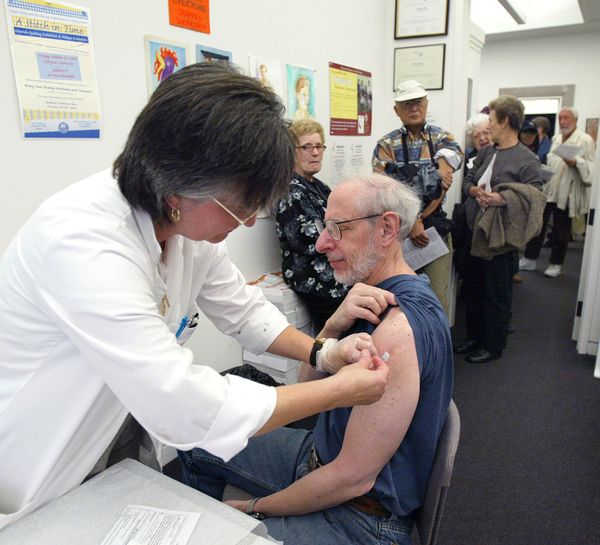
The MenACWY vaccine — which covers serogroups A, C, W, and Y, including the serogroup Y responsible for the ST-1466 surge — is routinely recommended for preteens and teens and for adults with HIV and other risk factors. Among 24 HIV patients infected with ST-1466 in 2022 and 2023, only 4 had received the MenACWY vaccine, and of those four, none were up to date on their doses. No ST-1466 cases have been identified in people who were fully up to date with MenACWY vaccination — a finding that directly demonstrates the vaccine's protective effect against this specific strain.

Against this backdrop, a January 2026 policy decision that made meningococcal vaccination "optional" for some adolescents — as part of a broader designation review under the current administration — has alarmed public health experts who warn that any reduction in vaccination coverage creates a larger susceptible population for a pathogen that is already surging.

People with HIV should specifically discuss MenACWY vaccination with their HIV care provider. Adults 30 to 60 who have never received MenACWY should discuss vaccination risk and benefit with their physician. Anyone who develops sudden, severe headache, fever, stiff neck, sensitivity to light, nausea, vomiting, or a non-blanching purple or red rash should seek emergency care immediately.

Frequently Asked Questions

Q: How many meningococcal disease cases were reported in 2025?

A: 463 confirmed and probable cases — the second-highest annual total in the U.S. since 2014, according to CDC surveillance data updated June 2026.

Q: What is the ST-1466 strain and why is it different?

A: ST-1466 is a specific serogroup Y Neisseria meningitidis strain that is disproportionately affecting Black adults ages 30–60 and people with HIV. It presents atypically (most often as bacteremia rather than meningitis), carries an 18% case-fatality rate, and has been detected with resistance to penicillin and ciprofloxacin.

Q: Is the MenACWY vaccine effective against this strain?

A: Yes. No confirmed ST-1466 cases have been identified in people fully up to date on MenACWY vaccination. Of 24 HIV patients infected with ST-1466 in 2022–2023, only 4 had received the vaccine.

Q: Who should prioritize getting vaccinated against meningococcal disease?

A: People with HIV (MenACWY is routinely recommended), adults ages 30–60 who have never received MenACWY, preteens and teens per the routine schedule (11–12 years with booster at 16), and college students living in dormitories.

Q: What are the warning signs of meningococcal disease?

A: Sudden severe headache, high fever, stiff neck, sensitivity to light, nausea, vomiting, altered mental status, and a non-blanching purple or red rash (petechiae or purpura) — any of these require immediate emergency care.

Sign up to read this article
Read news from 100's of titles, curated specifically for you.
Already a member? Sign in here
Related Stories
Top stories on inkl right now
One subscription that gives you access to news from hundreds of sites
Already a member? Sign in here
Our Picks
Fourteen days free
Download the app
One app. One membership.
100+ trusted global sources.