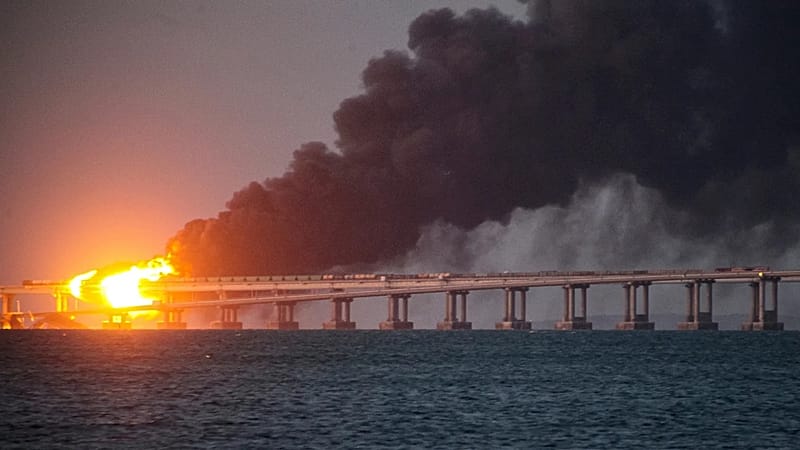
Eight men who were handed life sentences by Russian judges over an attack on a bridge linking the Moscow-annexed Ukrainian peninsula of Crimea to Russia issued a joint appeal to be freed on Tuesday, saying they did not know about the Kyiv-planned operation.
The 2022 blast killed five people and badly damaged the Kerch Bridge, which was built after Russia occupied and unilaterally annexed the region from Ukraine in 2014 in a show of Russian President Vladimir Putin's ambitions.
The bridge has been struck in two further major attacks in 2023 and 2025, both carried out by Ukrainian forces as they pushed back against Russia’s full-scale invasion launched in early 2022.
The eight men, hailing from Russia, Ukraine and Armenia, appealed to Putin, US President Donald Trump and Ukraine's President Volodymyr Zelenskyy to include them in any prisoner releases agreed in talks on how to end Russia's ongoing all-out war.
They were jailed last year but have always denied their guilt, describing themselves in their plea for freedom as "eight ordinary people ... who got up every day to earn for bread, pay rent, hug their kids."

"But now we are 'terrorists'. We are sentenced to life in prison, to a slow and degrading death in the cement cages of Russian prisons," they said in the letter published by Russia's rights group Memorial.
Some of the men were linked to the transport of construction material, which turned out to have been packed with hidden explosives, but they have always insisted they did not know about it.
The men include the head of a St Petersburg logistics company, farmers and fruit traders from occupied Ukraine, and a truck driver.
At the sentencing in November, logistics and supply manager Oleg Antipov, who had found a driver to transport materials to Crimea, shouted: "We are innocent."

In 2023, the then-head of Ukraine's security service, Vasyl Malyuk, admitted Kyiv had used "so many people in the dark" for the attack and said Moscow had arrested people who were "in reality engaged in their usual everyday business."
Among them is farmer Roman Solomko from occupied Ukraine who said he advised a neighbour on how to bring materials into Russia following the imposition of Western sanctions. He insisted he was unaware of the explosives.
The other men include fruit trader Vladimir Zlob, warehouse owners Artem and Georgy Azatyan, another trader, Alexander Bylin, and Armenian trucker Artur Terchanyan, who say they were part of what they believed was regular transport logistics.