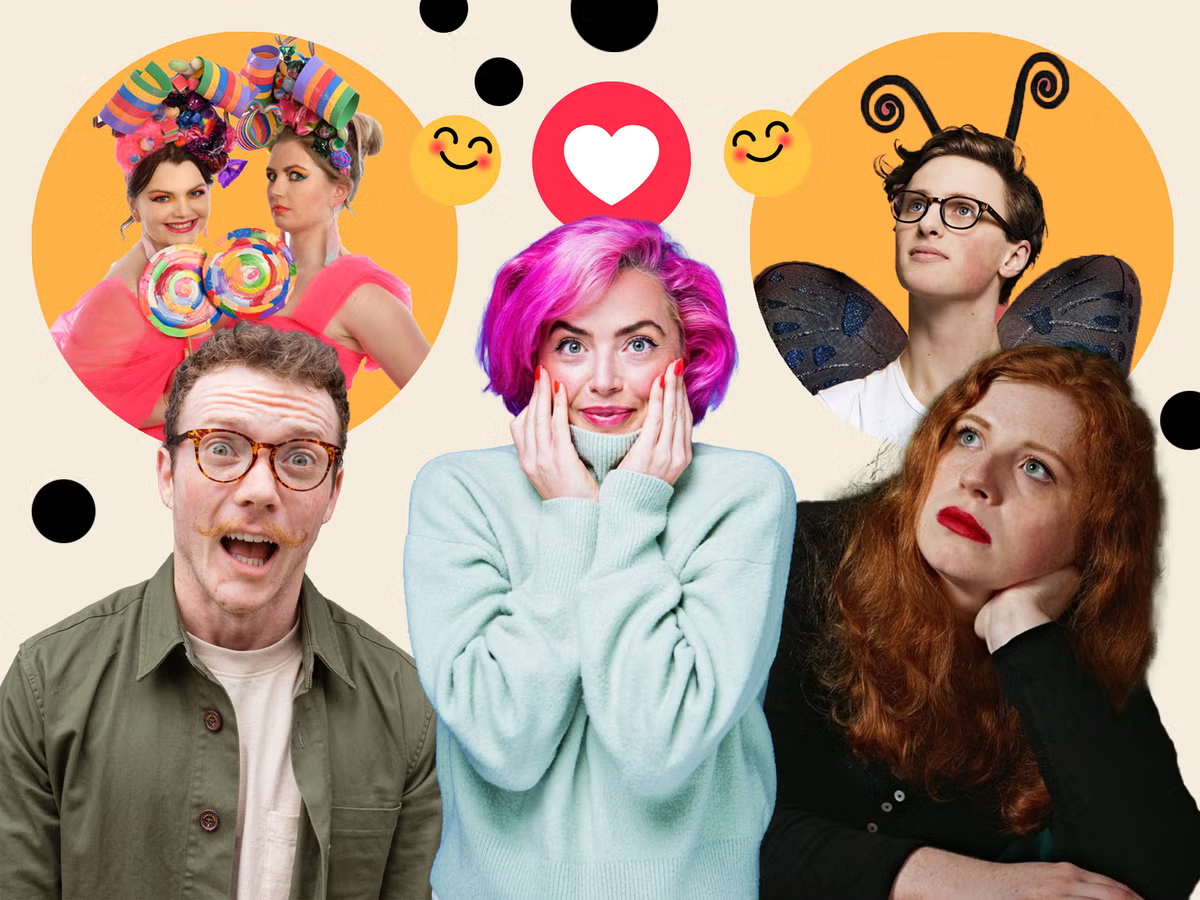
When TikTok and YouTube sensation Max Fosh first started performing stand-up comedy last year, one word kept finding its way into his audience feedback. “Actually.” As in: “That was actually really good.” “I said, ‘That’s really fine, but I would rather you take away the word “actually” – don’t sound so surprised!’” Fosh tells me. And – actually – maybe it’s not such a bad thing. “It’s always great when I exceed expectations of what people think it’s going to be.”
Those expectations, implicitly, are that internet comedians are all one-trick ponies hoping to coast through on the support of prebuilt online fanbases. Social media has dramatically changed the comedy scene. An industry once stereotyped as a boys’ club has had its barrier to entry lowered by the internet. Anyone with a phone can now make funny videos and anyone, on platforms such as TikTok, can go viral and find an audience. But with that has come suspicion, prompting a narrative of an “us versus them” divide between the old guard and new whippersnappers.