In the years following the Second World War, as industries, harbours, and residential areas developed, there was growing fear amongst environmentalists that the dune region in Indiana would disappear forever.
Get breaking news anytime, anywhere. Download the TOI app now!

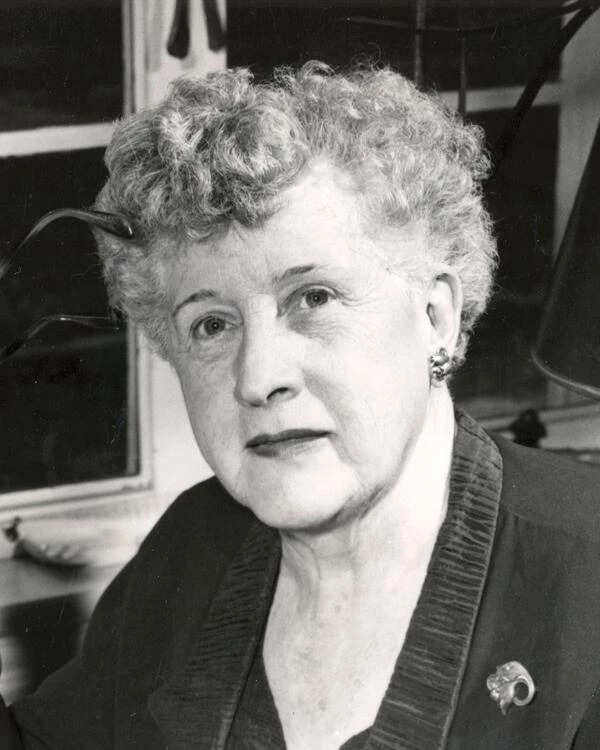
The National Park Service profile of Dorothy Buell describes how one determined woman turned local concern into a movement that eventually protected acres of dunes. Rather than launching a nationwide campaign from the outset, Buell began with a gathering of just 25 women in her living room. That meeting became the foundation of an organisation that spent years building public support, working with scientists, educating communities and urging political leaders to preserve a landscape many believed could still be saved.
Her contributions helped to ensure that a natural habitat of exceptional ecological and aesthetic worth would become part of Indiana Dunes National Park.
Living room gathering to conservation movement
Before Dorothy Buell began her crusade, she was already well acquainted with the Indiana Dunes. She knew that the region had a great deal of ecological diversity and beauty in one small geographic area. Following the end of World War II, northwestern Indiana underwent rapid industrialisation, and she understood that if nothing was done soon, the dunes could be forever changed.
According to the National Park Service profile, Buell invited 25 women to meet in her living room in 1952. Together they founded Save the Dunes Council, an organisation dedicated to protecting the remaining dune landscape. What began as a living-room discussion soon developed into a structured conservation effort that reached communities across Indiana and beyond.
Instead of relying solely on emotional appeals, the group focused on public education. Members organised meetings, spoke with residents, distributed information and encouraged people to understand why the dunes mattered. They believed that lasting protection would only come if the public recognised the scientific and environmental importance of the landscape as well as its scenic value.
With increasing numbers of participants from all walks of life, the campaign eventually developed into a conservation campaign that gained national recognition.
More than just sand dunes
Most tourists regarded the Indiana Dunes as nothing but a sandy landscape on the shores of Lake Michigan. In reality, the Indiana Dunes were famous for their exceptional biological variety. There were beaches, forests, prairies and wetlands within the area where one could find different types of plants and animals.
The National Park Service explains that protecting the dunes meant preserving an entire ecosystem rather than isolated stretches of sand. Each habitat was part of a larger natural system that had developed over thousands of years. Losing sections of the dunes to development would therefore affect far more than the visible landscape.
Patience in conservation was appreciated by Buell. She did not focus on getting an instant win but continued to try to obtain backing. Buell and her colleagues were talking to elected officials, soliciting public participation, and making sure that the significance of the dunes was not overlooked in the process of development.
Their persistence gradually won over decision-makers. Public awareness increased, and the campaign demonstrated that protecting the dunes enjoyed support far beyond a small group of residents. This sustained effort helped create the momentum needed for long-term conservation measures. Each discussion, letter and meeting helped build support for protecting the dunes.
Conservation legacy
Dorothy Buell and her organisation managed to contribute to the creation of Indiana Dunes National Lakeshore, which has been renamed Indiana Dunes National Park. The impact of Buell’s work goes beyond the park boundaries. It is an example of how local efforts may affect national conservation policies if communities continue to be persistent about their goals. The difference is that Dorothy Buell did not have political influence or money at the start.
The National Park Service presents her campaign as an example of effective citizen-led conservation. Rather than opposing development outright, Buell focused on protecting a landscape whose ecological and educational value deserved lasting recognition. That practical approach helped build support among people with different interests while keeping attention on the importance of preserving the dunes themselves.
To date, some of the beaches, forests, wetlands, and dunes conserved through her efforts are included in Indiana Dunes National Park. It is difficult to know whether the conservation effort began with that living-room meeting. This shows that conservation does not have to begin with government or formal organisations; it can also start with a small group of people working together for a common cause. The living room meeting of 25 women was the very first step in the conservation campaign.