Get all your news in one place.
100's of premium titles.
One app.
Start reading
The Times of India
The Times of India
World
Karan Manral

Mecca Pact and Bangladesh: Why Dhaka is keeping the door open to 'Islamic Nato'

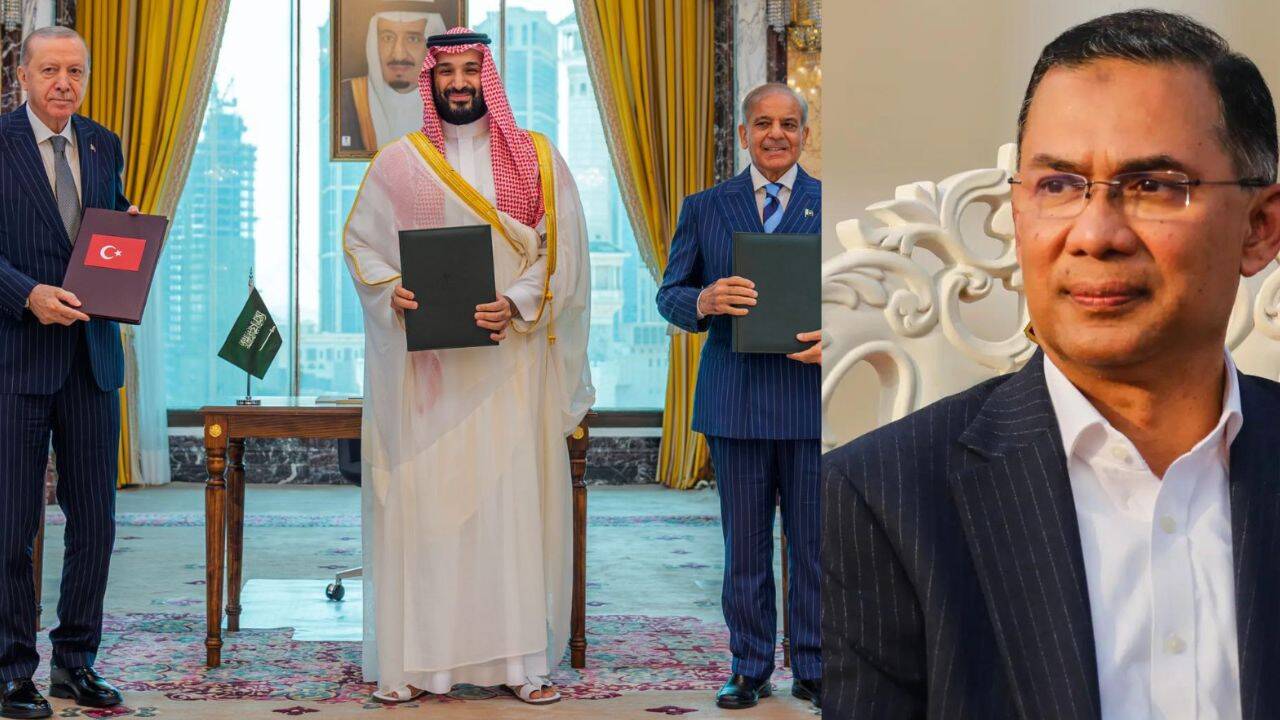
In August, Saudi Arabia, Pakistan, and Türkiye unveiled what has informally been dubbed the “Islamic Nato”. Named after Makkah, Islam’s holiest city, the Makkah Joint Defence Agreement or simply the Mecca pact—is based on the principle that an armed attack on one member would be considered an attack on all three, similar to Nato's Article 5.

Get breaking news anytime, anywhere. Download the TOI app now!

Since the pact was announced, Bangladesh has signalled that it could join the grouping. Bangladesh Prime Minister Tarique Rahman has not publicly commented on the possibility, but his foreign minister and junior ministers have said Dhaka is “interested” and would respond “positively” if invited.

Against that backdrop, Saudi Crown Prince and Prime Minister Mohammed bin Salman’s invitation to Tarique Rahman to visit the Kingdom is also likely to attract added attention.

What lies behind Dhaka’s interest in the pact is less clear. But several factors could be shaping its thinking.

Mecca pact: A different security calculus for Dhaka

Over the years, Bangladesh, as a member of the Non-Aligned Movement, has followed a policy of not taking sides with major powers during conflicts. Experts also point out that, unlike the three founding members of the Mecca security alliance, Bangladesh does not face the kind of immediate external military threat confronting some of the pact’s founding members.

Others have raised concerns about the agreement’s “collective security” principle, arguing that it could draw Dhaka into a war not of its own making.

Why, then, are Bangladesh’s ministers talking about joining the tri-nation agreement?

According to Professor Sreeradha Datta, who teaches International Affairs at OP Jindal Global University, Bangladesh would definitely want to leverage the interest of other countries in it.

“I think right now, Bangladesh would like to have a reach beyond the (immediate) region. And if others are getting interested in Bangladesh, why wouldn't they leverage it?” Professor Datta told The Times of India.

Besides, the three countries would offer Bangladesh different advantages. Pakistan brings military and strategic weight in South Asia and is the only Muslim-majority country with nuclear weapons; Türkiye offers high-tech defence capabilities and technology, as well as Nato’s second-largest military; and Saudi Arabia brings economic and diplomatic weight.

Taken together, these ties could give Dhaka access to a wider range of strategic, military and economic partnerships, while allowing it to expand its reach beyond the immediate region. In return, Bangladesh would bring a sizable military to the alliance and give the grouping a member strategically located on the Bay of Bengal.

The 'Muslim family' argument

On August 30, a day before the alliance’s first meeting in Türkiye's Istanbul, Bangladesh’s foreign affairs minister Khalilur Rahman reiterated a point he had made previously: that joining the Mecca pact was a matter for the world’s “Muslim family."

Sign up to read this article
Read news from 100's of titles, curated specifically for you.
Already a member? Sign in here
Related Stories
Top stories on inkl right now
One subscription that gives you access to news from hundreds of sites
Already a member? Sign in here
Our Picks
Fourteen days free
Download the app
One app. One membership.
100+ trusted global sources.