MAITLAND mayor Philip Penfold has been accused of abusing his power amid allegations he was behind moves to censor an art exhibition featuring a history of the so-called 'Jocko Graves' hitching post statue.
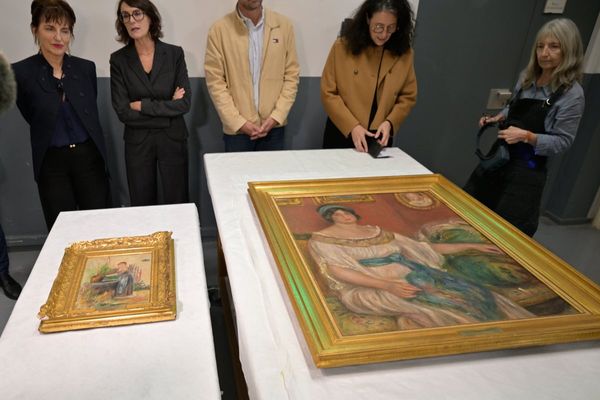
Osvaldo Budet's display, which is part of Maitland Regional Art Gallery's Upriver Downriver exhibition, focuses on the controversial Maitland black boy hitching post, informed by his experiences growing up in Puerto Rico, a US territory with a history impacted by slavery, racism and colonialism.

Budet says he included a council-commissioned heritage assessment report, titled Hitching Post, Maitland, in his display, but the report was removed, he says, and later replaced only after he pressured the council to return it.
The council has already faced strong backlash for installing a sign outside the exhibition, at the behest of Cr Penfold, warning viewers that those who admire the hitching post statue could be offended by the display.
"While council recognises and shares those views, council also respects freedom of expression and the artist's right to present this exhibition on this occasion," the sign reads.
Budet said the 'freedom of expression' reference was ironic given the council wanted to remove one of the items on display.
"I got a call from the gallery saying, I'm sorry but we've been forced to remove this from the archive," Budet said of the council-commissioned report. "So they went there and removed that document."
He said he later spoke with an executive at the council. "He was basically trying to explain that they moved that because it's distracting the public from my message," Budet said.
"I understand that some people love it," Budet said of the statue. "But it is still racist."
The mayor's intervention was an abuse of power, Budet said.
"You have the mayor of a city deciding what is art or not, deciding what an art gallery should have or not, and it's bullying," Budet said.
The 60-page report included in Budet's exhibition was prepared by GML Heritage and tabled at a Maitland City Council meeting in 2024. It provides a detailed history of the hitching post which it says is thought by many to depict a 12-year-old African American slave named Jocko Graves, a story which it says is contested and uncorroborated. Others have described it as a "racist garden gnome".
"There has been a shift in consciousness as socially and culturally we grapple with legacies of racism, colonialism, and injustice and their often 'silent' expression in the public domain," it says.
The report goes on to make a series of recommendations, none of which the council has actioned.
The first recommendation was, if the statue remains on Maitland's High Street, it be accompanied by a "reinterpretation" plaque describing its contested history, including information about First Nations history and cultural heritage, with public consultation.
The second option was the removal of the statue. If it was displayed elsewhere, it should be accompanied by "interpretation" informed by community consultation, the report says. The third option was for its removal and long-term storage.
"Given the sensitivity of the hitching post, it may be considered for removal from the public domain," the report says.
Once removed, an interpretive plaque could be installed in its place.
Maitland City Council said on Tuesday that it acknowledged the "Jocko Graves hitching post" evoked different opinions among members of the community.
"There is a range of signage installed at the Upriver Downriver exhibition to acknowledge and address this," the statement said.
The council did not answer questions about whether the report was removed, and later returned, or where the wording for the sign came from.
Cr Penfold has not responded to the Newcastle Herald's questions.
Previously, in council chambers, Cr Penfold said it was his idea to introduce the sign at the entry of Budet's display "in accordance with consents afforded to me between council meetings".
He did it to acknowledge "the multiple generations over the last 150 years, who may well find it racist to have an exhibition that is clearly opposed to the council's positions be listed as well [sic]", he said.
Councillor Amelia Atkinson said she was disgusted and appalled by the mayor's intervention.
The artist has a transcript of a recorded telephone conversation with a senior member of council staff who questions him about why he included the report in his display in the first place, later saying he could reconsider talking internally around "how we can put it back in".
The mayoral minute in which Cr Penfold invited the council to express "high level disappointment" in the decision to exhibit a display "disparaging the Jocko Graves hitching post" was a surprise addition to the council meeting on July 21, Cr Atkinson said.
"It was a retrospective resolution saying that the sign was appropriate and that council did indeed share those views," Cr Atkinson said.
"I was not comfortable nor happy with myself as an elected member of that body being represented like that."
The mayor had the sign installed using his delegation under Section 226 of the Local Government Act, usually reserved to deal with emergencies, Cr Atkinson said.
The council changed its policy regarding management of the museum in 2025, removing from the 2019 policy a clause saying: "Artworks shall not be excluded from exhibition on moral, political, racist, religious, sexist, language or other sensitive grounds unless subject to federal or state prohibition".
Cr Atkinson confirmed the recommendations contained in the heritage assessment report were never actioned, and the council does not have an Aboriginal Reference Group, which was disbanded in 2021, or a Reconciliation Action Plan working group, which was formed in November 2020 and stopped meeting in September 2022.