
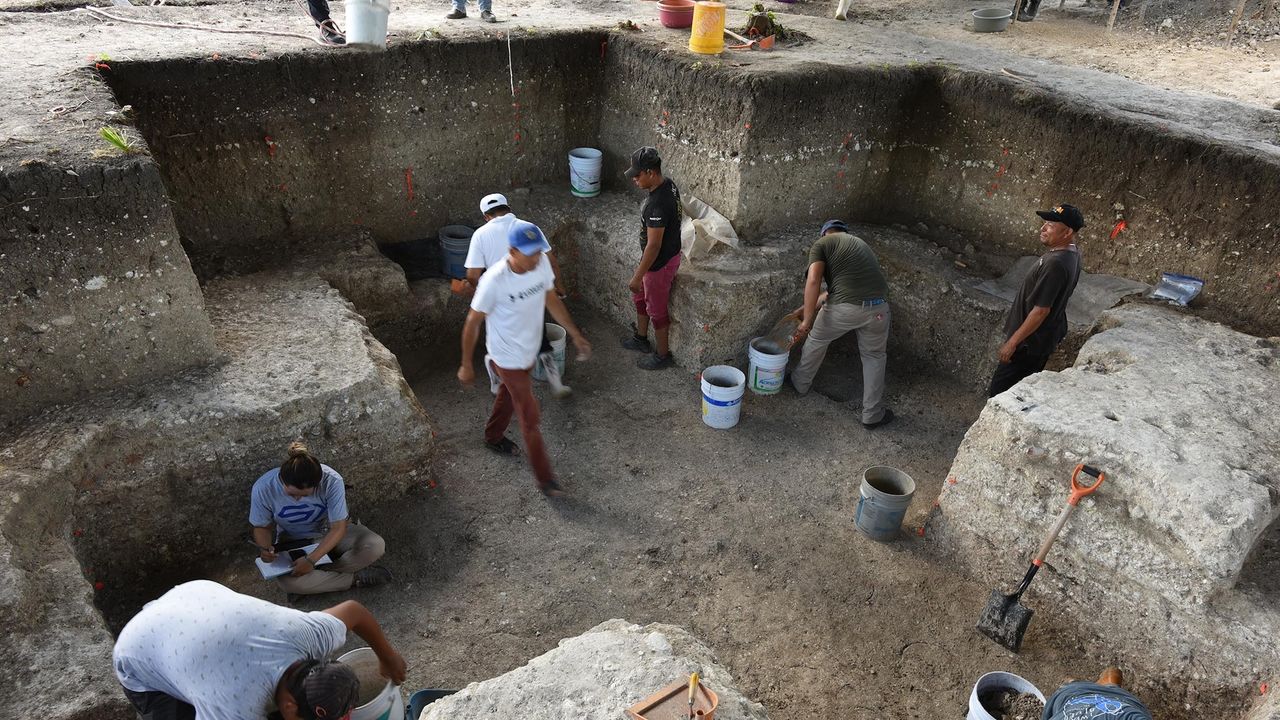
A 3,000-year-old Maya site is actually a giant, city-size map depicting the "order of the universe," researchers say. The ruin, in what is now southeastern Mexico, was a cosmogram — a representation of how ancient people at the site viewed the cosmos, a new study suggests.
The site, known as Aguada Fénix, is the "oldest and largest monumental architecture in the Maya area" and is larger than many ancient cities in Mesoamerica, the researchers wrote in the study. Although its construction was a major endeavor, its cultural significance, likely motivated people to help construct it, meaning its builders were probably not coerced into labor, the researchers suggested.