Get all your news in one place.
100's of premium titles.
One app.
Start reading
The Times of India
The Times of India
World
TOI World Desk

Martian Meteorite Record Sale: Niger probes ‘illicit international trafficking’; trade rules under scrutiny

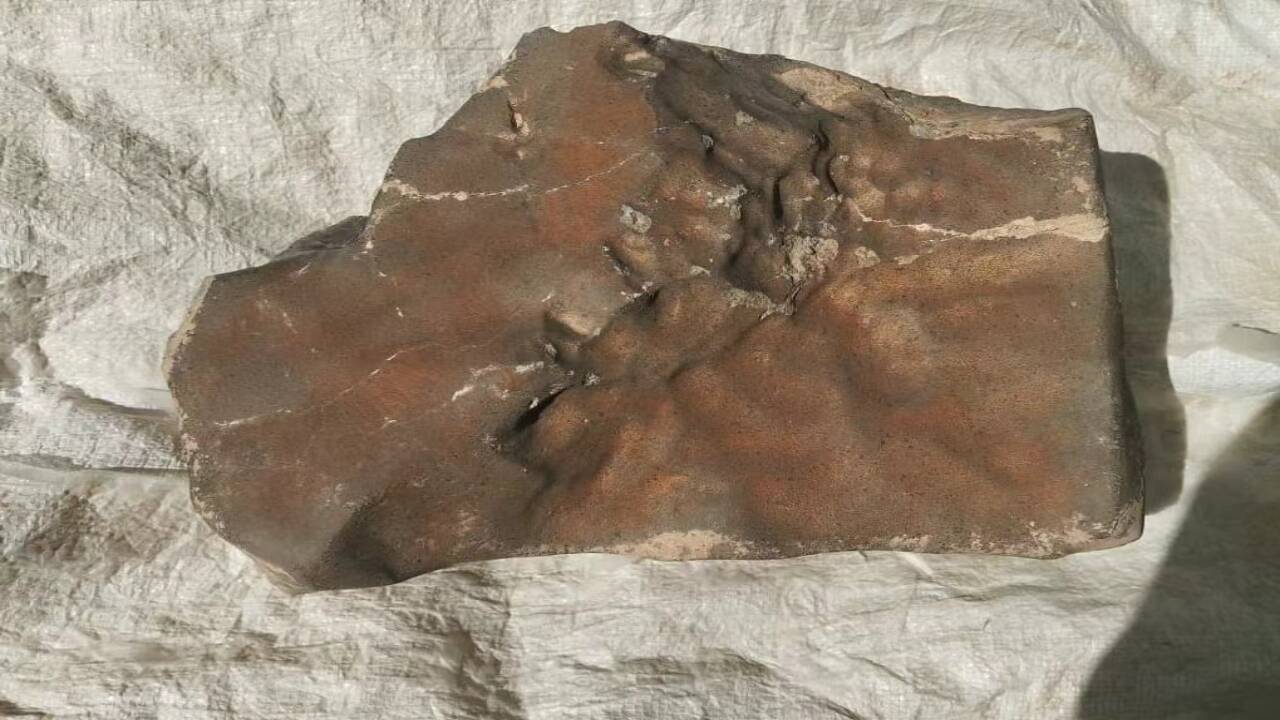
The majority of rocks found in the middle of a desert remain just that: ordinary stones that have been sculpted over thousands of years by heat and wind. Occasionally, however, someone discovers a rock that has no right to be there, having come from somewhere other than the immediate surroundings. On 16 July 2023, a meteorite hunter found a single 24.67-kilogram stone in the Kefkaf region of Niger’s Agadez area; it was later classified as a Martian shergottite.

Get breaking news anytime, anywhere. Download the TOI app now!

The rock, eventually designated as Northwest Africa 16788, or NWA 16788 for short, weighed a hefty 54 pounds, around the weight of a car tyre, and was over 15 inches across at its widest point. Meteorite hunting is itself a specialised activity, and deserts like the Sahara are desirable hunting grounds precisely because their bare, rock-free stretches of sand make an out-of-place stone far simpler to find than it would be in practically any other place on Earth.

Confirming a piece of another planet

Finding a strange-looking rock is one thing, demonstrating where it truly came from is a whole other issue. The reddish colour and glassy fusion crust on NWA 16788 were early indicators that something remarkable had been found, but further laboratory investigation of the rock’s mineral and gas makeup was needed to prove the scientific significance of the find. NWA 16788 was classified as an olivine microgabbroic shergottite, an igneous type of Martian meteorite whose mineral texture records its crystallization history, in the Meteoritical Bulletin Database , the official database of approved meteorite names and classifications. Its Martian origin was confirmed by matching the gases contained in the rock to the atmospheric measurements by NASA’s Viking landers in the 1970s. The Meteoritical Bulletin entry also records that the stone was found on 16 July 2023 in the Kefkaf region of Niger, with a 24.67-kilogram main mass and a single piece recovered. Its description identifies a porphyritic rock with olivine phenocrysts up to 3 millimetres across, shock-melted areas and chemically zoned olivine and pyroxene ranging from pigeonite to augite.

That placed NWA 16788 in the company of a very few indeed. Of all meteorites ever found on Earth, just a small fraction came from Mars. NASA estimates that more than 50,000 meteorites have been recovered on Earth, and the Martian material is a small fraction of that total, roughly equal to the number of meteorites known to have originated from the Moon. NWA 16788 was unusually large even among Martian meteorites. Sotheby’s said the specimen represented nearly 7% of the total known mass of Martian material on Earth and was about 70% larger than the next-largest known piece. The 24.67-kilogram stone is also the largest individual Martian meteorite recorded in the Meteoritical Bulletin Database.

From a private gallery in Tuscany to a saleroom in New York

Before ever going to auction, the meteorite was displayed to the public at the Italian Space Agency in Rome for European Researchers’ Night in 2024, before spending some time in a private exhibition in Tuscany. In July 2025, it was a real moment of recognition when Sotheby’s put it at the centre of a natural history sale in New York, officially branding it as the largest piece of Mars ever found on Earth. Sotheby noted that the meteorite showed very little terrestrial weathering, suggesting that it had spent relatively little time exposed to Earth’s surface environment.

Before the sale, Sotheby's had predicted the meteorite would bring somewhere between two and four million dollars. The auction began with two advance bids already in place, and the tension grew as phone and online bidders competed until the gavel fell, far exceeding expectations. Including the hammer at 4.3 million dollars, the total amount, including fees and taxes, was just above 5.3 million dollars, making NWA 16788 immediately the most expensive meteorite ever sold at auction.

A record sale that posed unpleasant questions

Sotheby’s executives said they have never disclosed the buyer’s identity, which is not uncommon for high-value natural history sales of this nature. What happened next was anything but normal. After the sale, questions were raised in Niger about how the meteorite had been removed from the country, prompting authorities to investigate its discovery and export.

Sign up to read this article
Read news from 100's of titles, curated specifically for you.
Already a member? Sign in here
Related Stories
Top stories on inkl right now
One subscription that gives you access to news from hundreds of sites
Already a member? Sign in here
Our Picks
Fourteen days free
Download the app
One app. One membership.
100+ trusted global sources.