
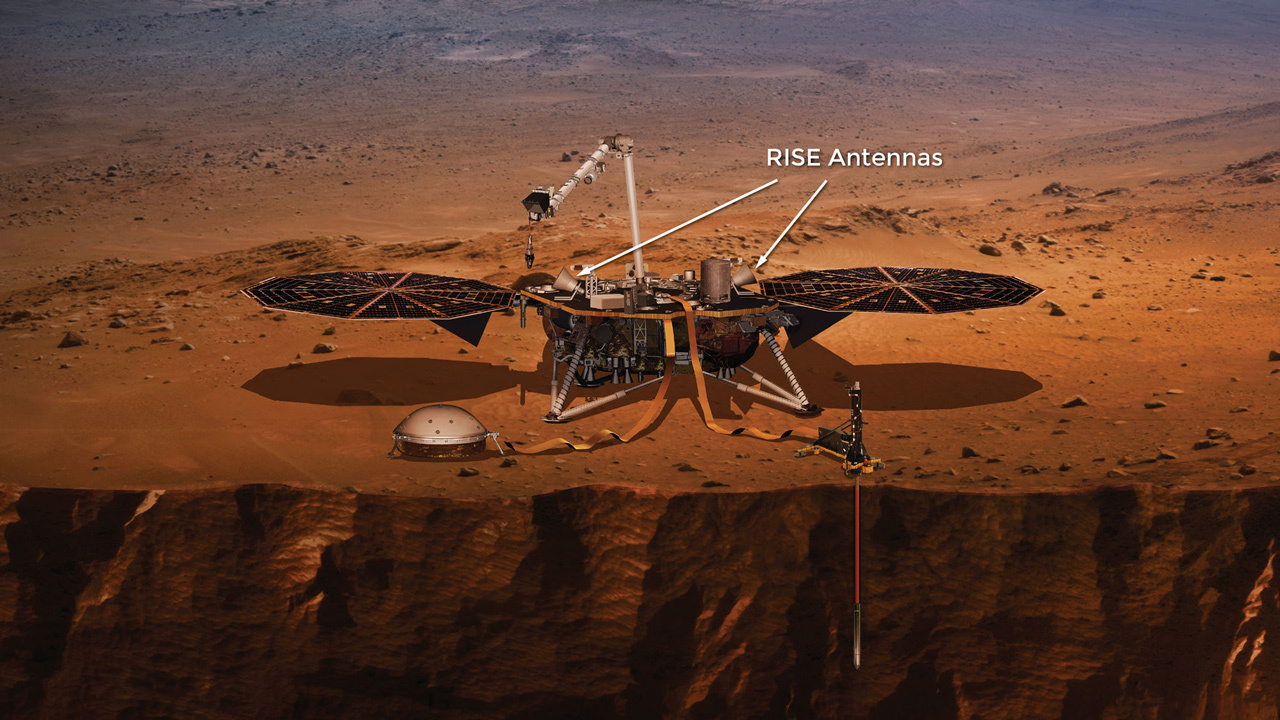
The length of Mars' day is shortening by three-quarters of a millisecond each year as the planet’s rotation spins up, according to new results from NASA's InSight lander.
A standard day on Mars, or "sol" as it is called, is 24 hours and 37 minutes long, but measuring that length of day to an accuracy of a fraction of a millisecond has revealed the planet’s rotation rate is speeding up by a tiny amount. Planetary scientists are not entirely sure why this is happening, but it is likely related to the redistribution of Mars' mass, which can have an effect on the planet's rotation like an ice skater pulling in their arms to spin faster. This redistribution might be caused by the accumulation of ice on Mars' polar caps, experts believe, or by the surface itself slowly rebounding from residing under the weight of immense glaciers that existed at equatorial latitudes during the world's most recent ice ages, which ended about 400,000 years ago.














