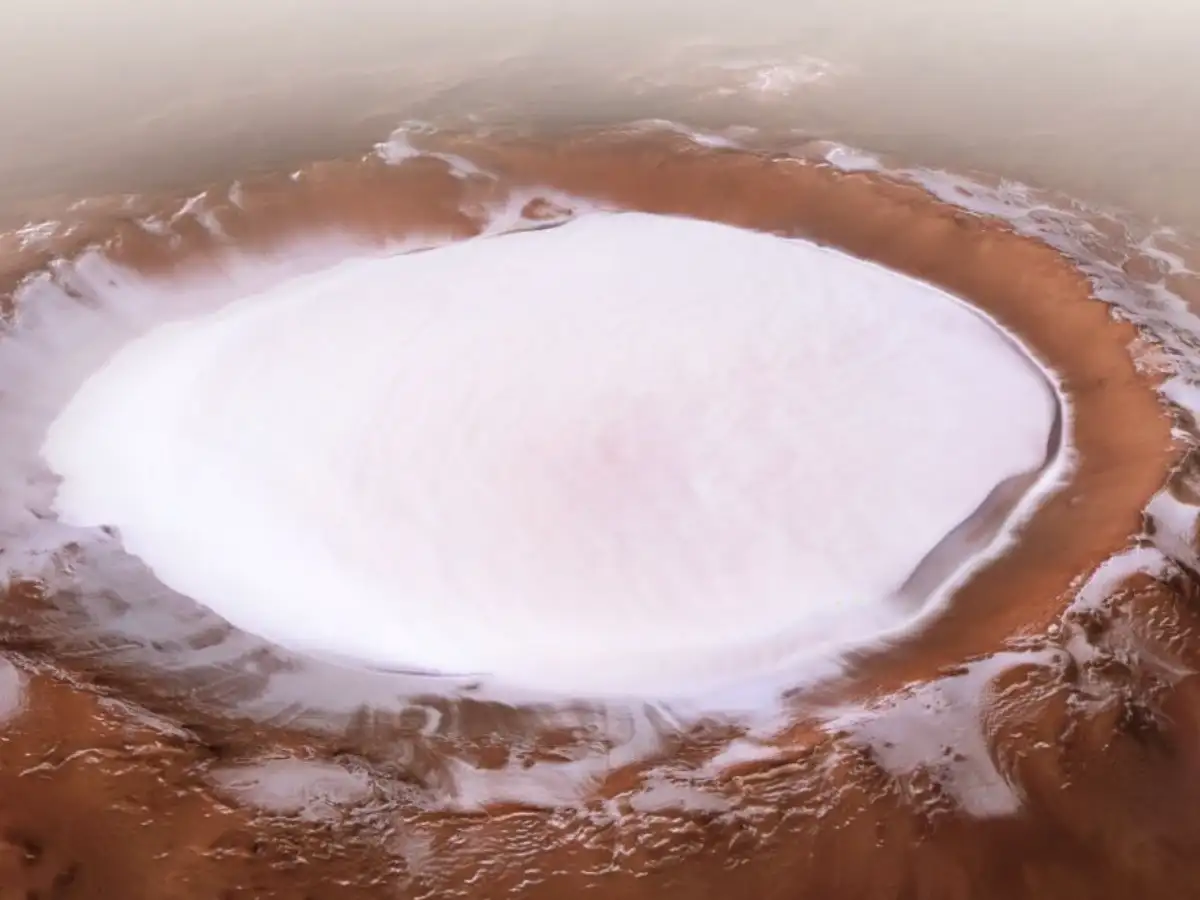
Although it may be that Mars lost its rivers and lakes billions of years ago, the rocks found within Jezero Crater indicate that water did not vanish from the area altogether. The Perseverance rover that NASA is using to study Mars has found that the same stretch of the Martian surface has been changed by different water systems over time. The findings point to ancient groundwater, water associated with Jezero’s lake and a much later episode involving hot fluids moving beneath the surface.
The discovery comes from the crater’s puzzling Margin Unit, a geological area along the inner edge of Jezero Crater. Scientists initially expected Perseverance to encounter sedimentary rocks formed from material deposited by the ancient lake. Instead, the rover found igneous rocks that had formed deep underground and were later exposed and repeatedly modified by water.