Get all your news in one place.
100's of premium titles.
One app.
Start reading
Barchart
Barchart
Caleb Naysmith

Mark Cuban Says He’s ‘All for Universal Care’ But Warns It Won’t ‘Automagically Work,’ and the ‘Best First Step’ Is This Warren-Hawley Bill

In a recent Bluesky thread, Mark Cuban told Medicare for All supporters that they are lobbying for the wrong thing first. "If you want change and a chance for M4A, why aren't you calling your senator screaming for them to support the Break Up Big Medicine Bill from Sens. Warren and Hawley?" he wrote. "That's your best first step."

Cuban was not arguing against universal coverage. In the parent post, he wrote that he is "all for Universal Care" but against “thinking it will automagically work if M4A legislation is passed." He added, ”We should be challenging pols to provide a plan." The argument focuses on the supply chain of healthcare — pass single payer on top of the existing drug-distribution system, and you have changed who writes the check without changing what the check pays for.
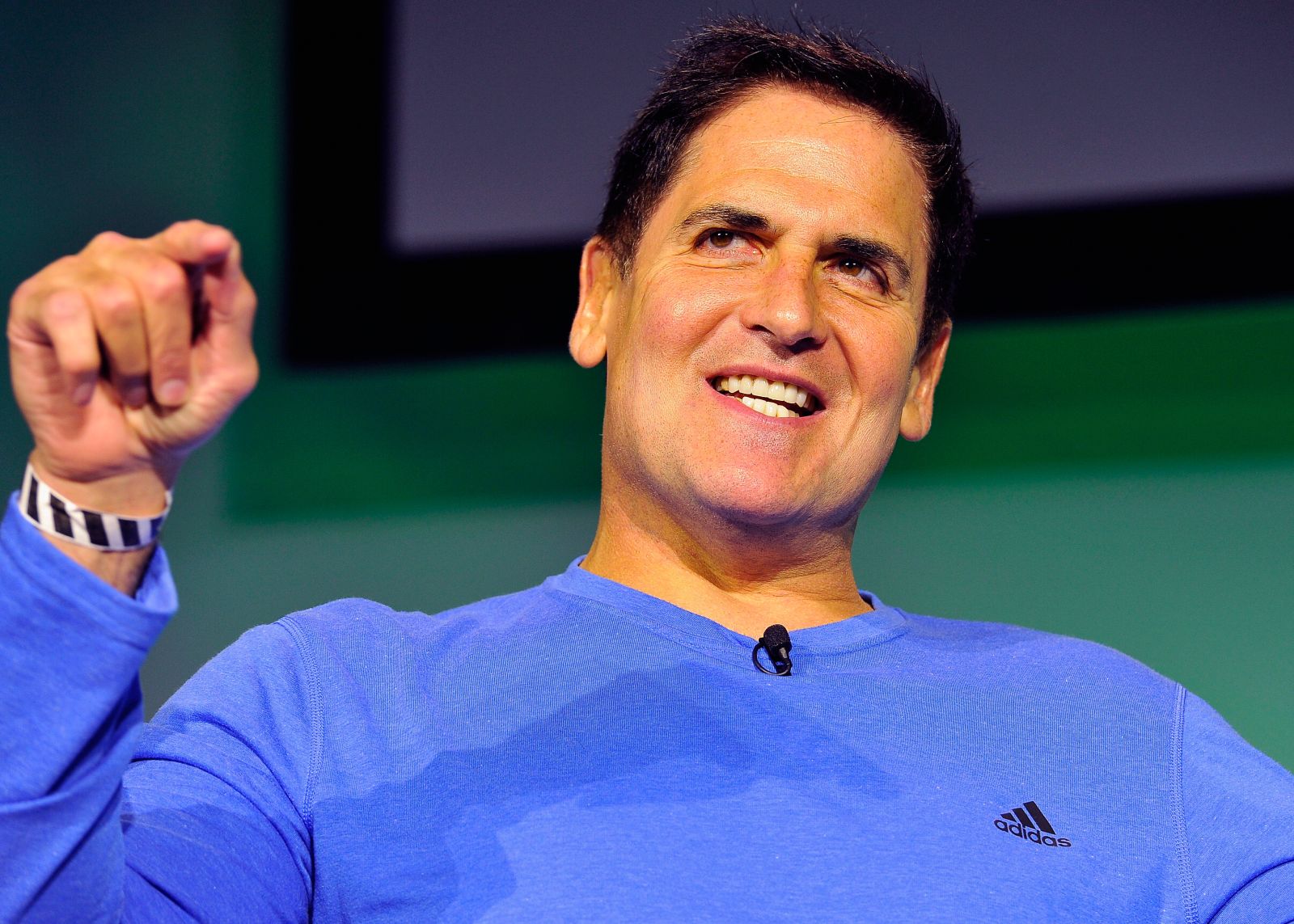
Cuban co-founded Cost Plus Drugs, which sells generics at a disclosed markup and competes squarely with the pharmacy benefit managers the bill he is promoting would break apart. He has said as much repeatedly, so he isn't disinterested, but he has consistently been pro-everyday American. Cuban has also made a version of this case before, arguing that the fix is to remove insurance companies from the equation entirely.

Sponsored Content: This Flying Car Startup Is Open to Investors — See What’s Behind the Opportunity

The bill itself is S.3822, the Break Up Big Medicine Act, introduced on Feb. 10, 2026 by Sen. Elizabeth Warren and Sen. Josh Hawley and referred to the Senate Judiciary Committee. Its core provision is a common-ownership ban; a parent company would be barred from owning both a pharmacy benefit manager or insurer and a medical provider or management services organization. It extends the same prohibition to parent companies of prescription drug and medical-device wholesalers. Enforcement would be unusually broad, with the Federal Trade Commission (FTC), the U.S. Department of Health and Human Services (HHS), the U.S. Department of Justice (DOJ), state attorneys general, and private parties all able to bring suit.

Translated into tickers, that is an attack on the structure of three of the largest companies in U.S. healthcare. UnitedHealth (UNH) owns Optum Rx alongside one of the country's largest physician employers. CVS Health (CVS) owns Caremark, a retail pharmacy, and Aetna. Cigna (CI) owns Express Scripts. Between them, the three largest pharmacy benefit managers (PBMs) process the large majority of U.S. prescription claims, and in each case the PBM sits inside the same corporate parent as an insurer, a provider network, or both. A common-ownership ban would, in theory, reduce the non-competitive aspects of these vertical monopolies.

That is the point Cuban has been circling for months. He has argued the industry's giants have become too big to care, and that divestiture is the best remedy. Cuban publicly urged senators to back this same bill in the spring.

The most unexpected line in the thread is not about insurers at all. "I spend my days trying to convince CEOs to move away from conglomerates that keep prices up," he wrote. "To transparent companies, direct contracts and other resources that push prices down […] but employees fight any change." The obstacle he names is the workers whose costs would fall, people who have learned that any change to their health plan tends to arrive as a downgrade, and who resist it on those grounds regardless of what the spreadsheet says.

Set against that, the legislative odds are not encouraging. S.3822 has sat in Judiciary since February with no floor action, and the pairing of Warren and Hawley, which reads as broad bipartisanship, has historically been a signal that a bill has passionate support at both ends of the chamber and thin support in the middle. The industry's counterargument is that vertical integration lowers costs by cutting out intermediaries, a claim the bill's sponsors dispute and which the FTC has been examining for years.

For investors, the practical question is not whether Cuban is right. It is whether legislative risk of this specific shape — forced structural separation rather than a fine or a rebate rule — is priced into the big three at all. History suggests it mostly is not, because bills like this rarely move. That has also been true right up until the moment it wasn't.

Cuban's own closing note in the thread was the least billionaire-sounding thing in it: “Sorry for the novel. But I live this stuff every single day.”

Sign up to read this article
Read news from 100's of titles, curated specifically for you.
Already a member? Sign in here
Related Stories
Top stories on inkl right now
One subscription that gives you access to news from hundreds of sites
Already a member? Sign in here
Our Picks
Fourteen days free
Download the app
One app. One membership.
100+ trusted global sources.