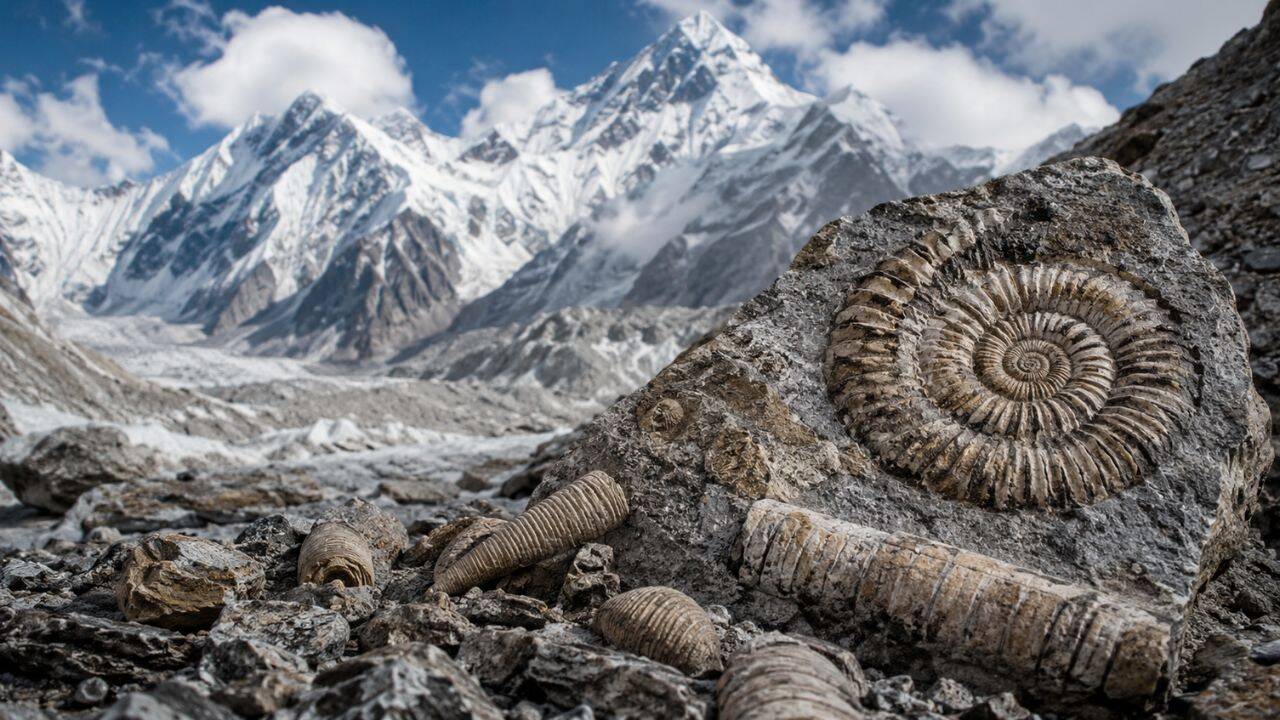
Standing on the summit of Mount Everest feels like reaching the highest possible point on Earth. The mountain rises nearly nine kilometres above sea level, surrounded by ice, rock and thin air. Yet the rocks beneath a climber’s boots tell a very different story. They do not speak of towering peaks or glaciers. They speak of a vanished ocean.
Geologists studying limestone collected from the summit pyramid of Everest have identified fossils of marine creatures that lived hundreds of millions of years ago. Among them are trilobites, crinoids and tiny crustaceans that once inhabited shallow tropical seas. According to research published in Wiley Library, titled “ Geology of the summit limestone of Mount Qomolangma (Everest) and cooling history of the Yellow Band under the Qomolangma detachmen t”, some of these fossils were recovered from limestone exposed just six metres below the mountain's highest point. The discovery highlights one of geology's most remarkable realities: the highest place on Earth was once part of an ancient seabed.