Closing summary
Donald Trump is committed to the success of Hungarian prime minister Viktor Orbán because his leadership is crucial for US national interests, the US secretary of state, Marco Rubio, has said. “President Trump is deeply committed to your success, because your success is our success,” Rubio said, standing next to Orbán at a joint press conference in Budapest.
At a news conference in Budapest, Rubio said US-Hungary relations - which both he and Orbán described as experiencing a “golden age” under Trump - go beyond mere diplomatic cooperation. “I’m going to be very blunt with you,” Rubio said. “The prime minister and the president have a very, very close personal relationship and working relationship, and I think it has been beneficial to our two countries.”
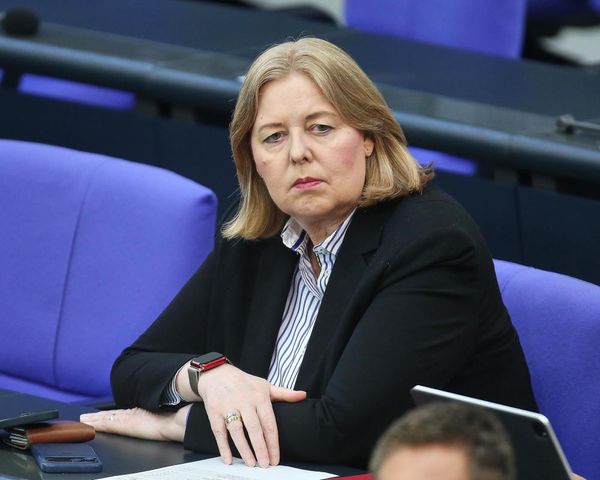
German finance minister Lars Klingbeil said on Monday the European Union was at a turning point in which countries should not hide behind national interests but accelerate progress to strengthen EU influence and sovereignty. “We want to cut through knots, we want to find solutions always with the goal of strengthening Europe’s sovereignty and making Europe strong,” Klingbeil said in Brussels. “This is a very European moment.”
Germany’s foreign minister Johann Wadephul suggested that France needs to boost its defence spending. “He repeatedly and correctly refers to our pursuit of European sovereignty,” Wadephul said of French president Emmanuel Macron. “Anyone who talks about it needs to act accordingly in their own country.”
The Kremlin has dismissed assessments from five European countries that concluded that the late Russian opposition leader Alexei Navalny was killed using a poison developed from a dart frog toxin administered by the Russian state two years ago. The assessment was made from the foreign ministries of the UK, France, Germany, Sweden and the Netherlands after analysis of material samples found on Navalny’s body.
Senior Ukrainian and Russian officials are to meet this week in Switzerland for a second round of talks brokered by the Trump administration, days before the fourth anniversary of Moscow’s full-scale invasion of Ukraine. The two-day meeting, kicking off on Tuesday, is expected to mirror negotiations held earlier this month in Abu Dhabi, with representatives from Washington, Kyiv and Moscow in attendance.
Avalanches from heavy snowfall in the European Alps claimed more lives over the weekend, as a train was derailed by a snow slide in Switzerland on Monday and roads and villages around Mont Blanc were closed or placed under evacuation orders. As large areas of the western Alps remained under a high risk of avalanche – following a week in which alerts reached category 5, the highest level – Swiss police said a train derailment caused by an avalanche injured five people near the town of Goppenstein.
Authorities in Cyprus have urged residents to reduce their water intake by 10% – the equivalent of two minutes’ use of running water each day – as Europe’s most south-easterly nation grapples with a once-in-a century drought. The appeal, announced alongside a €31m (£27m) package of emergency measures, comes as reservoirs hit record lows with little prospect of replenishment before the tourist season starts.
Spain announced earlier this month that it would seek to ban under-16s from using social media platforms, following Australia’s ban for under-16s in December and French lawmakers passing a bill that would ban social media use by under-15s. To enforce the ban, the Spanish government will reportedly seek to order platforms to put stringent age verification methods in place.
German finance minister Lars Klingbeil said on Monday the European Union was at a turning point in which countries should not hide behind national interests but accelerate progress to strengthen EU influence and sovereignty.
“We want to cut through knots, we want to find solutions always with the goal of strengthening Europe’s sovereignty and making Europe strong,” Klingbeil said in Brussels. “This is a very European moment.“
Speaking before a meeting of EU finance ministers, he said Germany was ready to make compromises. “The pace we have today at the European level is not commensurate with the challenges we face as Europe.”
Authorities in Cyprus have urged residents to reduce their water intake by 10% – the equivalent of two minutes’ use of running water each day – as Europe’s most south-easterly nation grapples with a once-in-a century drought.
The appeal, announced alongside a €31m (£27m) package of emergency measures, comes as reservoirs hit record lows with little prospect of replenishment before the tourist season starts.
“Everyone has to reduce their consumption,” said Eliana Tofa Christidou, who heads the country’s water development department. “Whether that is in the shower, brushing their teeth or using a washing machine. Times are critical and every drop now counts.”
It was, she told the Guardian, the Mediterranean island’s worst drought in living memory with dam inflows at their lowest since 1901, when hydrological records first begun. Vast tracts of land across the country have been baked dry, with prime forest areas desiccated and dying fast.
As other parts of Europe have this winter been lashed by rain, the sight of the church of St Nicholas in the Kouris reservoir, where water levels are reported to have dropped to just 12.2% of capacity, offered further proof of the worsening crisis.
Donald Trump is committed to the success of Hungarian prime minister Viktor Orbán because his leadership is crucial for US national interests, the US secretary of state, Marco Rubio, has said.
“President Trump is deeply committed to your success, because your success is our success,” Rubio said, standing next to Orbán at a joint press conference in Budapest.
Taking questions from journalists, Rubio also said that the US seemed to be the “only nation on Earth” that can get Ukrainian and Russian representatives “to the table to talk” to try to bring an end to the war.
Spain announced earlier this month that it would seek to ban under-16s from using social media platforms, following Australia’s ban for under-16s in December and French lawmakers passing a bill that would ban social media use by under-15s.
To enforce the ban, the Spanish government will reportedly seek to order platforms to put stringent age verification methods in place.
Similarly, the Danish government announced last year it had secured an agreement in parliament to ban access to social media for under-15s.
The flurry of legislative activity is in response to growing concerns about young people’s mental health, ability to concentrate and their easy access to harmful content online.
The EU’s Digital Services Act requires social media platforms to ensure there are measures including parental controls and age verification tools before young users can access the apps.
EU officials have acknowledged that enforcing the regulations aiming at protecting children online has been difficult because it requires cooperation between member states and many resources.
Updated
Over in the UK, the British prime minister Keir Starmer has promised to react more quickly to close loopholes in laws in order to protect children online.
The UK government has plans to consult on minimum age limits for social media and restrict children’s access to virtual private networks, which could be used to defy age verification rules on pornography websites.
You can read the latest over in our UK politics live blog.
Updated
Avalanches from heavy snowfall in the European Alps claimed more lives over the weekend, as a train was derailed by a snow slide in Switzerland on Monday and roads and villages around Mont Blanc were closed or placed under evacuation orders.
As large areas of the western Alps remained under a high risk of avalanche – following a week in which alerts reached category 5, the highest level – Swiss police said a train derailment caused by an avalanche injured five people near the town of Goppenstein.
The incident in Switzerland followed a series of deadly avalanches in the Alps in recent days involving skiers.
The avalanche that killed two skiers in the Couloir Vesses, a popular off-piste route in Courmayeur, northern Italy.
A French national, who was skiing alone, was also killed. The Albertville prosecutor, Benoît Bachelet, said the ski instructor, who avoided injury, tested negative after taking blood and drug tests. He added that another British person had sustained minor injuries.
In another incident on Sunday, an avalanche claimed the lives of two skiers on the Italian side of Mont Blanc.
The incident occurred about 11.00am in the Couloir Vesses, a popular off-piste route in Courmayeur, located in the upper Val Veny, near the border with France and Switzerland.
The incidents come on top of the record 13 off-piste skiers, climbers and hikers who died in the Italian mountains over a week ending 8 February, Alpine Rescue said last Monday, including 10 in avalanches triggered by an exceptionally unstable snowpack.
Updated
Senior Ukrainian and Russian officials are to meet this week in Switzerland for a second round of talks brokered by the Trump administration, days before the fourth anniversary of Moscow’s full-scale invasion of Ukraine.
The two-day meeting, kicking off on Tuesday, is expected to mirror negotiations held earlier this month in Abu Dhabi, with representatives from Washington, Kyiv and Moscow in attendance. Despite renewed US efforts to revive diplomacy, hopes for any sudden breakthrough remain low, with Russia continuing to press maximalist demands on Ukraine.
While the Abu Dhabi discussions were largely focused on military ceasefire proposals, the Kremlin spokesperson, Dmitry Peskov, said on Monday the Geneva talks would address a “broader range of issues”, including territorial questions and other demands put forward by Moscow.
Vladimir Medinsky, an arch-conservative Putin adviser who has previously questioned Ukrainian sovereignty, will head Russia’s negotiating team. He will be joined by Igor Kostyukov, the chief of Russian military intelligence, and the deputy foreign minister Mikhail Galuzin, among nearly two dozen officials, Moscow has said. Ukraine is expected to send the same delegation as in earlier rounds, to be led in Geneva by Rustem Umerov, secretary of Ukraine’s national security and defence council.
The choice of Switzerland marks the first time the talks will be held on European soil after earlier rounds in Abu Dhabi and Istanbul.
The choice of Geneva appears to have been pushed by Washington. The Trump envoys Steve Witkoff and Jared Kushner, who are expected to lead US engagement with Russia and Ukraine, are scheduled to hold separate meetings with Iranian officials in the city later this week.
Updated
Talks between German Chancellor Friedrich Merz and French President Emmanuel Macron over creating a joint European nuclear deterrent are at an early stage and not aimed at diminishing the role of the US, a German government spokesperson was quoted by the Reuters news agency as having said earlier today.
“The aim of the talks is to explore how closer cooperation on nuclear deterrence can be achieved … The talks are still in the very early stages,” the spokesperson told reporters.
“This is not about replacing the US protective shield, but rather supplementing and strengthening it … The United States plays a central role in Nato’s nuclear deterrence. That is the case now, and we want it to remain so in the future,” he added.
European leaders are increasingly looking to carve an independent path after a year of unprecedented upheaval in transatlantic ties, while also striving to maintain their alliance with Washington, which is still so important for the operation of the continent’s current defence systems as well as intelligence and security apparatus.
While Germany is banned from developing a nuclear weapon under international agreements, France is the EU’s only nuclear power, after the UK’s departure from the bloc, and has the world’s fourth-largest stockpile.
Updated
For an analysis of what Marco Rubio’s speech at the Munich Security Conference really meant, you can read this insightful opinion piece by Nathalie Tocci, a Guardian Europe columnist:
To read more about the political mood in Hungary and the campaigning tactics ahead of the country’s consequential parliamentary elections in April, you can read this informative opinion piece by András Bíró-Nagy, a senior research fellow at the ELTE Centre for Social Sciences in Budapest and author of ‘The Path of Hungary’s EU Membership’.
Here is an extract from the piece, which examines the campaign promises of both Viktor Orbán and Péter Magyar, the opposition challenger leading the polls and riding a sense of momentum ahead of the vote:
Everything Orbán presents as dangerous – European military support for Ukraine, migrants, expanding LGBTQ+ rights – is lumped together as the “Brussels path”.
By contrast, peace, a migration-free country and the rejection of “gender ideology” are framed as the uniquely “Hungarian path”. The choice, voters are told, is civilisational, a message that echoes the Trump administration’s warning about European liberal democracy.
Updated
Rubio was asked about Hungary’s deepening cooperation with China, a strategic rival of the US. The secretary of state answered by saying countries are meant to act in their individual national interests, even if that jars with the interest of an ally. Rubio said:
We are not asking any country in the world to isolate themselves from anybody. We understand that every country in the world has to deal with the reality of their geography, of their economy, of their history, and of the challenges of their future.
We will obviously share with partners and friends concerns we may have about certain things …
We have trade and relations with China. The president of the United States is going to travel in April to China. Why? Because China is a big country, it has a billion and something people, the second largest economy in the world, they have nuclear weapons. It is insane for the United States and China not to have relations and interact with one another.
Two big countries like this, do we have differences? We absolutely do, and we’ll have to manage those differences.
Hungary has become an important trade and investment partner for China, with Budapest keen to attract Chinese investment and has offered tax incentives and infrastructural support to do so.
Updated
Rubio says US seems to be 'only nation on earth' to get Ukraine and Russia to talk to end the war
Taking questions from journalists, Rubio says that the US seems to be the “only nation on earth” that can get Ukrainian and Russian representatives “to the table to talk” to try to bring an end to the war.
“I’m not here to insult anybody but the United Nations hasn’t been able to do it. There are no other country in Europe that has been able to do it,” Rubio said.
He added:
We are not seeking to impose a deal on anybody. We are not trying to force anybody to take a deal they don’t want to take.
We just want to help them. Because we think it is a war that is incredibly damaging, we think it is a war that is incredibly destructive.
Rubio said that Trump has invested a “tremendous amount of time and political capital” to end the war. So far negotiations have faltered, with a few key sticking points remaining, notably on territory, as Russia sticks to its maximalist demands.
Updated
Rubio said the US granting Hungary a one-year exemption from US sanctions for using Russian oil and gas last year was because of the strong relationship between Trump and Orbán.
“It was because of that personal relationship, it’s because we want this economy to prosper, we want this country to do well. It’s in our national interest, especially as long as you are the prime minister and the leader of this country.”
Hungary has maintained its reliance on Russian energy since the start of Russia’s full-scale invasion of Ukraine in 2022, prompting criticism from several EU and Nato allies.
Updated
Trump is 'deeply committed to your success', Rubio tells Orbán
Rubio said the personal connection between Trump and Orbán is behind the strong relationship between the US and Hungary. He said:
We are entering this golden era of relations between our countries and not simply because of the alignment of our people.
But because of the relationship that you have with the President of the United States.
I don’t think it is any mystery and it should not be a mystery to anyone here how the president feels about you, how he interacted with you in his first term as president and now in his second term as president that relationship has grown even closer …
I can say to you with confidence that President Trump is deeply committed to your success.
Because your success is our success. Because this relationship we have here in central Europe through you is so essential and vital for our national interests in the years to come.
If you face financial struggles, if you face things that are impediments to growth, if you face things that threaten the stability of your country, I know that President Trump would be very interested because of your relationship with him and because of the importance of this country to us.
Updated
Rubio dismisses perceptions by some that Hungary is being isolated on the international stage, pointing to US companies investing in the country due to its “strong leadership” that he says promotes a business friendly environment. Rubio singled energy out as a particular area where the two countries can cooperate on.
Updated
US-Hungary relations are as close as 'I can possibly imagine', Rubio says
Marco Rubio is up next. He starts by saying Budapest is an “incredibly gorgeous city”, admitting it is the first time he has visited the Hungarian capital.
Echoing Orbán’s “golden age” line, the US secretary of state said:
The relationship between the United States and Hungary is as close as I can possibly imagine it being. And it is not just close rhetorically, it is close in action and things that are actually happening.
I think some evidence of that is in the agreement we have just signed that builds on a historic meeting that we had in November at the White House …
The signed agreement we have had today is one that we hope will be many in the years to come.
Updated
Hungary backs US peace efforts in Ukraine, Orbán says
Orbán said Hungary will “continue to support the peace efforts” the US is leading on to bring an end to the war in Ukraine.
“If Donald Trump had been the president of the United States this war wouldn’t have broken out,” he told journalists.
“And if he were not the president now then we would not even stand a chance to put an end to the war with peace.”
Orbán added that Hungary “remains ready” to provide a venue for a peace summit in Budapest, if this is possible.
Hungary has been at odds with other western countries over Orbán’s maintenance of ties to Russia and refusal to send arms to Ukraine.
Hungary has pushed back against plans by the European Commission to phase out the EU’s imports of all Russian gas and LNG by the end of 2027, deepening a rift with Brussels over relations with Moscow.
Relations between the US and Hungary are in 'a new golden age', Orbán says
Orbán said they “reviewed and overviewed” their bilateral relationships as there is a “new” US president, who the Hungarian leader says he is also having to adapt to.
A new golden age has set upon us concerning the relationship between the United States and Hungary.
We operate with understatements in the Hungarian language and in Hungarian politics …
I cannot remember – although for 30 odd years I have been present in politics – when the last time it was that the relationships between the two nations were at such a high level, so balanced and so friendly. So my heartfelt thanks go to President Trump.
Orbán said 17 US “investments” have “been decided upon” in Hungary since last January, a decades-long record he said, adding that he is grateful for Hungarians being allowed to travel to the US without a visa.
Updated
He started off by saying himself and Rubio had a “friendly and very serious” discussion.
Updated
The Hungarian prime minister Viktor Orbán is now making some remarks.
Back to Budapest now. Marco Rubio and the Hungarian foreign minister, Peter Szijjarto, appear to be signing an agreement to facilitate cooperation on a civilian nuclear programme.
EU’s deportations plan risks ICE-style enforcement, rights groups warn
We’ll give you any key lines from the press conference. In the meantime, our European community affairs correspondent, Ashifa Kassam, has reported on the EU’s proposed deportation law that rights groups warn could intensify already widespread racial profiling across the continent. Here is an extract from her story:
More than 70 rights organisations have called on the EU to reject a proposal aimed at increasing the deportation of undocumented people, warning that it risks turning everyday spaces, public services and community interactions into tools of ICE-style immigration enforcement.
Last March, the European Commission laid out its proposal to increase deportations of people with no legal right to stay in the EU, including potentially sending them to offshore centres in non-EU countries.
The draft regulation on enforcement, which still needs to be agreed on by MEPs, comes after the far right made gains in the 2024 European parliament elections.
In a joint statement published on Monday, 75 rights organisations from across Europe said that the plans, if approved, could expand and normalise immigration raids and surveillance measures across the continent while also intensifying racial profiling.
The plans “would consolidate a punitive system, fuelled by far-right rhetoric and based on racialised suspicion, denunciation, detention and deportation,” the statement said. “Europe knows from its own history where systems of surveillance, scapegoating and control can lead.”
Rubio-Orbán press conference due to begin shortly
The press conference between the US secretary of state, Marco Rubio, and the Hungarian prime minister, Viktor Orbán, in Budapest is expected to start shortly:
Updated
In other news, the Kremlin has dismissed assessments from five European countries that concluded that the late Russian opposition leader Alexei Navalny was killed using a poison developed from a dart frog toxin administered by the Russian state two years ago.
The assessment was made from the foreign ministries of the UK, France, Germany, Sweden and the Netherlands after analysis of material samples found on Navalny’s body.
Kremlin spokesperson Dmitry Peskov told reporters this morning that Moscow did not accept what he claimed were false accusations.
“Naturally, we do not accept such accusations. We disagree with them. We consider them biased and unfounded. And, in fact, we strongly reject them,” said Peskov.
The European countries said they were reporting Russia to the Organization for the Prohibition of Chemical Weapons for a breach of the Chemical Weapons Convention.
In February 2024, Navalny, who was a fierce critic of Russian President Vladimir Putin, died in a remote Arctic penal colony where he was serving a 19-year sentence on extremism charges that were widely seen as politically motivated.
Updated
You can see how much individual Nato countries spent on defence last year in this document. Every country in the alliance met the target of spending at least 2% of their GDP on defence.
Members are now committed to spending 3.5% on core defence and 1.5% of GDP to wider resilience and security measures, such as critical infrastructure, civil preparedness and the defence industrial base, by 2035.
Updated
Germany's foreign minister says French defence spending is insufficient
In a radio interview with broadcaster Deutschlandfunk this morning, Germany’s foreign minister Johann Wadephul suggested that France needs to boost its defence spending.
“He repeatedly and correctly refers to our pursuit of European sovereignty,” Wadephul said of French President Emmanuel Macron. “Anyone who talks about it needs to act accordingly in their own country.”
Despite Nato member states last year committing to spend 5% of GDP on defence and security by 2035, Wadephul said progress has been too slow.
“Unfortunately, efforts in the French Republic have also been insufficient to achieve this so far,” Wadephul said. “France, too, needs to do what we are doing here with difficult discussions.”
After years of missing its Nato spending targets, Germany has unleashed hundreds of billions of euros on rearmament in the wake of Moscow’s full-scale invasion of Ukraine in February 2022.
Germany last year exempted most defence spending from constitutionally enshrined debt limits and current budgets foresee Berlin spending more than €50bn on defence between 2025 and 2029.
Under financial pressure, France has less room for manoeuvre with a huge debt burden as a proportion of GDP.
Updated
Marco Rubio arrives in Budapest to meet Viktor Orbán and Hungarian foreign minister
We have some images come through from the newswires of Marco Rubio in Budapest:
Updated
Hungary’s 12 April election is set to be one of the year’s most consequential in the EU. Voters will choose a new 199-seat national assembly under the country’s mixed electoral system, with Viktor Orbán facing his biggest electoral challenge after 16 years of uninterrupted power.
Under Orbán, Hungary has repeatedly sought to block EU sanctions against Russia, has vetoed the release of billions of euros in funds to reimburse other EU countries providing military aid to Ukraine and has used Budapest’s veto ability in Brussels as a way to prolong urgent EU decisions.
The far-right Hungarian leader has long been at odds with the EU, which has frozen billions in funding to Budapest over concerns he has dismantled democratic institutions, eroded judicial independence and overseen widespread alleged corruption.
In a speech on Saturday, Orbán compared the EU to the repressive Soviet regime that dominated Hungary for over 40 years last century. His message doesn’t seem to be cutting through to voters in the way he may hope though. Polls have suggested Orbán and his Fidesz party are trailing behind Péter Magyar’s opposition Tisza party.
Magyar, a former member of Fidesz, has vowed to root out corruption and bring in term limits for future leaders. He has focused on issues such as low wages and rapidly rising living costs that have made Hungary one of the poorest countries in the EU.
On Sunday, Magyar pointed to meetings he held with numerous European leaders at the Munich Security Conference over the weekend, and said he would put an end to Hungary “drifting out of the European Union” as was the case under Orbán.
Updated
EU foreign policy chief criticises ‘fashionable euro-bashing’ by US
The EU’s foreign policy chief has denied claims levelled by the US that Europe is facing civilisational erasure, rejecting what she condemned as “fashionable euro-bashing” by Washington.
Kaja Kallas also said the US was discovering that it could not settle the war in Ukraine without Europe’s involvement and consent.
Her remarks capped a difficult three-day Munich Security Conference attended by world leaders and security officials in which the health of the transatlantic alliance, a stronger European pillar inside Nato, and the Ukraine peace talks dominated discussions.
In his speech on Saturday, the US secretary of state, Marco Rubio, laced a more diplomatic tone with a firm message that Washington would only work alongside Europe if it changed to accommodate US leadership on mass migration, free trade and greater European defence spending.
Kallas, speaking on the last day of the conference, suggested some of Rubio’s remarks were directed at a domestic audience.
“Euro-bashing” was now “very fashionable” despite all “the good things that Europe actually has to offer,” Kallas said. “When I travel around the world, I see countries that look up to us because we represent values that are still highly regarded.
“Contrary to what some may say, woke, decadent Europe is not facing civilisational erasure. In fact, people still want to join our club, and not just fellow Europeans. In Canada, I was told over 40% of Canadians have an interest in joining the EU.”
You can read the full story here:
Marco Rubio to meet Viktor Orbán in Budapest ahead of Hungary elections
Good morning and welcome to our Europe live blog. The US secretary of state, Marco Rubio, is in Hungary today as he continues his tour of key American allies in central Europe after attending the Munich Security Conference.
Rubio is expected to have morning talks with Hungary’s foreign minister, Péter Szijjártó, in Budapest, before meeting the country’s embattled prime minister, Viktor Orbán, who has been lagging in polls ahead of crucial elections on 12 April. There is expected to be a press conference at around 11am local time.
Rubio, who visited Slovakia on a diplomatic visit yesterday, is expected to discuss bilateral relations with Orbán as he tries to bolster ties with US allies in the region.
The secretary of state is also reportedly pushing to shore up energy agreements with both Slovakia and Hungary, with Orbán being a particularly vocal critic of the EU’s green policies. Rubio and Orbán plan to sign a civilian-nuclear cooperation agreement later, according to the Associated Press.
The US president, Donald Trump, threw his support behind Orbán, the EU’s longest-serving leader, earlier this month, saying he had his “complete and total endorsement for re-election”. Orbán has cultivated a strong personal rapport with Trump over the years, including on their shared hard-line immigration policies.
Rubio’s charm offensive follows on from him striking a lighter tone at this year’s MSC in comparison to JD Vance’s aggressive speech last time round, in which the vice-president castigated Europe for its policies on migration and free speech. Instead, Rubio talked of an “intertwined destiny” for the US and Europe, describing America as “a child of Europe, before making a highly conditional offer of a new partnership.
Stick with us as we bring you the latest news from around Europe.
Updated