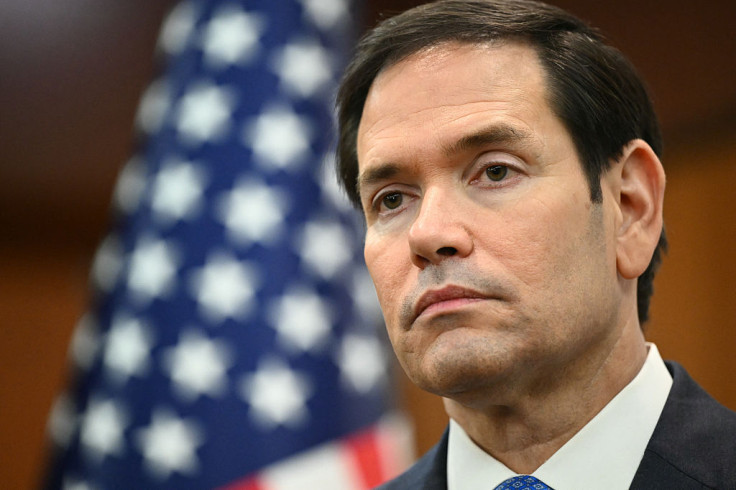
U.S. Secretary of State Marco Rubio has become the betting favorite to win the 2028 presidential election on the prediction market platform Kalshi, a striking political development that underscores his growing influence inside President Donald Trump's administration.
According to Kalshi, Rubio leads "2028 U.S. Presidential Election winner" market with 20% odds, ahead of Vice President J.D. Vance at 18% and California Gov. Gavin Newsom at 17%.
Kalshi confirmed earlier this year that Rubio had briefly overtaken Vance for the first time in the platform's election market, reflecting a rapid rise in trader confidence surrounding the former Florida senator.
The movement may appear symbolic, but prediction markets have increasingly become a closely watched indicator of political momentum, donor sentiment and media narratives, particularly in the Trump era. More than $17 million had reportedly been traded in Kalshi's 2028 presidential market as Rubio climbed.
BREAKING: Marco Rubio is now the odds favorite to win the 2028 Presidency pic.twitter.com/TtsG6iIFvI
— Kalshi (@Kalshi) May 6, 2026
Rubio's ascent comes after months of heightened visibility on foreign policy and national security issues. Since becoming secretary of state, he has played a central role in high-profile flashpoints involving Iran, Venezuela, NATO allies and U.S.-Mexico security coordination.
Rubio's stature inside the administration expanded significantly following the Iran conflict earlier this year, fueling speculation about whether he could emerge as Trumpism's next standard-bearer.
The shift also reflects growing uncertainty around Vance's political standing. Kalshi analysts noted in April that the vice president's odds slipped after failed Iran negotiations and declining approval numbers, allowing Rubio to close the gap.
Even so, the Republican primary picture remains far from settled.
Kalshi's separate market for the 2028 Republican nomination still shows Vance leading Rubio among GOP primary voters, suggesting traders currently see Rubio as potentially stronger in a general election matchup than in a Republican primary.
Rubio himself has publicly denied plans to challenge Vance if the vice president runs. In previous interviews, Rubio said he would support Vance for the nomination, though political observers remain skeptical that the 54-year-old former presidential candidate has completely closed the door on another White House bid.
The growing speculation around Rubio highlights a broader battle already taking shape inside the Republican Party over who will inherit Trump's political coalition once the president leaves office. Analysts increasingly describe the looming 2028 field as a contest between two dominant wings of post-Trump conservatism: Vance's populist nationalism and Rubio's more internationalist, foreign policy-driven approach.
Rubio first ran for president in 2016, famously clashing with Trump during a brutal Republican primary before eventually becoming one of his closest political allies.
Now, nearly a decade later, traders and strategists alike appear to believe the Miami-born Cuban American politician may once again be positioning himself for the Oval Office.
© 2025 Latin Times. All rights reserved. Do not reproduce without permission.