The Briefing:
- Saturday's Marcha de la Bronca drew a crowd that Argentina's left-wing coalition itself puts somewhere between 50,000 and 70,000 people in Buenos Aires, with no independent count to confirm either figure.
- The manifesto read outside the presidential palace demands a national strike from the CGT labor federation, calls for breaking Argentina's deal with the IMF, and also raises the Falklands dispute and Washington's stance toward Venezuela, Cuba and Israel.
- The CGT, both wings of the CTA and the UTEP again stayed away, in the same week a new IMF mission arrived to review the fiscal targets behind the 2027 budget.
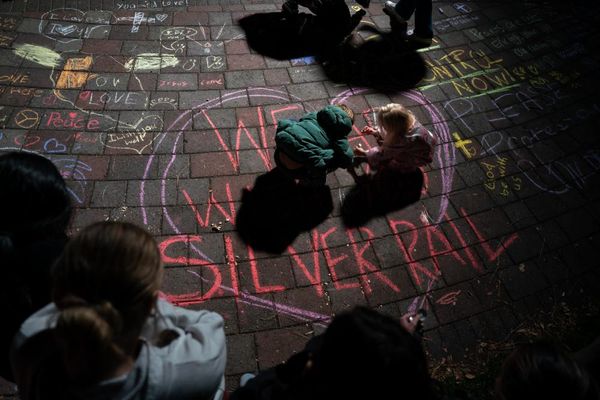
Buenos Aires saw its largest street protest against Javier Milei's austerity program so far in 2026 on Saturday, September 19. Thousands of workers, retirees, students and human rights groups marched from Congress to Plaza de Mayo under the banner "organize the anger to defeat Milei." But the real political story wasn't only the rejection of the government's economic plan — it was the gap, once again on display, between a rising street-level left and a traditional union leadership that chose to sit this one out.
Three Hours From Congress to the Pink House
The lead contingent gathered from 3 p.m. at Avenida de Mayo and San José, headed by human rights groups such as Encuentro Memoria, Verdad y Justicia, student organizations and a coalition of retirees known for their Wednesday protests. The main rally started at 3:30 p.m. in Congress Square and, from 4 p.m., columns moved down Avenida de Mayo toward Plaza de Mayo, where a stage was set up for the closing rally in front of a heavily barricaded presidential palace. The security ministry enforced its anti-roadblock protocol throughout the day.
Who Led the March, and Which Groups Joined
At the front were national lawmakers Myriam Bregman and Nicolás del Caño, provincial legislator Christian Castillo and lawmaker-elect Celeste Fierro, representing the four parties that make up the Left and Workers' Front-Unity: the PTS, the Workers' Party, the Socialist Workers' Movement and Socialist Left. Fierro captured the day's mood by arguing "love conquers hate, but a general strike is better". Laid-off workers from the FATE tire plant marched alongside the tire workers' union, the internal staff commission from Garrahan Children's Hospital, and grassroots and unemployed-workers' groups answering a call signed by more than 350 social, cultural and human rights organizations.
Outside the capital, the original call spoke of columns in more than 30 cities; once the day wrapped up, Infobae and Ámbito counted rallies in roughly 60 towns, while left-leaning outlets claimed more than 70.
The most-discussed no-show was, again, organized labor's traditional leadership: neither the CGT, nor either branch of the CTA, nor the UTEP formally backed the call. Bregman was the sharpest voice against that leadership, arguing that union leaders had signed "a governability pact" with Milei's government that, in her view, smoothed the labor reform's passage through Congress while leaving each sectoral conflict to fend for itself.
What the Manifesto Demands
The eleven-page document, agreed among the more than 350 participating organizations, described the government's economic program as "a war plan against the working people" and called for urgent wage and pension increases, an effective ban on layoffs, and full repeal of the labor reform. It also demanded the reopening of the FATE plant with its workers reinstated, non-payment of foreign debt, and a break with the IMF. The text called for the release of prosecuted workers and, at its core, demanded the CGT and the CTA call a national strike as part of a broader push toward a general strike. Organizers blamed the government for the closure of roughly 30,000 businesses and the loss of 300,000 jobs since December 2023 — figures drawn from their own diagnosis, not an official statistic.
The Falklands, Venezuela, Cuba and Israel: A Fuller International Agenda Than First Reported
The manifesto didn't stop at domestic issues. Its international section denounced what it called a "military incursion" in Venezuela driven by the Trump administration and criticized the economic blockade on Cuba, declaring that "Latin America is not the backyard of the United States." The text went further than most early summaries suggested: it also raised Argentina's sovereignty claim over the Falkland Islands amid British moves in the area, and condemned what it labeled a "genocide" carried out by the state of Israel against Palestinians, demanding Argentina's government sever political, diplomatic, trade and military ties with Israel, according to the full text carried by Huella del Sur.
The Backdrop: A Naval Base, Trump, and a Tariff Hike in the Same Week
The Falklands demand isn't abstract. Days before the march, Milei announced the construction of an integrated naval base in Ushuaia, Tierra del Fuego, and signed a decree to fund it, as the offshore Sea Lion oil field — developed by Rockhopper Exploration (UK) and Navitas Petroleum (Israel) near the islands — moves forward. Argentina's foreign ministry had to publicly deny the base would end up under U.S. control, according to the Associated Press. The march's proclamation also landed just two days after local press described Milei's biggest diplomatic stumble with Trump yet: the previous Thursday, the Argentine president flew to Miami expecting a photo with his U.S. counterpart at a Mar-a-Lago gala and came home without one, in the same week Washington imposed new tariffs on Argentine exports and the country-risk index climbed again, as Diario de Cuyo reconstructed the episode. The ideological closeness between the two leaders dates back further: at CPAC in 2024, Trump described Milei as "a great man, he's MAGA," a line Argentina's left still invokes as a target for criticism.
The 2027 Budget, Under IMF Review This Same Week
The call to break with the IMF comes at a delicate moment for Buenos Aires' relationship with the fund. The government sent its 2027 budget bill to Congress on September 15, projecting a fiscal surplus alongside a higher tax burden; just six days later, on the same Monday this article was reported, an IMF mission arrived in the country for the third review of the extended fund facility, after the first half's fiscal result came in below the agreed target.
What Comes Next
The document called for a new retirees' rally on September 23, Argentina's National Retiree's Day, outside Congress, and signaled plans for an even larger mobilization once lawmakers begin debating the 2027 budget. As of this writing, the government has not issued a detailed official response to the manifesto's specific demands, beyond the security operation deployed for the day itself.