
Get all your news in one place.
100's of premium titles.
One app.
Start reading
The Conversation
The Conversation
Kate Trinajstic, John Curtin Distinguished Professor, Molecular and Life Sciences, Curtin University

Many animals can reshape and shed their teeth – and now scientists have traced this ability back 380 million years

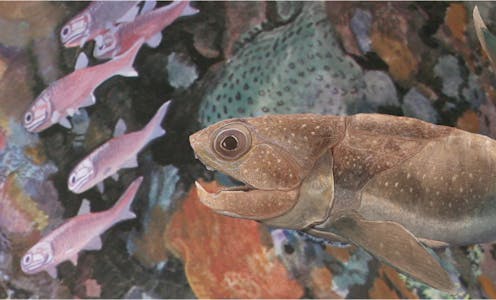
Artist's illustration of Bullerichthys, a placoderm fish that could resorb its teeth like modern bony fishes do. Brian Choo & Peter Schouten

Losing your baby teeth is a strange experience. The teeth gradually loosen until they’re replaced by thicker, more durable and permanent ones. But humans aren’t the only animals capable of shedding teeth. In fact, most mammals have two sets of teeth throughout their life. And reptiles, amphibians, fish and sharks replace their teeth continuously throughout their lives.

But before a tooth can be replaced, it must first undergo a process known as “resorption”. This involves specialised cells called osteoclasts breaking down the bone at the tooth root, allowing it to become loose and fall out.

Sign up to read this article
Read news from 100's of titles, curated specifically for you.
Already a member? Sign in here
Related Stories
Top stories on inkl right now
One subscription that gives you access to news from hundreds of sites
Already a member? Sign in here
Our Picks
Fourteen days free
Download the app
One app. One membership.
100+ trusted global sources.







