Replacing a legendary manager in the dugout is one of football’s most fascinating challenges.
Opting for continuity can bring risks if standards are not maintained, while a fresh start can risk alienating established players and traditions.

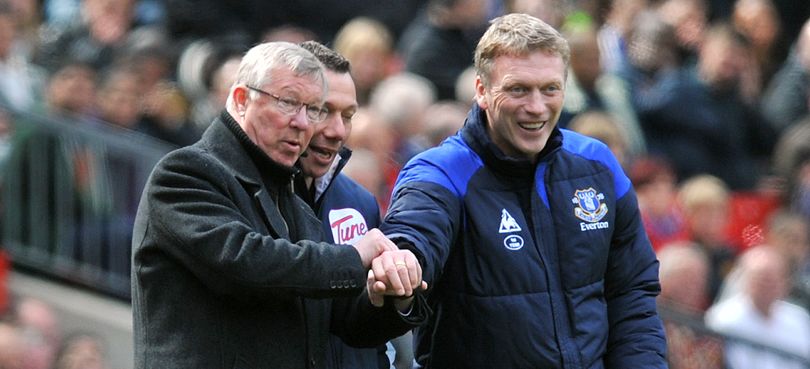
When Sir Alex Ferguson called it a day in 2013 and ended his 26-year spell in the Manchester United dugout, the club opted to bring in David Moyes, trading one Scot for another as they looked to bring in a new boss with plenty of Premier League experience.
Nani on Manchester United’s post-Fergie struggles

Moyes would fail to see out the season at Old Trafford as he was sacked in April 2014 with the club sitting seventh in the Premier League and their title defence in tatters. With the benefit of hindsight, former Red Devils winger Nani believes that the move was doomed from the start.
“When Moyes arrived, he came in with a mentality the complete opposite of what United required” the Portuguese tells FourFourTwo. “After Ferguson left, that dressing room needed a manager who understood the club’s culture, someone strong-willed enough to handle players of that stature and used to winning with big teams.
“Moyes wasn’t. He arrived with a small-club mentality and made poor decisions. Above all, it was about bad man-management. When you have high-quality players, you can’t waste them by taking away their confidence or devaluing them – that happened to me.
“At first he told me one thing, shortly afterwards he changed completely. You can’t convince a player to stay by telling him he’s fundamental to the team, then behave in the opposite way. He repeated that United depended on me, that things didn’t work without me, and that speech convinced me to renew my contract.
“As soon as I signed, his behaviour towards me completely changed. He stopped believing in me. Once I realised I wasn’t in his plans, I wanted to leave – but I’d just signed a five-year contract.”
Nani would head out on loan back to Sporting in August 2014, by which time Louis van Gaal had taken over the club.
“I left at the right moment – everything clearly went downhill afterwards,” he continues. “The team was never the same again, it was no longer the United we’d all been used to.

“At first, Van Gaal wanted me to stay, but he arrived with a different tactical approach, a back three, and didn’t use wingers. I kept training professionally, but also told him that if he wasn’t counting on me, I had nothing to prove and I’d rather leave.
“In the first Premier League match, I started on the bench. The team was losing – when I came on, I changed the game and we equalised. After that, he told me not to leave, that he wanted me to stay. I was training at a high level – confident, scoring goals.
“But I reminded him that he’d been the one who’d told me I wasn’t a priority, so I made the decision to go. I moved to Sporting and had a fantastic season personally in the Champions League.”