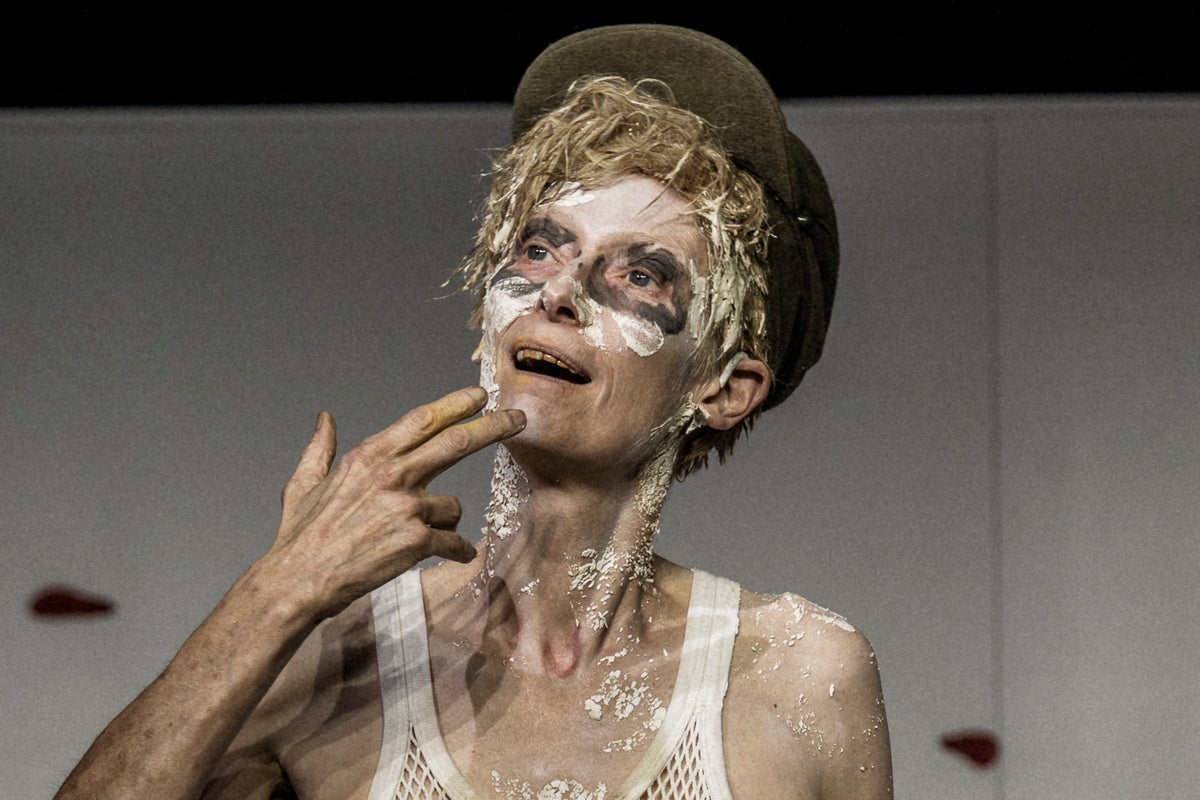
The curtain drops. The audience shuffles out, shellshocked from their experience at one of 2026's most fiercely hyped shows. And as they do, Doris Day's 'Sentimental Journey' trickles out from the Royal Court's speakers. This nostalgic song feels like a quiet plea for indulgence from the trio who first staged this surreal German play nearly 40 years ago: director Stephen Unwin, designer Bunny Christie and of course Tilda Swinton, who's making a vanishingly rare return to live theatre in the gender-blurring role that made her name. It's poignant to imagine them all revisiting their vulnerable early career days together – but, of course, any homecoming comes with mixed emotions.
Manfred Karge's monologue is a strange, multilayered thing – a narrative of one person's struggle through the lean 1930s, the lethal Nazi period, and the hungry years that came when it all imploded. Swinton sits on a swivel chair and introduces us to her personal strategy for staying alive. She's Ella Gericke, a woman who's taken on her dead husband Max's identity, stuffing a screwed-up dishcloth down her pants and creating a blokey, East End-accented facade to cling to employment in desperate times. Only maybe this pose fulfils a need that's deeper than pure survival. Swinton relishes her lines, here, bringing a laddish swagger to her tall tale that melts subtly into the story's other characters: a flirtatious, secretly Communist lunchlady, or a taunting SS Officer. Ella claims that she's got no political aims, no particular dream, but perhaps conning the system is the most satisfying rebellion possible in this warped society.