
Get all your news in one place.
100's of premium titles.
One app.
Start reading
The Conversation
The Conversation
Gat Rauner, Research Assistant Professor of Developmental, Molecular and Chemical Biology, Tufts University

Mammary glands in a dish − what miniature organs reveal about evolution, lactation, regeneration and breast cancer

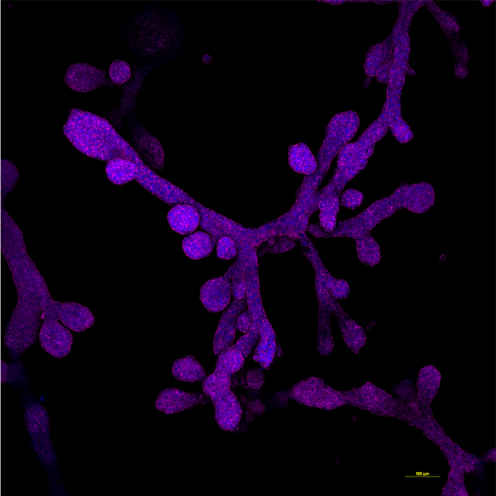
This is an image of a rabbit mammary gland organoid. Organoids are made of stem cells pushed to become specific types of organ cells. Rauner Lab/Tufts University, CC BY-ND

All mammals have mammary glands that produce milk, a feature that has fascinated scientists for many years. Questions such as why mammary glands evolved in the first place, how they have adapted across different species and what unique evolutionary pressures shaped their development remain largely unanswered.

To investigate how various species have evolved unique solutions to biological challenges, my team at the Rauner Lab of Tufts University School of Medicine is recreating mammalian diversity in a dish through miniature versions of mammary glands – organoids. These models can shed light on the fundamental biological processes behind milk production, tissue regeneration and the early stages of breast cancer development.

Sign up to read this article
Read news from 100's of titles, curated specifically for you.
Already a member? Sign in here
Related Stories
Top stories on inkl right now
One subscription that gives you access to news from hundreds of sites
Already a member? Sign in here
Our Picks
Fourteen days free
Download the app
One app. One membership.
100+ trusted global sources.







