Get all your news in one place.
100’s of premium titles.
One app.
Start reading
Reason
Reason
Politics
Elizabeth Nolan Brown

Mamdani Needs a Maximalist Vision of Mayoral Power To Achieve His Goals. Lina Khan Has a Plan.

In the February/March 2026 issue of Reason, we explore Mayor-elect Zohran Mamdani's policy goals and what they mean for New York City. Click here to read the other entries.

When New York Mayor-elect Zohran Mamdani announced his transition team the day after the election, one name stood out as a harbinger of mayoral misconduct: Lina Khan. Khan, who headed the Federal Trade Commission (FTC) under President Joe Biden, was one of the team's four co-chairs.
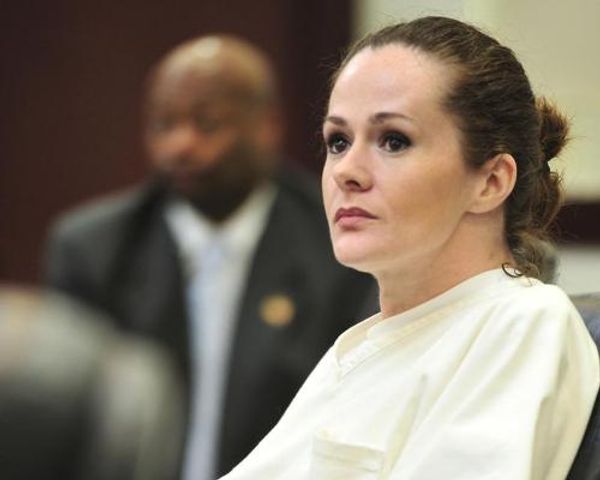
"The poetry of campaigning may have come to a close last night at 9, but the beautiful prose of governing has only begun," said Mamdani in a November 5 speech. "The hard work of improving New Yorkers' lives starts now."

When it comes to helping improve ordinary people's lives, Khan is hardly up for the job—not if her history is any indication.

Khan's influence will likely lead Mamdani's office to get creative—and perhaps unconstitutional—in applying existing laws and authorities to enact big-ticket items on Mamdani's agenda, such as city-run grocery stores, free child care and bus rides, and nearly doubling the minimum wage.

She could also prompt the city government to poke its head into all sorts of areas, some of them rather minor, under cover of enforcing antitrust statutes. Semafor's Liz Hoffman reported in November that Khan hoped to help Mamdani go after everything from hospital drug prices to high-priced stadium concessions with "a 56-year-old NYC prohibition on business practices deemed 'unconscionable'—a designation expansive enough to delight any regulator."

In an interview with Pod Save America host Tommy Vietor, Khan explained her quest to unearth existing but forgotten laws that could maximize Mandami's power to act unilaterally. "I'm going to be especially focused on things like: How do we make sure that we have a full accounting of all of the laws and authorities that the mayor can unilaterally deploy?" she told Vietor. Khan went on to talk about the "unused and underused" powers that she tried to wield at the FTC, and she said she wanted to discover the extent of authority that would be possible for Mandami as mayor.

We've seen how that plays out.

Before and during her tenure as FTC chair, Khan rejected the traditional consumer welfare standard in antitrust—the idea that enforcement should focus on prices and outcomes for consumers. She preferred a more nebulous framework in which the government should intervene against big businesses to protect the position of their smaller competitors, whether or not this resulted in consumers getting a better deal.

She was known to oppose mergers and acquisitions based on the size of the company involved, notwithstanding whatever positive effects might accrue from that size. Like Columbia University law professor Tim Wu and other "neo-Brandeisian" antitrust theorists, Khan seemed to believe that bigger was always bad.

This led her to launch or continue several ill-conceived or ill-fated actions against tech companies, including a failed bid to block Microsoft from acquiring Activision Blizzard, a failed attempt to ban Meta from buying a virtual reality fitness app, and a failed move to rework and revive a Trump-administration case seeking to make Meta divest WhatsApp and Instagram. Even when successful, the Khan FTC's antitrust suits often seemed sort of silly, aimed at stopping minor inconveniences such as having to take six clicks to cancel Amazon Prime (which was fewer clicks than it took to submit a comment to the FTC about the lawsuit).

It would be one thing if Khan had big ideas about big changes meant to meaningfully improve people's lives, and if libertarians simply disagreed with the wisdom of those ideas. But she had big ideas—involving lots of government mandates, meddling, and overreach—about achieving small changes that hardly anyone really wanted, or that failed to impact or improve things significantly.

She railed against the kind of tech integrations and innovations that surveys routinely show that consumers appreciate. She helped funnel Biden administration talk about fairness and competition into rules covering the minutia of how hotel bills are displayed. She presided over anti-tech antitrust investigations with little upside aside from securing government settlements.

Khan's time as FTC chair amounted to a lot of activity attempting to micromanage markets with very little practical effect on people's lives. Meanwhile, Khan also tried to expand the FTC's regulatory authority beyond what was allowed and further erode the separation of powers. Even though Congress was considering a bill to ban noncompete clauses, Khan's FTC enacted a ban itself. This was later struck down, with a judge declaring the FTC lacked the authority to do this.

Now Khan is ready to use the mighty power of city hall to try to make stadium hot dogs a little cheaper. It's a perfect distillation of the sort of petty populism that Khan has come to be known for—and that Mamdani may, alas, be angling to adopt as mayor.

The post Mamdani Needs a Maximalist Vision of Mayoral Power To Achieve His Goals. Lina Khan Has a Plan. appeared first on Reason.com.

Sign up to read this article
Read news from 100’s of titles, curated specifically for you.
Already a member? Sign in here
Related Stories
Top stories on inkl right now
One subscription that gives you access to news from hundreds of sites
Already a member? Sign in here
Our Picks
Fourteen days free
Download the app
One app. One membership.
100+ trusted global sources.