In today’s entertainment world, competition is fiercer than ever and audiences are increasingly demanding. To capture and hold their attention, talent alone is no longer enough — one must be able to create entire worlds where every detail contributes to the experience.
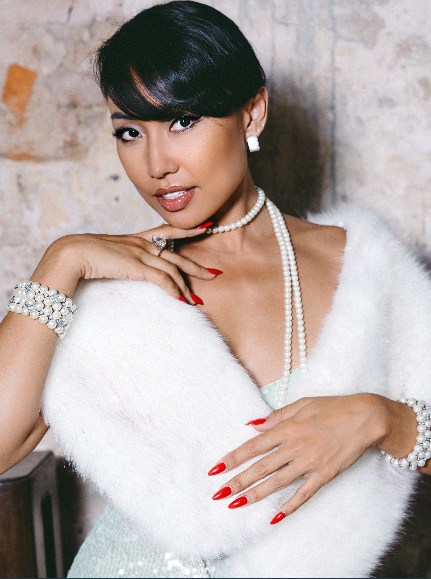
We speak with Malika Kazakova — a professional singer and dancer who became a director, choreographer, and producer of large-scale international shows. Today she is a recognized industry expert whose productions enhance some of the most prestigious events in Phuket and Bangkok — from private celebrations to international yacht exhibitions. In 2025, her contribution to the industry was acknowledged with the prestigious GLONARY AWARD FOR BUSINESS in the category Entertainment Business & Event Innovation Leader.
Malika, let’s start with your journey. When did you first realize the stage would become your destiny?
— My fascination with the stage began back in Kyrgyzstan, with oriental dance. At some point, what started as a hobby turned into a profession: I delved deeper into the world of belly dance, taught classes, and took part in competitions. Later life brought me to Phuket, where I first appeared on stage in the “Palazzo” show theater — initially as a singer, and later as a dancer. That experience was fundamental: I felt the magic and discipline of the stage and realized that I could grow in many directions.
How did the transition from performer to show organizer and producer happen?
— Gradually. For several years I worked in different projects, and eventually clients began approaching me not only for performances but also for turnkey event production. I had to take responsibility for everything — from concept creation and costumes to selecting performers and negotiating with venues. That’s when I realized I could think on a larger scale. It was a challenge, but also an incredible freedom — I could finally bring my full creative vision to life.
You combine many roles — director, choreographer, costume designer, manager. What’s the hardest part of that?
— The most difficult thing is maintaining balance between creativity and management. On one hand, I’m an artist: I create images, atmosphere, movement. On the other, I must think like a business manager — calculate budgets, negotiate, handle logistics. Discipline is what keeps it all together. But honestly, my background as a performer makes me a very different kind of organizer — I understand the stage from the inside, I know how a dancer or singer feels. That builds trust and a special kind of energy within the team.
Your projects vary widely — from private weddings to international yacht shows. Which do you prefer?
— I love both formats. Private events allow for intimacy and attention to detail. Large-scale shows require different energy and broad vision. For example, the annual international yacht show is an incredible challenge — we design programs that must impress guests from all over the world. Once, we had a request from Jack Ma — for clients of that level, every element must be flawless. It’s not just a performance, it’s the event’s signature statement.
Tell us about your most memorable project.
— There have been many, but I’d probably highlight one — organizing an event for a beach club in Phuket. I was responsible for literally everything: concept, costumes, lighting, show program, and performer selection. It wasn’t just a party — it was the creation of a full cultural space. We built a project that set the tone for the island’s nightlife. That’s when I realized I could manage not only individual shows but entire entertainment formats.
Your work involves not just entertainment, but also psychology. Why is that important to you?
— I’ve always seen dance not only as art, but also as therapy. Movement helps people free themselves from inner blocks, express what words cannot. That’s why I’ve held workshops where, through dance, we work on self-perception and acceptance. It helps not only artists but also everyday people who come to the classes.
The entertainment industry in Asia has changed a lot in recent years. What trends do you notice?
— Yes, competition has grown significantly. Previously, a few companies dominated the Phuket market, but now there are many new players. Social media plays a huge role — clients have become more demanding; they see the quality of world-class shows and expect the same. But I believe competition is good — it pushes us to grow and find new forms of expression.
How do you manage to connect with clients of such different levels?
— It’s all about dialogue. I always try to listen to the client — their dreams, expectations, and style — and then merge that with my own vision. Sometimes I have to dissuade them from ideas that won’t work and explain why. But the main thing is always to do a bit more than they expect. That’s how you create the “wow” effect.
In 2025 you received the prestigious GLONARY AWARD FOR BUSINESS. What does this recognition mean to you?
— It means a lot. This award is proof that my work has been noticed not only by clients and audiences but also by the professional community. I received it in the category Entertainment Business & Event Innovation Leader, which is a symbol that we’re moving in the right direction. But I don’t see it as the finish line — it’s motivation for new projects and even higher goals.
Finally, what advice would you give to young artists dreaming of a career in show business?
— Never be afraid to start small. My path also began on small stages, with belly dance in Kyrgyzstan. The most important thing is to be honest with yourself, to work on your discipline, and to learn from every project. And always remember: show business isn’t just the stage — it’s also tremendous work behind the scenes. If you accept that, then you’re truly ready.