Get all your news in one place.
100’s of premium titles.
One app.
Start reading
LiveScience
LiveScience
Kristina Killgrove

Male human heads found in a 'skull pit' in an ancient Chinese city hint at sex-specific sacrifice rituals

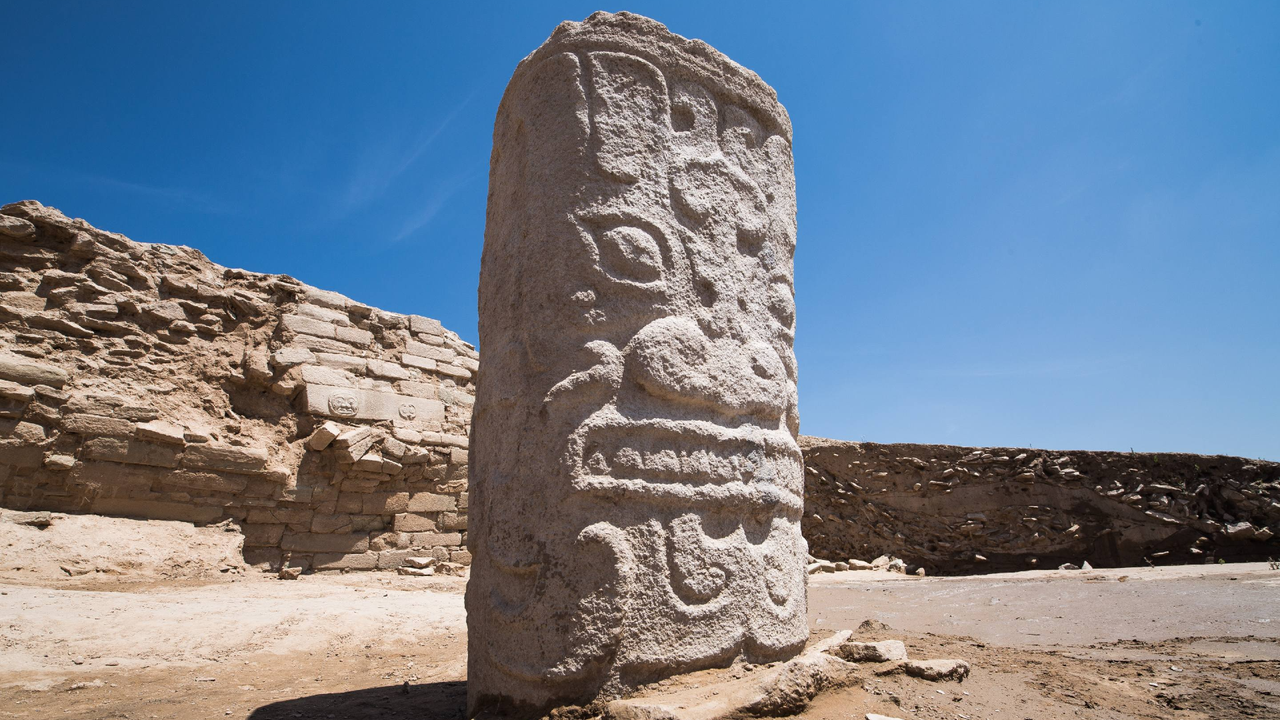
A large rock carved with a face stands in front of archaeological ruins of a wall.

Just outside the gate of a 4,000-year-old city in China, archaeologists found a pit full of 80 skulls from human sacrifice victims. Now, a new study has revealed a surprising fact about the victims: Nine out of 10 were men.

In the study, published Nov. 26 in the journal Nature, researchers analyzed DNA collected from skeletons found in the ancient city of Shimao and its satellite towns to figure out the social and kinship structure of this Neolithic society.

The ancient stone-walled city of Shimao was first discovered in Shaanxi province in 2018. Occupied between about 2300 and 1800 B.C., Shimao was roughly 1.5 square miles (4 square kilometers). The city featured a large step pyramid, craft specialization areas and two cemeteries.

An elite burial at the Zhaishan site in China, showing a male tomb occupant and a female sacrificed victim. (Image credit: IVPP/CAS)

Archaeologists also found two different forms of human sacrifice: one involving the heads of decapitated individuals, buried in "skull pits" near the city gate; and another involving the entombing of a lower-status individual — usually a female — as a sacrifice in a higher-status person's burial.

In the new study, the researchers used DNA analysis to figure out the biological sex of the skulls in the pit discovered beneath the foundation of Shimao's Dongmen (East Gate).

"In contrast to previous archaeological reports that identified these sacrifices as female-based," the researchers wrote in the study, the new DNA results "showed no evidence of female bias, with 9 out of 10 victims being men."

This finding surprised archaeologists, because the sacrifices associated with the elite burials at Shimao and its satellite towns were predominantly female.

"These patterns of mostly female sacrifices starkly contrast with Dongmen, in which decapitation and mass burial involved mostly sampled men," the researchers wrote. "This suggests Shimao's sacrificial practices were highly structured, with gender-specific roles tied to distinct ritual purposes and locations," according to a statement from the Chinese Academy of Sciences.

Additionally, when the researchers looked at the sacrificed men's DNA, they found no differences in their ancestry compared to the ancestry of the elite tomb occupants, meaning the sacrificial victims were not "outsiders."

Although the reason for the sex-specific sacrifice customs is still unclear, researchers have offered some possible explanations.

The cemetery-based sacrifices "may represent ancestor veneration, in which women were sacrificed to honour elite nobles or rulers," according to the researchers, while the sacrificed skulls in the pit "were probably connected to a construction ritual of the walls or gate."

Terracotta Army quiz: What do you know about the 'warriors' in the 2,200-year-old tomb of China's 1st emperor?

Sign up to read this article
Read news from 100’s of titles, curated specifically for you.
Already a member? Sign in here
Related Stories
Top stories on inkl right now
One subscription that gives you access to news from hundreds of sites
Already a member? Sign in here
Our Picks
Fourteen days free
Download the app
One app. One membership.
100+ trusted global sources.