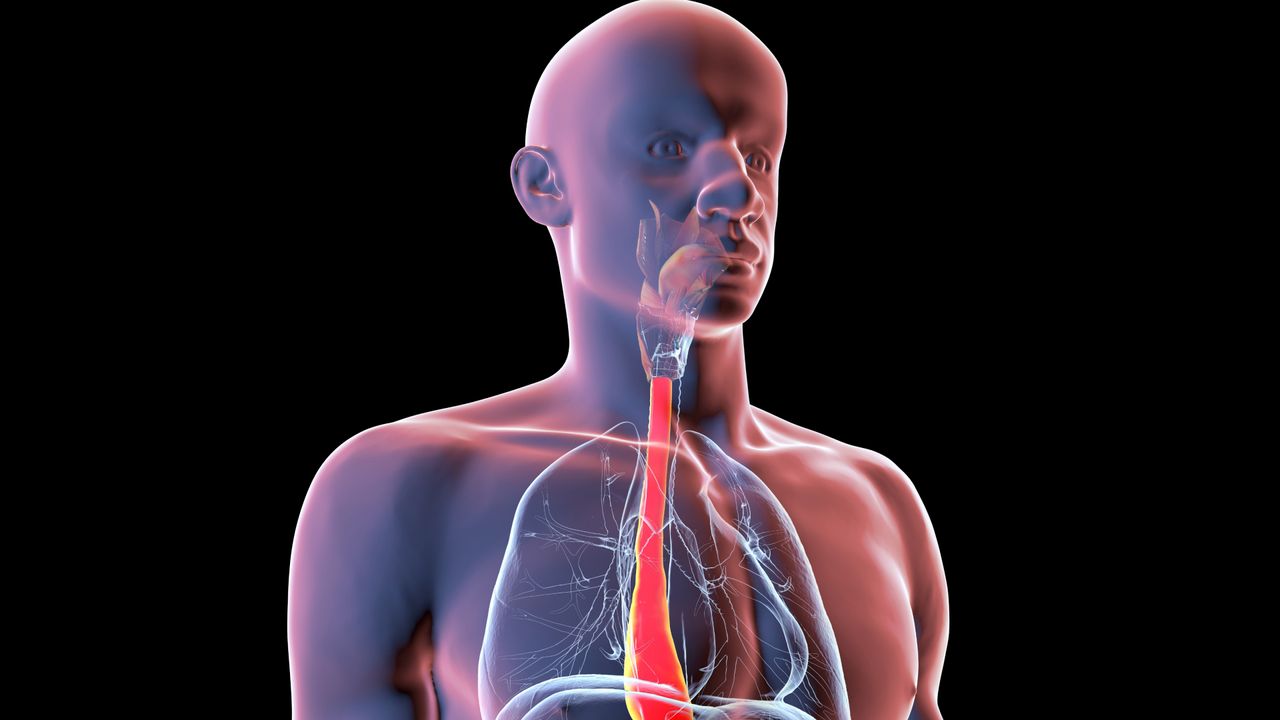
Dr. John Pandolfino jokes that he comes from a long line of electricians and plumbers — and that as a gastroenterologist, he's stayed in the family business. That's because the esophagus, the organ that brings food from your mouth to your stomach, is basically a pipe with some electrical wiring, he said.Pandolfino is the chief of gastroenterology and hepatology and director of the Northwestern Medicine Digestive Health Institute. He's begun using "digital twins" to model how individual patients with a swallowing disorder will respond to surgery called a myotomy, which is used to cut the esophagus. In the most futuristic conceptions of a digital twin, doctors would combine nearly identical anatomical replicas of an individual's body with biodata to recommend highly personalized medicine or procedures.The digital twins Pandolfino's team has developed aren't quite that advanced: They use dimensionally accurate virtual models to re-create the pressure and motion of the esophagus. He and his colleagues have recently started a 400-person clinical trial that will investigate whether using these virtual clones to guide surgery will result in better outcomes for patients. We spoke with Pandolfino about the future of digital twins, whether they could reduce animal testing, and how they could be used in organs beyond the esophagus, like the heart and bladder.