Get all your news in one place.
100's of premium titles.
One app.
Start reading
The National (Scotland)
National
The Jouker

Majority back law change to require General Election if Prime Minister quits

(Image: James Manning)

MOST people in the UK back a proposed law that would require a General Election if the Prime Minister steps down, according to new research.

The polling, by Ipsos, also found that 52% of people thought a new Labour prime minister would make no difference to their lives personally, and 56% thought Keir Starmer’s successor would have no effect on their local area.
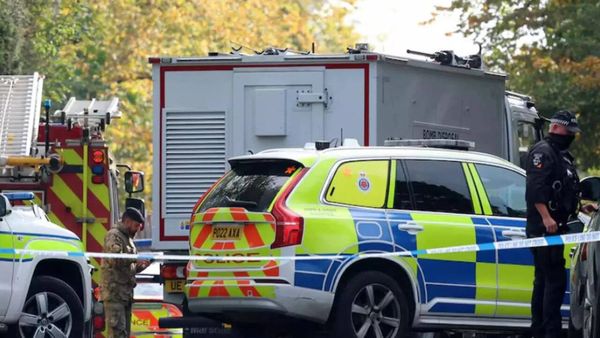
Before Starmer announced his resignation, Home Office minister Mike Tapp called for a new law requiring the nation to go to the polls if the Prime Minister quits.

The call sparked controversy, with fellow minister Michael Shanks slapping down Tapp’s proposal. The Scottish MP said: “We elect a Parliament and whoever commands a majority within that Parliament is prime minister. Let’s use parliamentary time to improve the country.”

(Image: Sky News)

But Tapp appears to be on the side of the voting public, with 55% of people telling Ipsos they would back the change.

Responding to the news, Tapp tweeted: “I still haven’t had any good arguments against this, other than ‘that’s not how it works’.”

Amid the chaos at Westminster, voters are split almost evenly on the question of whether Britain is “ungovernable” as they look forward to their seventh prime minister in a decade.

Asked whether the UK was “ungovernable”, 50% of people agreed while 42% disagreed.

Among those held responsible for this perceived state of affairs are the media on 84%, global events on 73% and the British public’s “unrealistic expectations” on 59%.

Gideon Skinner, senior director of politics at Ipsos in the UK, said: “Keir Starmer's sudden departure highlights the public’s fatigue with the way Britain’s system of government is working. Many years of frustration with the state of the country is leading to a crisis of faith in the political machinery itself, regardless of who sits in Downing Street.

“Britons think this is a home-grown issue just as much if not more than being purely the result of external, global forces, with most of the blame laid at the actions of domestic political parties and politicians of all stripes, followed by the media.

“However, there is also some limited recognition of the role of unrealistic expectations from the public themselves – which suggests some awareness of the need to engage voters in the trade-offs the country now faces.”

(Image: PA Wire/PA Images)

He added that while Starmer’s legacy is viewed “negatively” – with just 20% saying he did a good job, putting him behind David Cameron, Boris Johnson, Gordon Brown and Rishi Sunak – there is little optimism for whoever comes after.

“Rather the mood is more reserved, with many expecting a new leader to deliver little tangible difference to their bank accounts, their local streets, or the state of public services,” said Skinner.

“This sets a tough challenge for the incoming Labour leader. Their task goes much further than Westminster, with the need to deliver real, tangible improvements to the economy and public services, all while finding a way to fundamentally rebuild public trust and prove to a weary electorate that the country can, in fact, be governed successfully.”

Sign up to read this article
Read news from 100's of titles, curated specifically for you.
Already a member? Sign in here
Related Stories
Top stories on inkl right now
One subscription that gives you access to news from hundreds of sites
Already a member? Sign in here
Our Picks
Fourteen days free
Download the app
One app. One membership.
100+ trusted global sources.