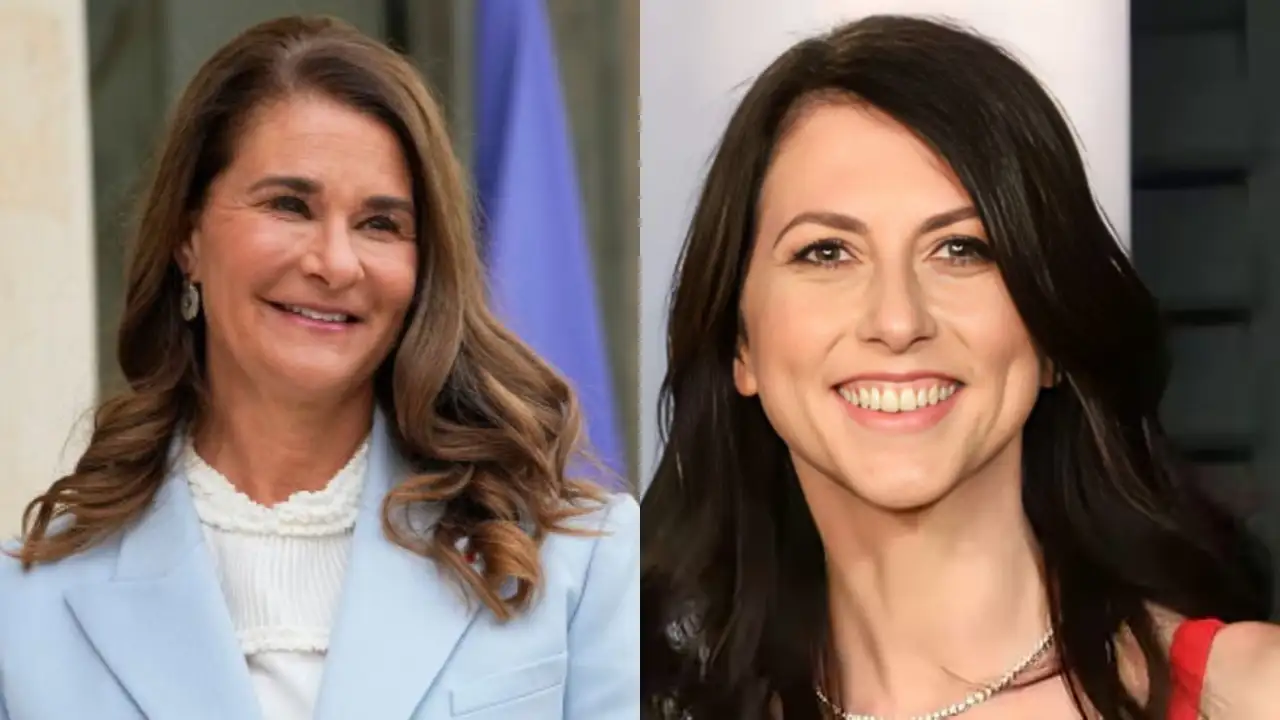
MacKenzie Scott and Melinda French Gates are among the world's most prominent philanthropists, but they have taken very different approaches to giving. Together, their philanthropic efforts have directed more than $28 billion toward organizations and causes focused on creating lasting social change. While Scott emphasizes trust and flexibility, French Gates focuses heavily on women, families and targeted investments.

ALSO READ: King Charles stepping away from the spotlight?
Where has MacKenzie Scott donated her money?
MacKenzie Scott's giving has reached organizations working across a broad range of areas. Her philanthropic support has included:
- Education
- Healthcare
- Disaster relief
- Racial equity
- Economic mobility
- Community development
- Arts and culture
- Environmental causes
- Nonprofit organizations serving underserved communities
One of the defining features of Scott's philanthropy is its scale. Rather than concentrating her donations and charity on a handful of large institutions, she has distributed billions across thousands of organizations.
Her relatively low-profile approach has also attracted attention. Scott generally does not make herself the center of announcements about individual grants, allowing recipient organizations and their work to take the spotlight.
Melinda French Gates focuses on women and families
Melinda French Gates has taken a more targeted approach through Pivotal Ventures. Since 2019, the organization has pledged $2 billion toward programs supporting women and families. Its priorities include women's health, reproductive healthcare, maternal care, mental health and economic opportunity.
ALSO READ: Google Drive is ending Google Photos backups on August 10
Earlier this year, French Gates announced an additional $215 million for women's health initiatives, bringing her investment in the sector to more than $600 million over two years, according to the information provided.
Two approaches, one broader goal
The biggest difference between Scott and French Gates is how they direct their money.
Scott puts trust in nonprofits to decide where funds are needed most, while French Gates directs funding toward specific issues and combines philanthropy with advocacy.
Their methods may differ, but both are helping reshape modern philanthropy and the role billionaire wealth can play in addressing social challenges.
Their work also highlights a growing shift toward purpose-driven philanthropy, where large donations are designed not simply to provide short-term assistance but to support broader, lasting change.
A new era of billionaire philanthropy
For much of the past several decades, billionaire philanthropy was associated with large foundations, carefully structured grant programs and donors maintaining significant control over how charitable money was distributed.
Scott and French Gates illustrate how that model is evolving.
Trust-based giving, unrestricted grants, targeted investments and public advocacy are increasingly part of the modern philanthropic landscape.
Their approaches also highlight an important question for wealthy donors: Should philanthropists decide what communities need, or should they give organizations the freedom to make those decisions themselves?
MacKenzie Scott and Melinda French Gates have answered that question differently.
But their combined billions in charitable giving show how women philanthropists are playing an increasingly influential role in determining where private wealth goes—and how it can be used to create lasting social change.