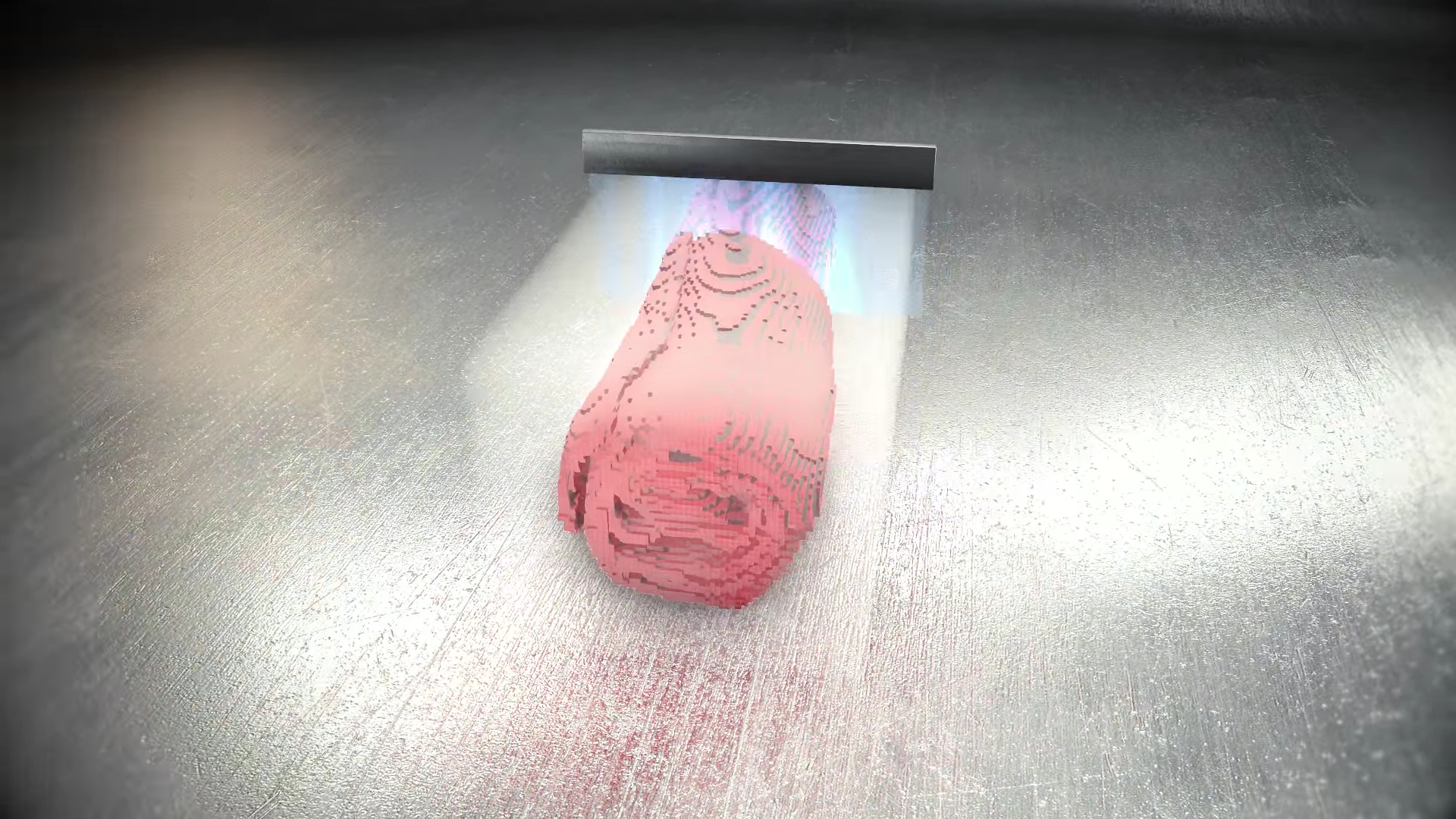
You hear that? That's the sound of people everywhere saying 'they can do that?' after reading how researchers used imaging, computer vision, and machine learning to read ancient Roman text within what most would think amounts to little more than a stick of charcoal by looking at it.
The 2000-year-old scroll is one of more than 800 discovered in the ruins of Herculaneum, a Roman city buried by the eruption of Mount Vesuvius in AD 79. Carbonised by the eruption, each scroll is incredibly fragile, and any attempt to open one up to see if it's in any way legible has ended in a crumbling mess. Yet researchers have been keen to unlock the secrets stored in these scrolls, and it looks like machine learning might have proven the key to doing so.