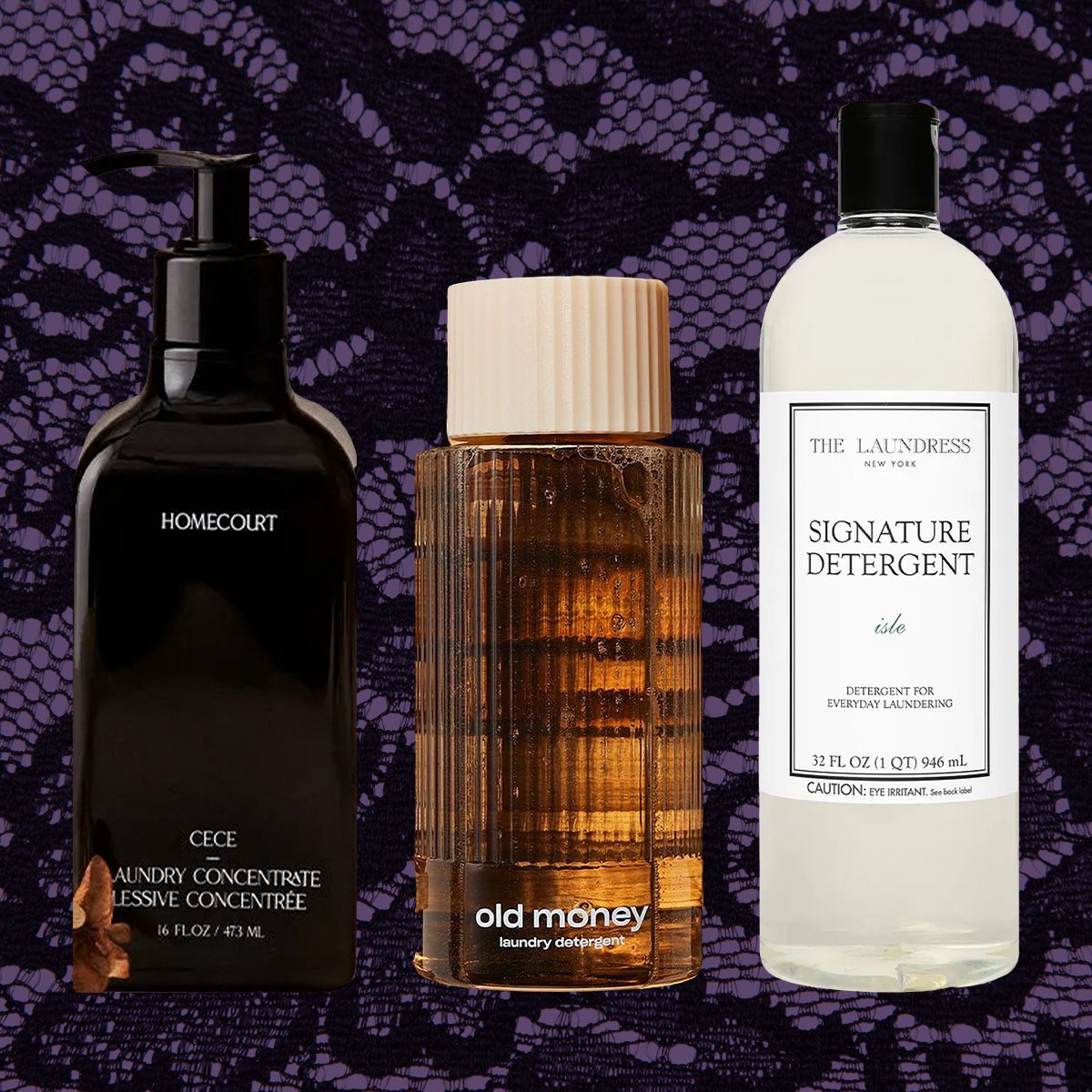
There was a time not that long ago when laundry detergent was the least interesting thing I owned. It lived under the sink, smelled vaguely like fresh daisies or artificial lavender, and no one, under any circumstances, was asking what I used to wash my clothes. But in 2026, somewhere between the rise of niche fragrance and the fall of “linen breeze,” laundry detergent got hot. Now, it’s a cool-girl, look-what-I-have flex for detergent to be on display—and smell like fine fragrance.
Frankly, I can’t say I’m shocked. Beauty has spent the better part of the last five years turning the mundane into the must-have. First, it was body wash. Then deodorant. Then toothpaste started looking like it belonged in a high concept art store. “The premiumization of beauty has filtered through into everyday personal care categories; we’re retinterpreting formats and formulas to turn a chore into a sensorial, ritual-like experience,” says Lisa Payne, Head of Beauty Trend Forecasting at Stylus.

It was only a matter of time before detergent, which is arguably the most scent-driven category of them all, received a glow-up. “It was overdue. So much of the household category feels stuck in a very traditional, mass-market mindset,” says Carina Chaz, the founder of Dedcool, one of the first beauty brands to lead the charge in the detergent space with its Xtra Milk offering and later the Ouia Melrose Place collaboration.
There are the if-you-know-you-know players: Homecourt, The Laundress, L’Avant. Then you have the fragrance-first brands like Lafco, Dedcool, and Snif, getting their noses in the game. Perhaps most interestingly, new, laundry-only brands like Laundry Sauce have identified fine-fragrance detergent as their primary focus. “Eventually, the larger players in the industry will follow suit, once a significant amount of market share is lost to this new class of products,” says Lafco CEO Jon Bresler.
The reality is that the laundry detergent market (which, frankly, hasn’t undergone any widespread innovation in years) is projected to grow from 185 million in 2023 to 269 million in 2030. And it’s not because we collectively decided to do extra loads of laundry; it’s two-fold. On the one hand, as a society, we’ve reached a point wherein we’re seeking out small luxuries wherever we can find them. The world, the economy, the news cycle—it’s a constant stream of chaos. So the appeal of something as simple as Tahitian vanilla or rich rose-scented laundry starts to seem worth the price hike. (For context: a standard Tide detergent costs $0.29 per load, whereas something like Laundress costs $0.83 per load.) It’s a low-lift indulgence, and even if it quite literally goes down the drain, the category is creating a cult-like fan base and a bit of consumer frenzy. While not quite as collectable as something like the newest Sol de Janeiro or Phlur body mist, it appears luxury detergent is trending in that direction.
It's clear that this is the next chapter of the never-ending fragrance boom, driven by our collective obsession with curating a fragrance wardrobe. The US fragrance market alone is projected to exceed $100 billion by 2034. “Laundry felt like the most intimate extension of fragrance because it literally lives on you all day. If we’re talking about building a scent wardrobe, your detergent is the base layer,” says Chaz. “For me, fragrance was never meant to live in just a glass bottle. I’ve always believed scent is about identity, and it doesn’t stop at your pulse points. It’s in your clothes, your sheets, your home, your car.”
There’s no denying that laundry has gotten luxurious. The detergent that once lived quietly under the sink is now a display-worthy, scent-forward statement. Even the most mundane parts of our routines are expected to perform with a little personality. In 2026, it turns out nothing—even your laundry—gets to be mundane anymore.
Why Trust Marie Claire
For more than 30 years, Marie Claire has been an internationally recognized destination for news, fashion and beauty trends, investigative packages, and more. When it comes to the products Marie Claire recommends, we take your faith in us seriously. Every product that we feature comes personally recommended by a Marie Claire writer or editor, or by an expert we’ve spoken to firsthand.