
Get all your news in one place.
100’s of premium titles.
One app.
Start reading
Euronews
Euronews
Laila Humairah

Web Summit Qatar: Luma AI ramps up global expansion

Fueled by a $900 million funding round led by Saudi AI firm HUMAIN in November, the growth momentum at Luma AI is just beginning.

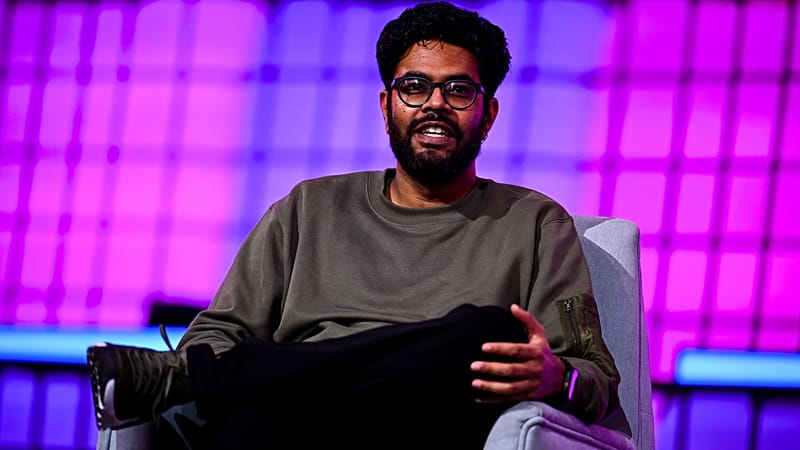
Speaking to Euronews Next at Web Summit Qatar, CEO Amit Jain noted the meteoric growth over the past year. Luma has expanded from roughly 30 employees in early 2025 to more than 160, adding as many as 20 to 25 people per month.

The company has opened offices in London and Seattle.

But while the company is experiencing some growing pains, the expansion is a natural step forward. “Startups that don’t grow shouldn’t exist,” Jain said.

Luma develops multimodal intelligence jointly across language, audio, video, and images. In 2024, the company launched its flagship video generation platform, Dream Machine, which garnered one million users in four days.

Last year, the Silicon Valley startup debuted Ray3, the world’s first reasoning video model. Since then, Ray3 has been updated several times to elevate its AI video generation capabilities.

To address the need to boost computational power, Luma is partnering with HUMAIN on Project Halo, a large-scale AI infrastructure initiative expected to reach up to two gigawatts of capacity by the early 2030s. The project also involves collaboration with NVIDIA and AMD.

“This is one of the largest infrastructure build-ups that we know of,” Jain said, placing it in the same league as the world’s biggest AI labs.

Luma’s expansion in the Middle East also fills a gap in generative AI: the lack of cultural representation.

“AI is really good at generating what they see,” he said. “But they don’t see enough Arabic representation.”

As AI-generated content becomes cheaper and more widespread, Jain warned that underrepresented cultures risk disappearing from the digital record. “History of our time won’t be in archaeology,” he said. “It will be on the internet.”

Luma is now working with partners in Saudi Arabia to build what Jain described as the world’s first Arabic world model. He also pointed to a broader opportunity for the Middle East, citing its access to land, energy, and capital.

“Energy is going to be the biggest bottleneck for AI,” he said. “The second bottleneck is turning that energy into compute.”

If those advantages are fully leveraged, Jain believes the region could become one of the world’s largest exporters of AI compute, embedding itself into global digital infrastructure as much as oil once did into the global economy.

Sign up to read this article
Read news from 100’s of titles, curated specifically for you.
Already a member? Sign in here
Related Stories
Top stories on inkl right now
One subscription that gives you access to news from hundreds of sites
Already a member? Sign in here
Our Picks
Fourteen days free
Download the app
One app. One membership.
100+ trusted global sources.