Get all your news in one place.
100's of premium titles.
One app.
Start reading
The Economic Times
The Economic Times
Trending Desk

Ludhiana MBA graduates ditch 9-5 jobs to grow Kashmir’s ‘red gold’ saffron, sell it for Rs 12 lakh/kg

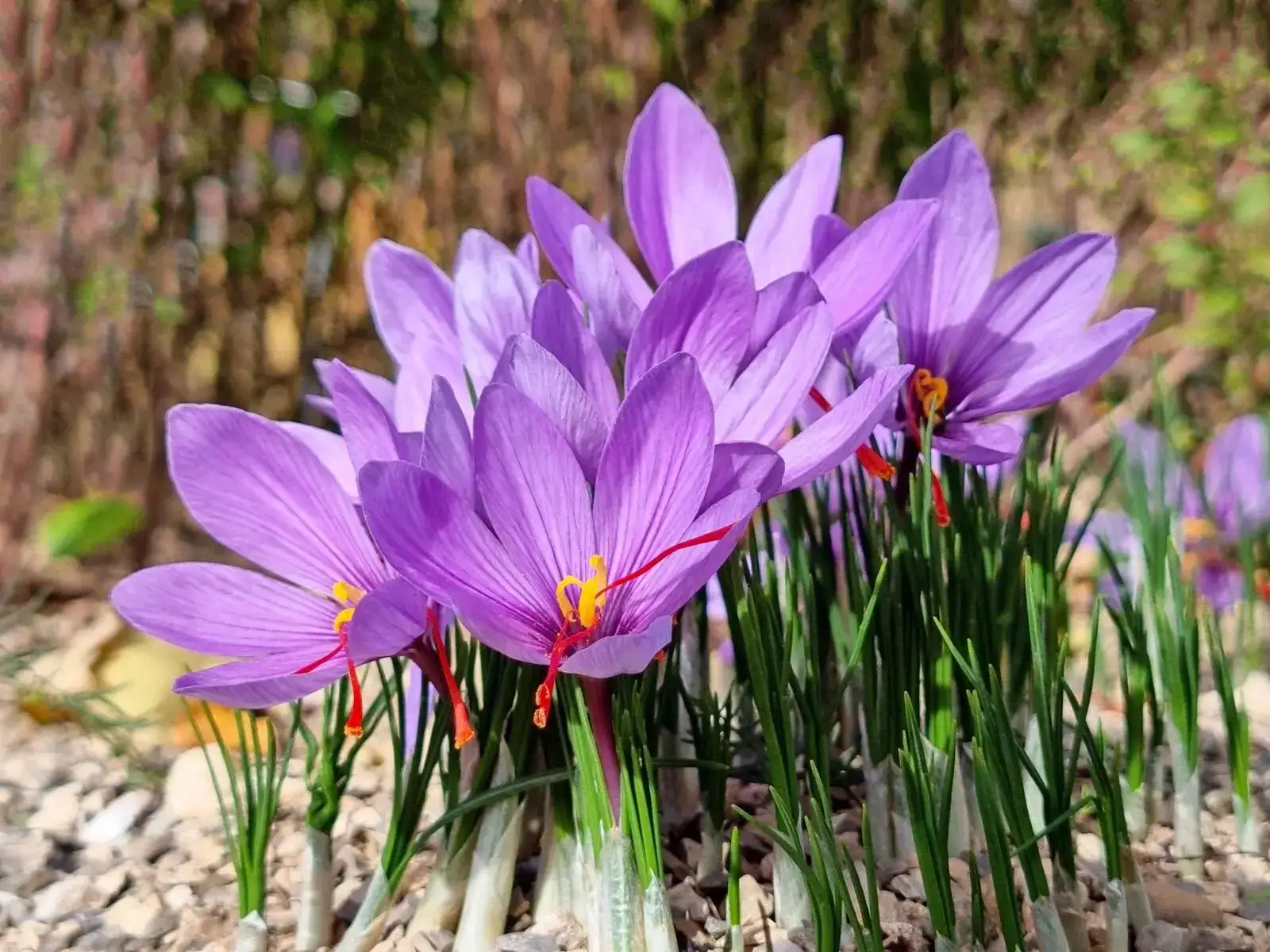
What was once considered possible only in the cold fields of Kashmir’s Pampore is now flourishing inside a climate-controlled room in Punjab's Ludhiana. Two MBA graduates from Punjab, both siblings, have successfully grown premium Kashmiri saffron indoors and are now selling the world’s costliest spice — often called “red gold” — for as high as ₹12 lakh per kilogram in international markets.

ALSO READ: “Why spend Rs 30,000 on ACs?”: Man claims his Rs 800 DIY roof cooling trick lowers temperature by 15 degrees even in 45°C heat

The venture is being led by Aastika Narula and Shanker Narula from Phulawal village under their startup “Grow Grower.” Using indoor aeroponic and vertical farming technology, the duo recreated Kashmir-like weather conditions to cultivate saffron without traditional farmland.

From MBA Dreams to Indoor Saffron Farming

The siblings, both postgraduates in business management, reportedly wanted to build something of their own rather than doing 9-5 corporate jobs. Their interest in agriculture eventually led them towards high-value saffron cultivation.

ALSO READ: Maharashtra groom gifts Rs 34.6 crore insurance cover to over 3,000 villagers

According to reports, the idea took shape during the Covid-19 pandemic when their father, Vikas Narula, started researching modern saffron farming techniques used globally. The family later consulted Iranian saffron expert Ghilavizadeh Ardalan and also travelled to Kashmir to understand the crop and its cultivation cycle.

“During the pandemic, our father studied global saffron innovations, spotting the opportunity in rising demand and declining supply of Kashmiri saffron," the duo told The Tribune.

“We bought research papers from Google Scholar, ICAR (Indian Council of Agricultural Research), ARCC (Agricultural Research Communication Centre),” says Shanker. “To understand things better and in more detail, we also got in touch with Dr Ghilavizadeh Ardalan, a renowned scientist, and talked with him on a video call to understand things better,” adds Shankar.

“We knew you couldn't plant even one seed without understanding the science,” Aastika explains. “Most of the saffron in India is actually imported from Iran, and authentic Kashmiri saffron is limited,” adds Asthika.

How They Grow Kashmir Saffron in Ludhiana

Traditionally, saffron cultivation in India has been associated with the Pampore region of Kashmir because of its specific climatic conditions. However, the Ludhiana-based siblings managed to recreate those conditions indoors using technology-driven farming systems and aeroponic technology. It is a method where plants grow in air or mist without soil. The controlled indoor facility reportedly uses:

Chillers

Humidifiers

Insulated walls

Exhaust systems

Special LED grow lights

Shankar Narula explained that four factors are crucial for saffron cultivation — temperature, humidity, carbon dioxide, and light. The facility maintains temperatures between 20°C and 22°C, while specialised pink and blue LED lights are used to improve saffron colour and quality.

The Cultivation Process

Aastika Narula explained that the process starts with saffron corms sourced from Kashmir. Before planting, the corms are treated with anti-fungal solutions such as neem oil. Plantation usually begins in August, while flowering starts around mid-November.

After harvesting, the bulbs develop into “daughter corms” between December and March before entering a dormancy period till July. This allows the same stock to be reused for future cultivation cycles.

“The process begins with corms sourced from Kashmir, treated with anti-fungal solutions like neem oil before being planted, usually in August. Flowers are ready by mid November, mirroring the natural cycle. After harvest, bulbs multiply into ‘daughter corms’ between December and March, followed by dormancy till July allowing reuse for the next cycle,” Aastika added.

Selling ‘Red Gold’ for Rs 12 Lakh Per Kg

The siblings reportedly produced around 1.3 kilograms in their first harvest, but demand quickly exceeded supply. Their saffron is being sold in India for nearly ₹9 lakh per kilogram and up to ₹12 lakh per kilogram internationally. Exports are already reaching countries including Australia, Singapore, Japan, and New Zealand. Because of its rarity, labour-intensive harvesting process, and premium quality, saffron is often referred to as “red gold.”

Why Indoor Saffron Farming Is Gaining Attention

The success of the Ludhiana entrepreneurs comes at a time when saffron cultivation in Kashmir has been facing challenges due to climate change, urbanisation, and declining agricultural returns. Indoor farming methods are now being viewed as a possible alternative for maintaining production consistency and improving crop control.

Their story has also drawn attention because it combines agriculture with technology, showing how controlled-environment farming is slowly changing traditional perceptions around high-value crops in India.

Sign up to read this article
Read news from 100's of titles, curated specifically for you.
Already a member? Sign in here
Related Stories
Top stories on inkl right now
One subscription that gives you access to news from hundreds of sites
Already a member? Sign in here
Our Picks
Fourteen days free
Download the app
One app. One membership.
100+ trusted global sources.