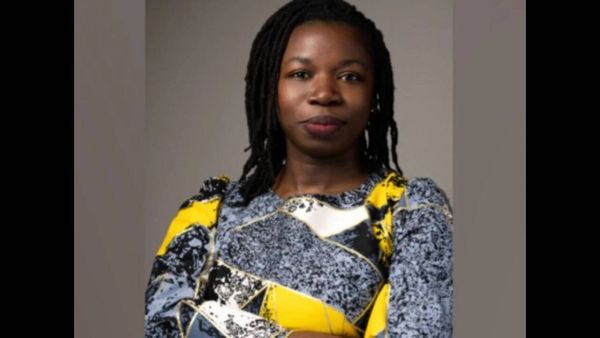
My friend Lucy Watts, who has died aged 29, lived with the knowledge that her life was going to be short, and that became the driver behind everything she accomplished.
Born in Rochford, Essex, Lucy was the second daughter of Kate (nee Manley) and David Watts. While Lucy appeared a healthy baby, unbeknown to her parents she had an extremely rare genetic mutation. When she was a 14-year-old pupil at King John school in Thundersley her health deteriorated rapidly, rendering her a wheelchair-user, with complex medical needs requiring 24-hour care.
Despite these setbacks she continued her education at home and in hospital, supported by the local authority education services, and she gained excellent GCSE results. She began her A-level studies at a local college but poor health meant she had to drop out.
A referral to the J’s hospice for young adults in Essex at the age of 17 was to be a turning point for Lucy in many ways. “For the first time since I became ill when I was 14, the J’s realised I was not just a patient with a host of medical problems; I was a person with goals, dreams, wishes and a desire to live.”
She began to get involved with the work of the hospice, sharing insights into how their support helped her focus on the quality not quantity of her life. A natural public speaker and gifted writer, she was invited to become an ambassador for the national children’s palliative care charity, Together for Short Lives.
I first met Lucy through our shared work for the charity. She was 18, defying the expectations of her medical team, and was energised and motivated to speak up and improve the rights and conditions of people like herself and their families. She used her platform to make recommendations to NHS programmes and charities and became a member of the NHS Assembly, which advises the board of NHS England.
Her work attracted the attention of Tedros Adhanom Ghebreyesus, director general of the World Health Organization, and they formed a lasting friendship, driven by a mutual desire to make access to good palliative care available to all who need it. She was a volunteer, patron or trustee to several charities and hospices, and in 2016, aged 22, was appointed MBE.
Despite her deteriorating health Lucy spent the last years of her life working to shift the narrative around palliative care and tell people how it enabled her to focus on living while also empowering her to make plans for dying. The opening lines of her TEDx NHS talk summed her up when she said: “Would you believe me if I told you the best years of my life have been the years I knew I was dying?”
Lucy is survived by parents and her sister, Victoria.
• This article was amended on 23 May 2023. The J’s hospice in Essex is for young adults not children, as an earlier version stated.