
Get all your news in one place.
100's of premium titles.
One app.
Start reading
LiveScience
LiveScience
Jamie Carter

Lucky few to see 'ring of fire' solar eclipse over Antarctica on Feb. 17

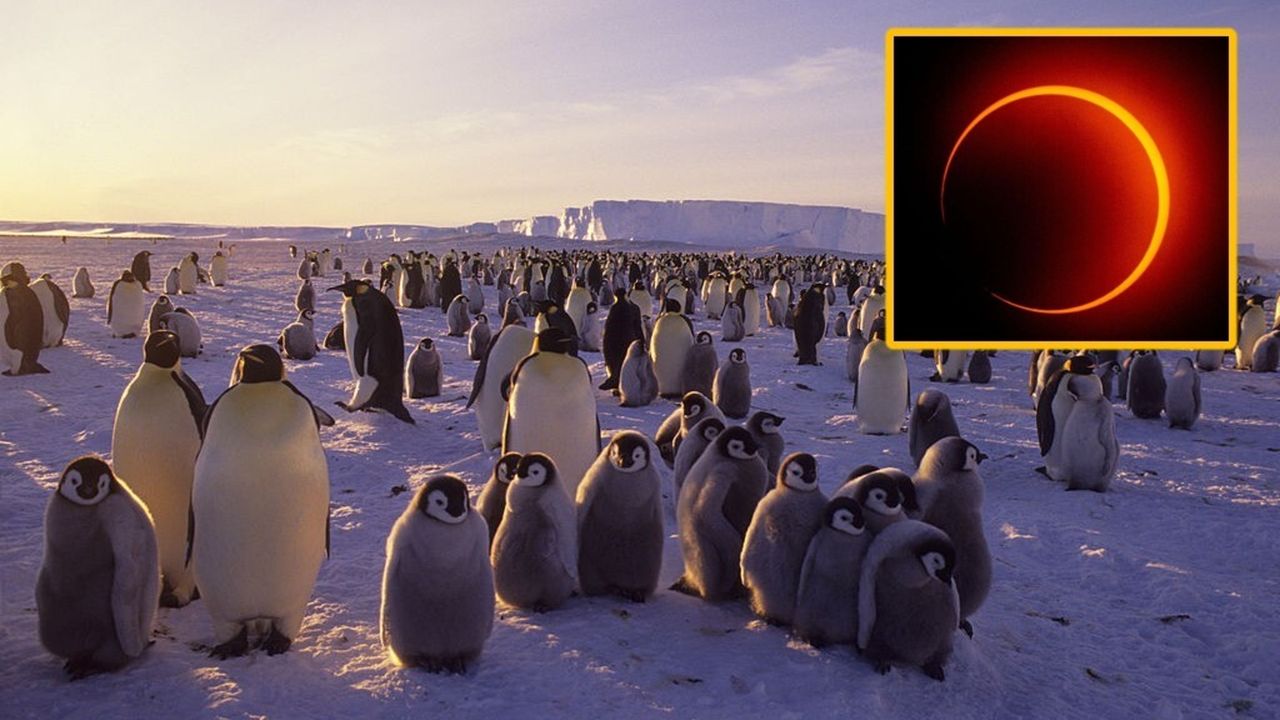
A penguin colony of chicks and adults waddle on a snowy surface with a boxout in the top right of the image showing a solar eclipse, a ring of glowing yellow light against a dark background.

While the new moon this Tuesday (Feb. 17) will pass without much fanfare in most of the world, something more exciting will be taking place over a sliver of Antarctica: a "ring of fire" solar eclipse, also known as an annular solar eclipse.

During an annular solar eclipse, the moon passes directly in front of the sun but appears too small in the sky to cover it completely. That’s because the moon is at its farthest point from Earth in its slightly elliptical orbit during these rare eclipses. On Feb. 17, 96% of the sun will be covered during the "ring of fire."
Sign up to read this article
Read news from 100's of titles, curated specifically for you.
Already a member? Sign in here
Related Stories
Top stories on inkl right now
One subscription that gives you access to news from hundreds of sites
Already a member? Sign in here
Our Picks
Fourteen days free
Download the app
One app. One membership.
100+ trusted global sources.