Get all your news in one place.
100’s of premium titles.
One app.
Start reading
Golf Monthly
Golf Monthly
Sport
Matt Cradock

Low-Spin Drivers To Become Obsolete? The Golf Monthly Equipment Team Makes Its 2026 Tour Gear Predictions

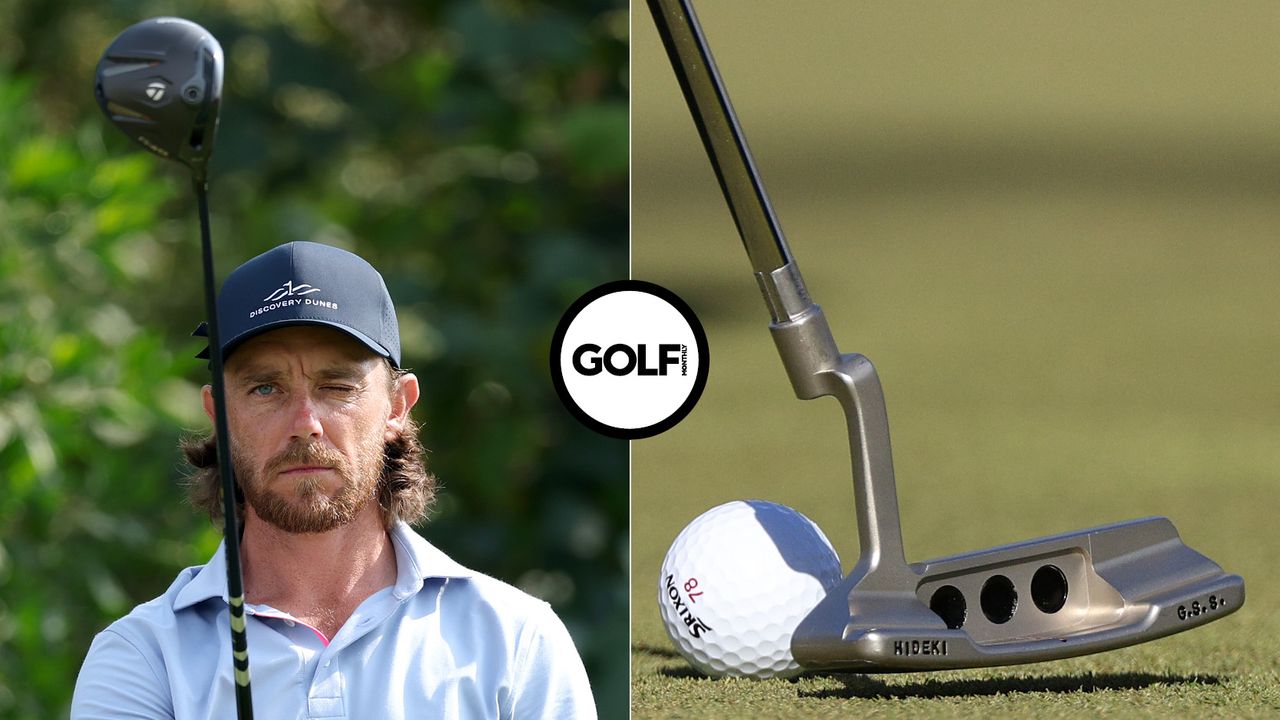
Tommy Fleetwood lines up a drive, Hideki Matsuyama's putter close-up.

Although 2026 is currently less than a month old, we have already seen some notable winners on the major Tours, as well as some intriguing equipment stories developing from the top players.


Rory McIlroy has opted to change his irons ahead of the upcoming season, swapping his TaylorMade Rors Protos for the more forgiving TaylorMade P7CB.

It signals the first-time that the five-time Major winner hasn't had blades in his set-up, with McIlroy claiming at the Dubai Invitational that: "If there's help to be had I'll definitely take it."

McIlroy was seen using the TaylorMade P7CBs at the end of 2025 (Image credit: Getty Images)

Speaking of TaylorMade, Scottie Scheffler's dominance continued at The American Express, as the brand's staffer claimed a 20th PGA Tour win by four strokes in La Quinta.

Along with Scheffler, Chris Gotterup earned his third PGA Tour win at the Sony Open in Hawaii, as Patrick Reed secured the Dubai Desert Classic on the DP World Tour in a dominant four shot victory.

The American duo are both equipment-free agents, as is Nacho Elvira, who won the DP World Tour's opening event of 2026 at the Dubai Invitational. His victory signaled the first win for Callaway's new Quantum range, as the Spaniard used the Quantum Triple Diamond Max at Dubai Creek Resort.

Elvira debuted the new Callaway Quantum range, specifically the Triple Diamond Max (Image credit: Getty Images)

Certainly, 2026 is already forging out some interesting equipment angles and, at Golf Monthly, we pride ourselves on our knowledge of golf gear, which is why five of our writers have given their predictions for what to look out for this season.

Check out the full thoughts below, and let us know your golf equipment predictions for 2026 in the comments under this article.

My gear prediction is that 2026 will be the year of the mini driver.

Just recently, Ping unveiled a prototype version of a mini driver, which means all the major manufacturers (bar Mizuno) have players using their models, with the take up on Tour increasing rapidly.

With the distance modern clubs and balls can now provide, Tour players are seeing the value in sacrificing some yardage to find more fairways and avoid the hazards that creep in at driving distance on modern Tour courses.

Justin Rose (left) has had the TaylorMade R7 Quad mini driver in-play for some time, with Jake Knapp (right), using the PXG Secret Weapon (Image credit: Getty Images/Future)

Towards the back end of 2025 on the DP World Tour, a record 28.8% of players at the Nedbank Golf Challenge (66 man field) had a mini driver in play, while 17.3% of players had a mini driver in play at the Australian Open.

The figures for the same events the year before were 4.5% and 3.2%, respectively, which clearly shows a strong trend towards their take up.

As high-profile PGA Tour players such as Tommy Fleetwood and Adam Scott have also employed one, we could well see Majors won in 2026 with a mini driver in the bag.

By the end of 2026, my hunch is that the traditional blade-putter may well be resigned to the history books of the world’s elite, replaced entirely by high-MOI mallets and the rapidly rising zero-torque technology.

The romanticism of the blade is dying, suffocated by the cold, hard data of strokes gained.

Currently, among the world's top 20, only Hideki Matsuyama and Ludvig Aberg remain as high-profile loyalists to the classic design and, in truth for both players, the flat stick remains the glaring weakness in otherwise pretty flawless skill sets.

Their ball-striking metrics are consistently world-class, but their refusal to embrace modern forgiveness is arguably costing them multiple titles a season.

Matsuyama (left) has used a number of Scotty Cameron blades, while Aberg (right), has had the Odyssey White Hot Versa #1 in-play for a number of years (Image credit: Getty Images)

They need only look at World No. 1 Scottie Scheffler for a roadmap.

Scheffler’s transition from a blade to the Spider Tour X mallet didn't just improve his putting; it proved the catalyst for a historic run of dominance, turning his only liability into a weapon.

In an era where margins are razor-thin, giving up forgiveness for "feel" is a luxury no one can afford, in my opinion.

As zero-torque designs like L.A.B. Golf continue to prove that face rotation is unnecessary, it surely won't be long before Matsuyama and Aberg finally trade tradition for technology.

By the end of 2026, I honestly think the dedicated low-spin driver head models from each manufacturer will be nearly obsolete on Tour.

The evidence has already begun collating itself on both the PGA, DP World, and LIV Golf Tours, where plenty of names are using either the core/standard models from each range, or specifically-designed, high-MOI heads.

Rory McIlroy and Scottie Scheffler have put the standard TaylorMade Qi4D model in-play (Scheffler swapped back to Qi10 at The American Express), shunning the LS version because neither player truly needs an extra 1mph in clubhead speed.

Manufacturers have seemingly solved the speed-forgiveness tradeoff, and the new Qi4D core driver spins low enough for these players but offers significantly higher MOI than the LS driver head.

Similarly, Nicolai Hojgaard and Tom McKibbin teed it up at the Dubai Desert Classic not with the lowest-spinning Triple Diamond (TD) heads available, but with the Callaway Quantum Triple Diamond Max - a head that offers more forgiveness than the standard TD model, yet lower spin than the regular Max head.

McIlroy (right) uses the core version of the TaylorMade Qi4D, while Hojgaard (right) the Callaway Quantum Triple Diamond Max (Image credit: Getty Images/Future)

These players already possess elite ball speed, so finding fairways out on Tour, rather than being another five yards down the hole, is a compromise these guys seem to be willing to make.

In fact, I think you could argue that some of these players may actually increase their clubhead speed through subconscious confidence, knowing they have a more stable head in their hands, so they can swing more aggressively without fear of the ‘big’ miss coming into play.

I thought I was going to sound really clever with my prediction that blades were going to slowly dwindle on Tour in 2026...

However, in the first two weeks on the PGA Tour we've seen Chris Gotterup win in Hawaii with Bridgestone Tour B 220 MBs, as well as Scottie Scheffler winning (again) with his TaylorMade P7TWs.

Scheffler is a freak, though, so we'll continue to consider his golf an anomaly and his equipment trends - including switching back to Qi10 - an exception to the rule.

What really made me think that 2026 was going to be the year the blade died on Tour was seeing Rory McIlroy switch into P7CBs from his Rors Proto irons.

A close-up of Rory McIlroy's TaylorMade P7CBs (Image credit: Getty Images)

Seeing McIlroy not in a blade is unusual, but if the five-time Major winner is citing the extra forgiveness and 'pop' from an iron with a bit more help in the cavity, then surely those still persisting with blades on Tour should be considering a move too?

I'll be keeping a close eye on this trend throughout the year, especially as Tour golfers are equipment copycats.

Back in the day, Tiger Wood's dominance set the agenda for all the equipment trends, so will McIlroy's influence do the same in 2026?

Given that pretty much every area of the bag has been covered by my colleagues, I was going to pen my thoughts on wedges, specifically around how older models will be more popular this year, following the driver trend we saw in 2025.

Scheffler won The American Express using Vokey SM8s, which were released in 2020, while Reed had SM10s in-play, not the recently-launched Vokey SM11, for example.

However, I'm actually going to go with a prediction around apparel, specifically how more clothing brands will either become represented on Tour, or sign big-named players.

As we saw in Dubai, Tommy Fleetwood wasn't wearing his traditional Nike clothing, instead wearing a mix of Lululemon, Vuori and G/FORE.

Fleetwood wearing Vuori (left) and G/FORE (right) during the Dubai Invitational (Image credit: Getty Images)

Although it's unclear as to whether the Englishman will sign for any clothing brand, Lululemon has Max Homa and Min Woo Lee on its books, while Vuori recently acquired Maverick McNealy, demonstrating that perhaps the brand is making a move into the golf sector.

It's not just those companies. Malbon signed Jason Day and Charley Hull last year, and has added Freddie Couples and Michael Block to its roster, as well as potentially Anthony Kim, who was wearing the brand at the LIV Golf Promotions event.

Tony Finau became the first player to become a Jordan ambassador, while Johnnie-O has acquired Jake Knapp and JT Poston. And Stromberg has signed Andy Sullivan, showcasing that players aren't afraid to use the less Tour-represented brands.

Apparel may not be the most exciting 2026 prediction, but given that it's what we see the players wearing on television, it is the most viewed aspect of a player when they're in tournament play.

What's more, with fewer players using the bigger brands, perhaps there's another wave of new clothing companies ready to show themselves off on the pro Tours...

Sign up to read this article
Read news from 100’s of titles, curated specifically for you.
Already a member? Sign in here
Related Stories
Top stories on inkl right now
One subscription that gives you access to news from hundreds of sites
Already a member? Sign in here
Our Picks
Fourteen days free
Download the app
One app. One membership.
100+ trusted global sources.