In the past decade, artists have repeatedly tried to crack the mystery of Princess Diana. In 2020, The Crown introduced the princess in its fourth season, first played by Emma Corrin, with Elizabeth Debicki taking over in seasons 5 and 6. In 2021, Kristen Stewart played the royal enduring a Christmas from hell in Pablo Larraín's expressionistic movie Spencer. There was even a misbegotten Diana musical, panned by critics but embraced as a camp classic by some Broadway fans.
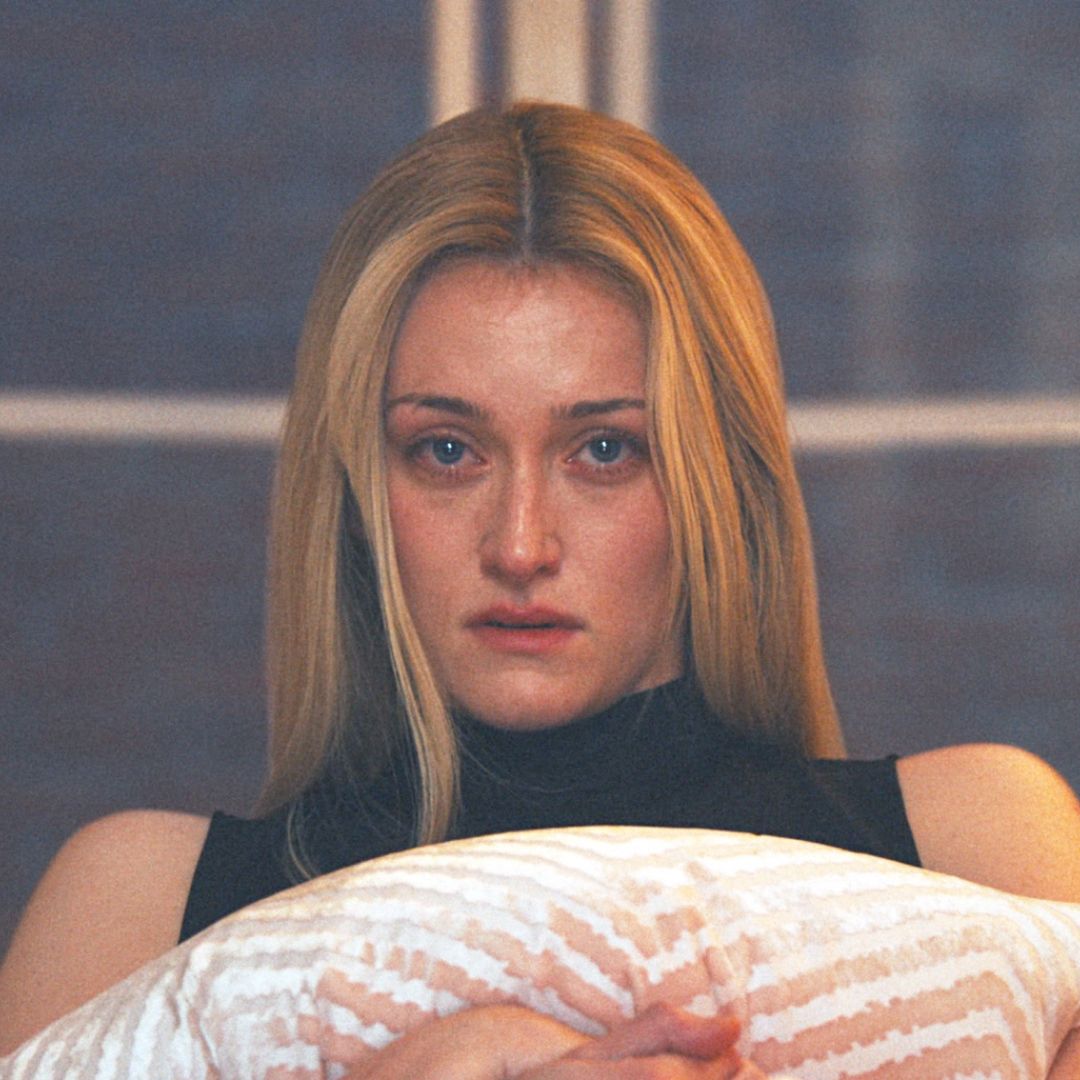
And, while she doesn't appear on screen, Diana still haunts FX's series Love Story, which follows the romance of Carolyn Bessette-Kennedy (Sarah Pidgeon) and John F. Kennedy Jr. (Paul Anthony Kelly). In the eighth episode, "Exit Strategy," Carolyn—bristling against the excessive, invasive media attention surrounding her own life—gets news of the car crash that resulted in Diana's death.

After that fateful call, the newly married Carolyn becomes obsessed. She’s glued to the television, the camera giving us a close up of her wide, tear-filled eyes as Radiohead plays. While we don't know exactly how the real Carolyn learned of Diana's passing, she was reportedly affected by the event. In a 2017 PEOPLE magazine story, Kennedy's former assistant said that Bessette was "rattled" by Diana's death, which came as a result of her vehicle being hounded by paparazzi. At the time, Bessette too was feeling threatened by photographers trying to capture her every move; here was an example of another prominent woman whose life ended as a result of the same phenomenon.
But by evoking Diana, the episode also highlights Love Story's own limits. After all, if we've never been able to really understand Diana, how are we supposed to understand Carolyn?

As Love Story makes clear, it's easy to draw parallels between Diana and Carolyn. They are both beautiful blonde women who married into prominent families that demanded a certain amount of public decorum. Diana wed literal royalty. Carolyn wed the U.S. equivalent. (JFK Jr. was arguably a more desirable prince than Charles—the latter never ended up as the "sexiest man alive.") Also, both Diana and Carolyn drew media attention not just because of their association with their respective country's elites, but because they had enviable personal style and the ability to look casually glamorous.
They also share untimely deaths—Diana in that car crash and Carolyn, ultimately, in that plane, piloted by her husband on the way to a family wedding. The violent, horrific nature of their endings only adds to their mystique.
Part of their combined appeal is that they were both essentially unknowable to the people who followed their lives through issues of PEOPLE and copies of The Daily Mail. And that means every subsequent interpretation of them is weighted down by a hefty level of speculation.

All of these works of art—whether that's The Crown or Spencer or Love Story—are required to invent these women's interiority using the writers' imaginations and bits of details we've gleaned from reporting over the years, stories their friends and acquaintances have told to biographers, gossip whispered to the press. At least in the case of Diana there were notable televised interviews, which have allowed actors to mimic her distinctive speech patterns; Carolyn rarely made public comments.
As such, the performances that result from Diana’s media are occasionally impressive and a little bit elusive. In Spencer, Stewart gave her an almost feral quality; In The Crown, Corrin plays her like a wounded bird. The two actors nail the accent and the slightly bowed head, while each imbuing their Diana with the qualities the work around them wants to highlight. They are both entrancing, but leave the viewer aware that no one really knows who she truly was.
By evoking Diana, the episode also highlights Love Story's own limits. After all, if we've never been able to really understand Diana, how are we supposed to understand Carolyn?
That sensation has remained in Love Story. In the early episodes, Pidgeon offered up a portrait of Carolyn as the ultimate '90s cool girl, fingers constantly running through her perfectly mussed hair or dangling a lit cigarette. As the show has gone on, Pidgeon's portrayal has started to feel burdened by the weight of Carolyn's trauma. Recent episodes have presented her less like the whole person we got to know at the beginning of the series, and more like the representation of the tragic figure we can only try to glean from images.

"Exit Strategy" brings this into relief because of the Diana comparisons. For years, we've tried to guess how Diana was feeling in her unhappy marriage to Prince Charles and her final moments; now it's clear we're just doing the same when it comes to Carolyn.
These projects do a good job of keeping these women's memories alive, but only up to a point. Their lasting impact is the perpetuation of Diana and Carolyn's aesthetic above all. That's evident in the brand Rowing Blazers recreating two of Diana's most iconic sweaters in 2020. Love Story, meanwhile, has resulted in young West Village denizens now seeking to recreate Carolyn's iconic look and waiting in lines outside of the Indian restaurant where the show depicts her and John's first date.
But all this just serves to remind us what we're invested in is the idea of these women rather than the actual women. Love Story even posits that Carolyn herself was guilty of this, staring at the television trying to graft her own life onto Diana's even though she was a mere acquaintance. Now, anyone watching Love Story is forced to do the same for Carolyn.