
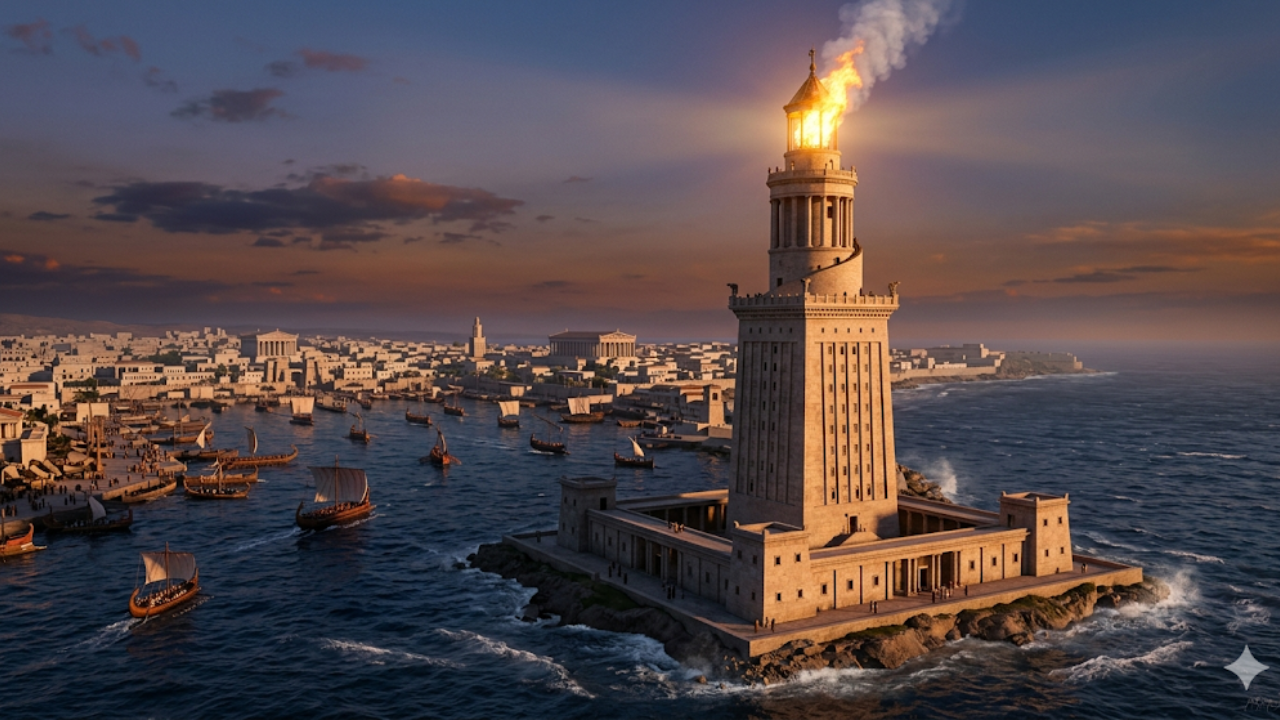
The finding of giant stone blocks weighing 80 tons under the sea, which are considered part of the Lighthouse of Alexandria, one of the wonders of the ancient world, has sparked interest in the study of ancient engineering, marine archaeology, and the history of the Mediterranean area. Found on the floor of the eastern harbour of Alexandria, these huge architectural fragments, including lintels, gateways, and paving stones, provide valuable information on the composition, fall, and methods used in the construction of this giant lighthouse. Through research initiatives such as PHAROS, scientists are studying the lighthouse through photogrammetry, computer reconstructions, and stone analysis.













