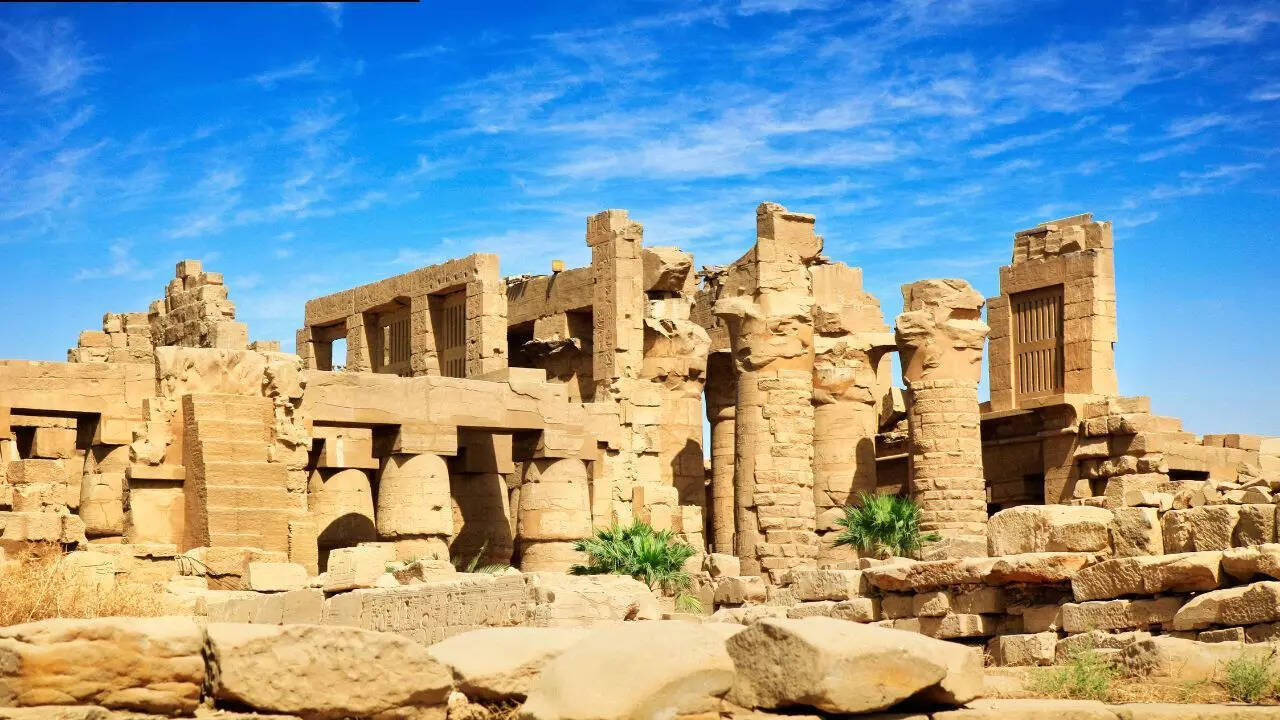
Ancient Karnak arose from a topography moulded both by water and stone. For more than a century, excavations have concentrated on temples, walls, and inscriptions, while the ground beneath them has received little attention. A recent geoarchaeological investigation has shifted the focus. Researchers drilled dozens of sediment cores over Karnak and its vicinity to determine how the River Nile previously travelled through the area. Their findings indicate that the massive temple complex was built on a natural river terrace that was previously ringed by canals. This site may have recalled Egyptian concepts of a holy mound emerging from primordial waters. The analysis also helps to narrow down when permanent construction at Karnak became feasible, providing a quieter but clearer picture of how landscape and belief evolved together.