Get all your news in one place.
100’s of premium titles.
One app.
Start reading
The Times of India
The Times of India
World
TOI World Desk

Lost ‘City of Gold’ emerges from Egypt’s desert after 3,000 years buried in sand

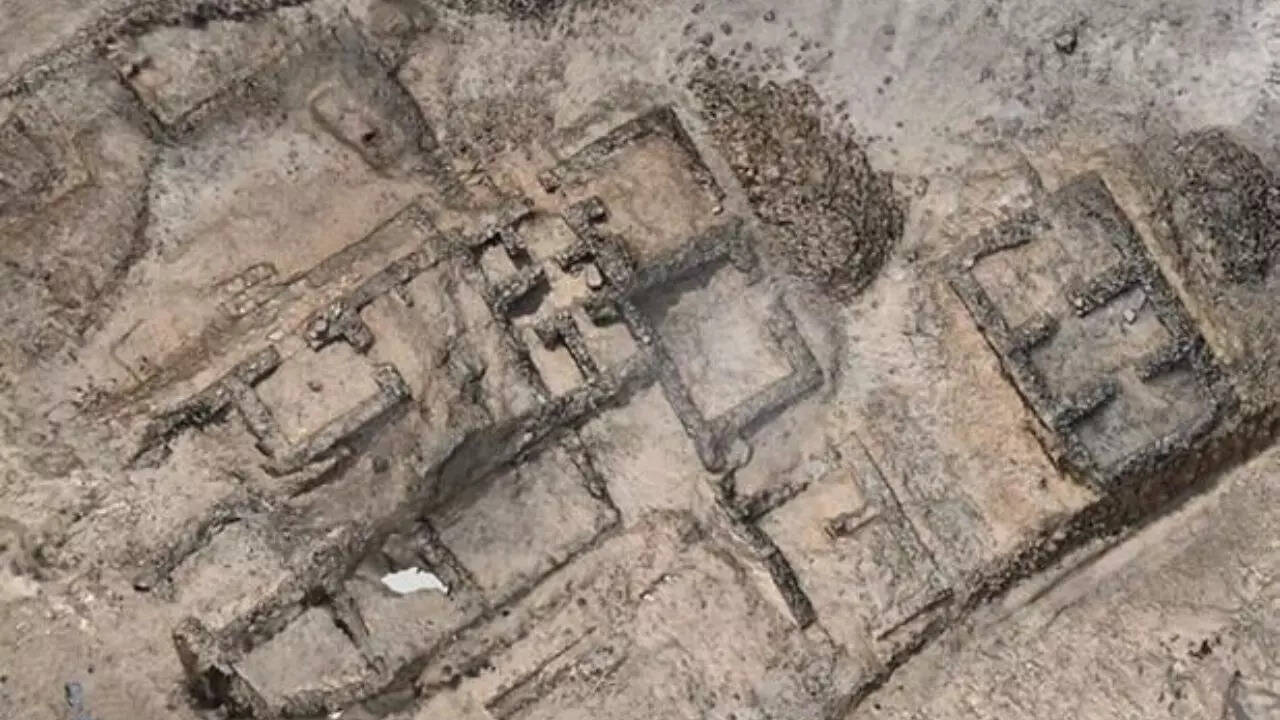
Archaeologists have uncovered what appears to be far more than a forgotten industrial site in Egypt’s eastern desert. Deep in the rugged Sukari Mountains, a 3,000-year-old Egyptian gold mine has come back into the light. And with it, traces of daily life that feel surprisingly vivid. This was not just a pit carved into rock but a place where people worked, worshipped, traded, and lived under the desert sun.

The discovery forms part of a long-running project called “Reviving the Ancient City of Gold”, led by Egypt’s Ministry of Tourism and Antiquities. What they found reportedly goes well beyond scattered tools or broken walls. Instead, it reveals a bustling gold-mining camp built around serious industry.

3,000-year-old Egyptian gold mine rediscovered in Sukari Mountains

The Sukari Mountains are still known for gold today. The modern Sukari Mine operates in the same region, which makes the ancient discovery feel oddly connected to the present. It seems the lure of gold here never really faded.

Archaeologists uncovered a remarkably advanced gold processing complex dating back roughly three millennia. Experts say the site included crushing and grinding stations used to break apart quartz veins that carried traces of gold. There were filtration basins, sediment tanks and even clay furnaces are designed for smelting and purifying the precious metal.

Evidence of long-term life beyond the gold

According to the official website State Information Service Egypt, Mohamed Ismail Khaled of Egypt’s Supreme Council of Antiquities explained that the remains show a carefully orchestrated operation. Gold was not simply gathered. It was extracted, processed and refined with skill. The scale suggests planning. What makes this discovery especially compelling is that it wasn’t only about production. Around the mining complex, archaeologists identified what appears to be a full residential district.

That detail alone hints at something bigger than a temporary encampment. It seems people settled here for generations. The team reportedly found architectural remains dating not just to the original pharaonic era but also to Roman and Islamic periods.

Inside the lives of Sukari’s ancient gold workers

Crews uncovered 628 fragments of pottery. Many pieces carry inscriptions in hieroglyphic, demotic and Greek scripts. That linguistic mix suggests a diverse population passed through this desert hub. There were also bronze coins from the Ptolemaic era and terracotta figurines shaped like humans and animals. Small stone statues of deities, including Bastet and Harpocrates, some finished, others abandoned mid-carving. That unfinished detail feels oddly intimate. Among the artefacts were vessels that likely stored medicines and incense. Beads made from semi-precious stones and decorative items crafted from seashells and even five offering tables.

Sign up to read this article
Read news from 100’s of titles, curated specifically for you.
Already a member? Sign in here
Related Stories
Top stories on inkl right now
One subscription that gives you access to news from hundreds of sites
Already a member? Sign in here
Our Picks
Fourteen days free
Download the app
One app. One membership.
100+ trusted global sources.