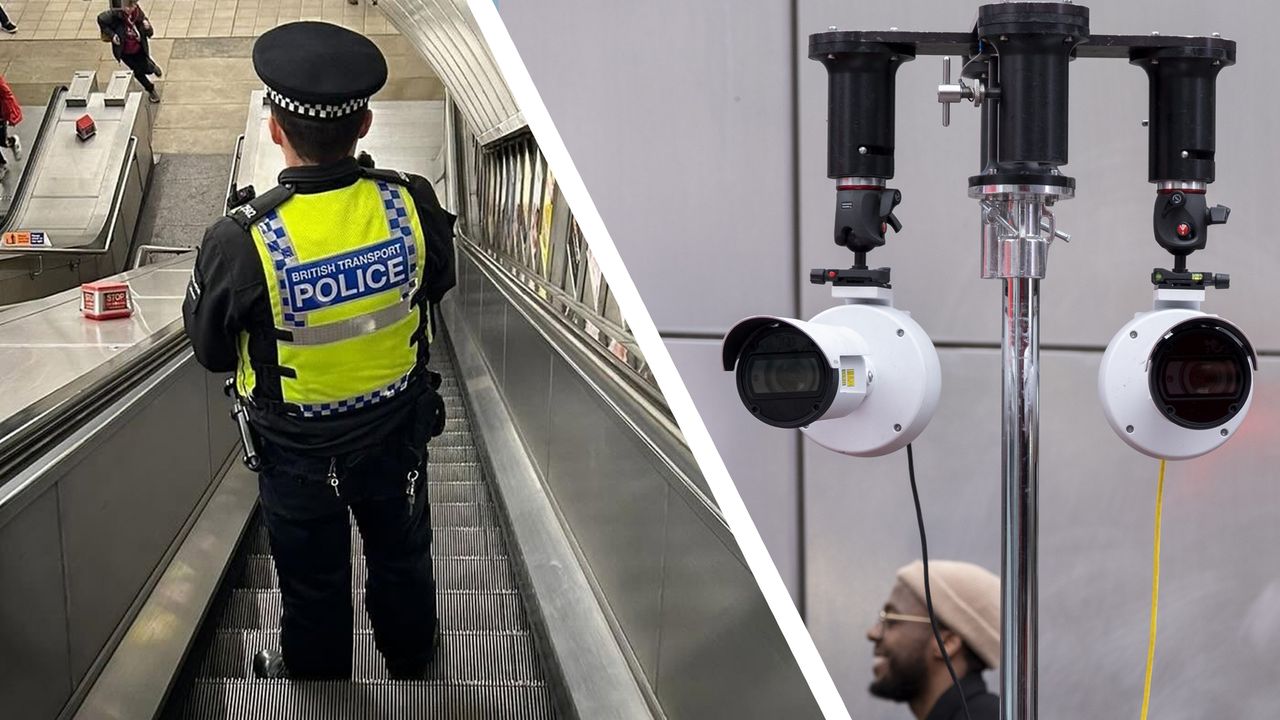
- Facial recognition systems are expanding to the London Underground
- British Transport Police say images will be checked against a watchlist
- Privacy groups are calling the technology intrusive
The debate over public surveillance and privacy is only getting more intense, with the British Transport Police (BTP) the latest organization to stoke the fires: it's expanding a trial of Live Facial Recognition (LFR) technology across several London Underground stations from today.

As per the BTP's official statement, this will start at Victoria and then rotate around other stations until November. "Our deployments are intelligence-led and focused on identifying people wanted by the police or courts, including those suspected of serious offences and those who may be breaching bail conditions or court orders," says the BTP.
The cameras work by comparing scanned faces to a watchlist of suspects and criminals wanted by the police. If there's a match, it's reviewed by a police officer — if not, the image is "immediately and permanently" deleted. The tech is already in use at other transport hubs in London, but is now being expanded to the Tube.
As for opting out of being surveilled, the police say the cameras will come with clear signage, and that "alternative routes" will be available too — which presumably the criminals can also sneak through. It's not clear if sunglasses and a hood would help you avoid being scanned, but you might be politely asked to remove them.
A 'dystopian' expansion
According to the BBC, the BTP are looking out for people wanted in connection with serious offences, including sexual assault, robbery, and knife crime. Police intelligence data will be used to select the stations covered by the cameras, with the aim of reducing violence and harassment.
However, as the BBC points out, scans of some 530,000 faces across UK railway stations since February have resulted in zero matches, zero arrests, and one false identification. That's based on the BTP's own deployment logs, suggesting that to date the technology isn't helping much.
Big Brother Watch director Silkie Carlo suggests that the tech "treats the public like suspects" and is a "disturbing and dystopian expansion" of facial recognition systems. The privacy rights group has long been campaigning against the use of these cameras, arguing that they're intrusive and unnecessary.
The reaction online has been mostly negative too: comments in one Reddit thread question the effectiveness of this type of facial recognition, and air concerns about more nefarious uses of the tech further down the line. However, others also point out that public transport stations are already extensively covered by camera monitoring.