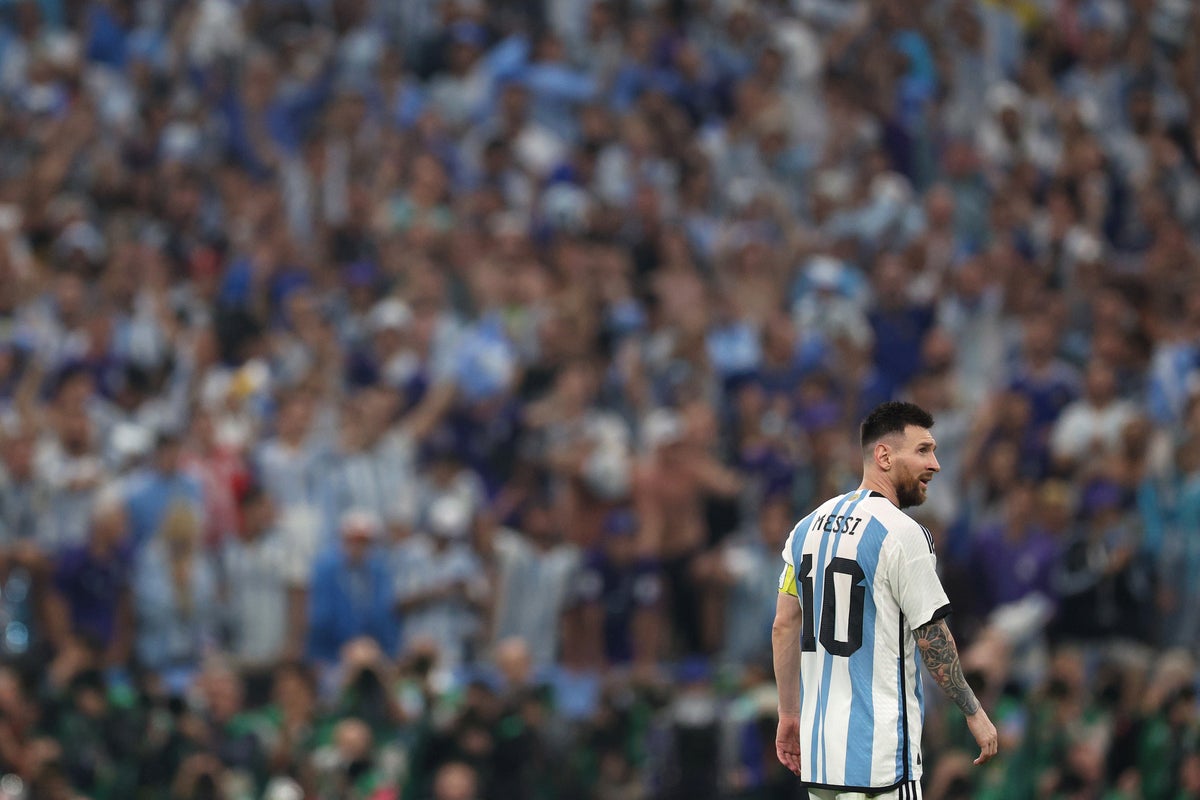
Two hours before kick-off, fans milled up and down Lusail Boulevard in a hubbub of heart-pumping, stomach-gripping anticipation. It is a wide street full of palm trees and bright shops and generic restaurants, a themepark of a place, and this so-called ‘city of the future’ felt like a weird location for some football history. But here they waited, outside McDonald’s and Nando’s and Sainsbury’s, wondering what the night had in store.
This was where Argentina’s destiny would be decided; or rather Lionel Messi’s, for that was who they’d come to see. It was the only way to explain why, beyond Argentina’s core of travelling supporters, thousands of local fans were here wearing Argentina shirts and draped in Argentinian flags. Inside the giant illuminated stadium, a group of young Arabic men took their seats wearing traditional Keffiyeh headdress coloured in the famous blue and white stripes. Thousands of people had come not really to see a World Cup semi-final, nor even to see a football match, as such. They’d come to see a moment.