The popular myth has it that the 1986 World Cup final was about Diego Maradona and 10 others, as though he had single-handedly led a band of no-hopes to glory—which, clearly, was not the case. Maradona was the outstanding player and that team was set up for him, but Jorge Valdano was a classy center forward, Jorge Burruchaga an intelligent runner from midfielder and Sergio Batista a composed and physically imposing holding midfielder. Maradona elevated them, but no tournament is ever won by just one man.
It’s a similar story with Lionel Messi. Clearly, he exists on a plane above the rest of this Argentina side, but then he exists on a plane above almost every footballer who has ever played the game. And no matter how exceptional he was, there was need for contributions from elsewhere. Julián Álvarez, who came into the side only after the opening defeat to Saudi Arabia and scored four goals, proved the perfect foil for Messi, quick, cultured and a fine finisher. Emi Martínez was an aggressive goalkeeper—too aggressive for many tastes—who excelled in penalty shootouts and made a barely credible block from Randal Kolo Muani late in extra time of the final. But really it’s the midfield that provided the platform for Messi that deserves great credit.
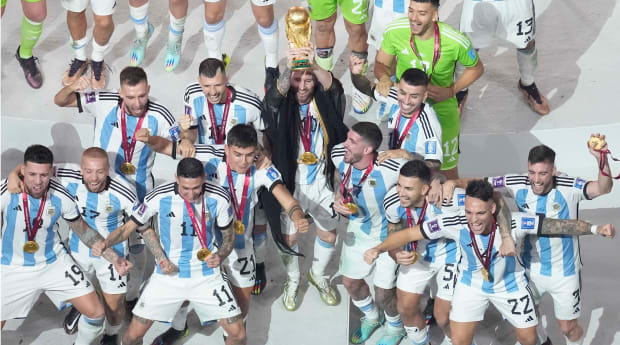
AP/Thanassis Stavrakis