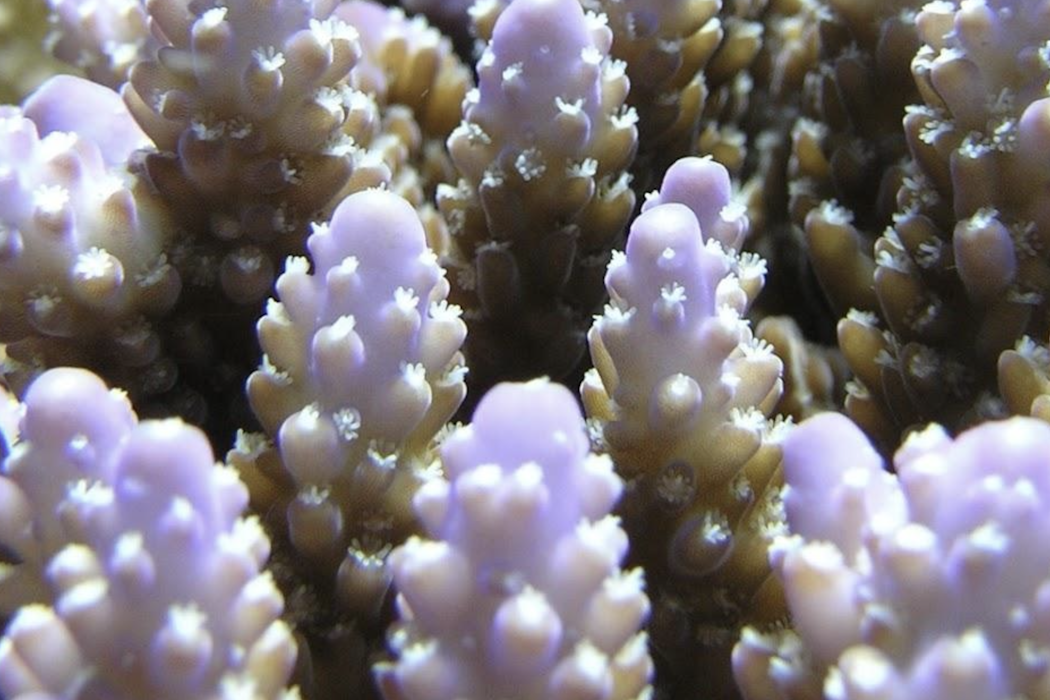
For decades, we have thought of coral reefs as the “rainforests of the sea:” vibrant, complex ecosystems full of fish, sponges, and coral. However, our recent findings suggest we’ve been overlooking a crucial part of this picture. By looking beyond the colourful life into the microscopic world, we have uncovered a “hidden chemical universe” that could hold the key to the next generation of life-saving medicines.
Our work, published in Nature, is the result of an international collaborative effort between the Sunagawa, Paoli, and Piel labs, alongside the Tara Ocean Foundation: France’s first foundation to be recognised as promoting public interest in the world’s oceans, founded by Agnès Troublé alias French Fashion designer agnès b. By combining our expertise in marine ecology, microbiology, and biotechnology, we have taken a closer look at corals. Far more than just individual animals, we prefer to think of them as super-organisms: bustling cities where the coral animal provides the living architecture, while trillions of microbes inhabit them, carrying out vital services.

What we found within these microscopic communities was staggering. After analysing 820 samples from 99 coral reefs across the Pacific, we reconstructed the genomes of 645 microbial species living within the corals. The surprise? More than 99% of them were completely new to science. Deciphering their genetic code revealed that these tiny residents are not silent “germs,” but prolific chemical engineers. They harbour a greater variety of biosynthetic blueprints for natural products than has been documented in the entire global open ocean so far.
How we found out
Our discovery didn’t happen in a single laboratory. It began aboard the 118-foot research schooner Tara, designed to withstand Arctic ice. After completing an extensive exploration of plankton across the global ocean, Tara served as our floating laboratory for the Tara Pacific mission. Over several years, our team visited 99 reefs across the Pacific. Life on Tara combined rugged seafaring with high-tech biology: while the crew managed the ship, teams of divers collected coral samples from remote archipelagos thousands of miles apart.
Back on land, the real detective work began. DNA sequencing at the French National Center of Sequencing (Genoscope) and genome reconstruction using ETH Zurich’s supercomputers allowed us to decode the genetic information from these microbes.
This enabled us to map Pacific coral microbiomes at an unprecedented scale. We found that microbes are highly specific to their coral hosts; each coral species has its own unique microbial fingerprint, shaped over millions of years of evolution.
Why it matters
Most current medical drugs were originally discovered in nature, many from soil bacteria. But we are running out of new “soil” leads, and antibiotic-resistant “superbugs” pose a growing global threat.
Here is where the tiny but mighty “chemical engineers” come in. Within their DNA, these microbes encode Biosynthetic Gene Clusters: instruction manuals for building diverse biochemical molecules, including antibiotics. Because coral-associated microbes live in the highly competitive reef environment, they have evolved sophisticated chemical weapons to defend their hosts or fight rivals. By identifying these Biosynthetic Gene Clusters, we have uncovered a “molecular library” written in a language we are only just beginning to translate. These chemicals may provide solutions to biotechnological challenges and human diseases.
What is next
Our discovery of new microbial species and biochemical diversity in corals is just the beginning. The Tara Pacific expedition studied only a handful of coral species, while at least 1,500 have been described worldwide, highlighting the enormous potential for scientific breakthroughs. But a tragedy is unfolding: as climate change warms the oceans, reefs are dying. When a reef disappears, we don’t just lose a beautiful ecosystem, we witness the “burning” of this library before we’ve had a chance to read the books.
The journey that began on Tara is now a race against time to unlock the secrets contained in the microbiomes of coral and other reef organisms before they are lost forever. Protecting reefs is critical, not only for the environment and the millions of people who directly depend on them, but also for preserving the biological pharmacy that could safeguard human health for generations to come.
A weekly e-mail in English featuring expertise from scholars and researchers. It provides an introduction to the diversity of research coming out of the continent and considers some of the key issues facing European countries. Get the newsletter!
Shinichi Sunagawa received funding from the Swiss National Science Foundation.
Chris Bowler ne travaille pas, ne conseille pas, ne possède pas de parts, ne reçoit pas de fonds d'une organisation qui pourrait tirer profit de cet article, et n'a déclaré aucune autre affiliation que son organisme de recherche.
This article was originally published on The Conversation. Read the original article.