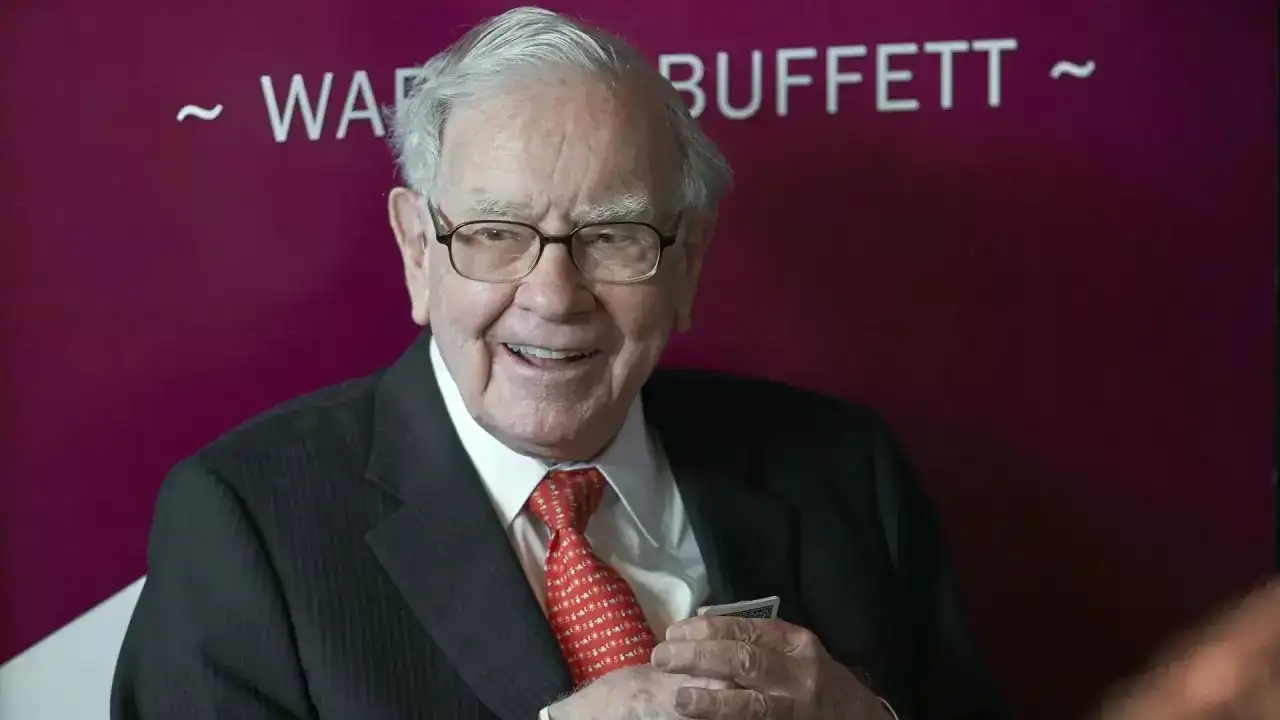
Warren Buffett has turned down more deals than most investors will ever see. Not because the opportunities were bad—many were exceptional. But because he understood something that takes most people decades to learn: saying yes is easy, and it costs you everything.
In an era defined by constant connectivity, the ultimate luxury isn't access; it is focus. Every morning, an average professional wakes up to a barrage of pings, emails, and invitations, each demanding a slice of their cognitive bandwidth. We are conditioned to believe that saying yes to opportunities is the engine of growth. However, the world’s most successful investor suggests that the exact opposite is true. Warren Buffett famously observed that the difference between successful people and really successful people is that really successful people say no to almost everything.

The quote has circulated widely: "The difference between successful people and really successful people is that really successful people say no to almost everything." It sounds simple. It even sounds obvious. But look at how Buffett has actually lived—and the idea becomes something far more unsettling than a productivity tip.
This isn't advice about being cold or dismissive. It's about the economics of attention, the compounding cost of distraction, and why the world's most accomplished people guard their time with an almost irrational ferocity. If you've ever felt stretched thin while trying to do everything right, Buffett's philosophy might be the sharpest corrective you'll encounter.
Meaning of the life lesson: What Does Buffett Actually Mean by "No to Almost Everything"?
To understand the quote, you have to understand how Buffett thinks about time. He once described his investment process as waiting for the perfect pitch—not swinging at every ball, but waiting, sometimes for years, until the conditions were exactly right. "The stock market is a no-called-strike game," he said. "You don't have to swing at everything."
This metaphor runs deep in his philosophy. Unlike baseball, where a third strike ends your turn, investing—and life—lets you stand at the plate indefinitely. You can watch a hundred pitches go by without penalty. The only mistake is swinging at the wrong one.
Most people operate under the opposite assumption. They treat every opportunity as something that must be seized immediately, every request as something that deserves a yes, every open calendar slot as something that should be filled. The result isn't productivity. It's noise.
Buffett's business partner Charlie Munger put it even more directly: "The best thing a human being can do is to help another human being know more. But most of us go through life making promises we can't keep and commitments we water down." Saying yes indiscriminately is a form of dishonesty—with others, and with yourself.
Why Do Smart People Struggle to Say No?
The psychology here is well-documented, and it's uncomfortable. Humans are wired for social approval. Saying no feels like rejection—not just of a request, but of a relationship. It triggers what psychologists call "fear of missing out," the belief that declining something means losing it forever.
There's also the planning fallacy, first described by Daniel Kahneman and Amos Tversky: people consistently underestimate how long tasks take and overestimate their future availability. When someone asks if you're free next month, your brain imagines a version of future-you with mysteriously open afternoons. That version never shows up.
High achievers aren't immune. Research on decision fatigue suggests that the more choices we make throughout the day, the worse our judgment becomes. Every yes you give depletes mental resources you needed elsewhere. This is partly why Steve Jobs wore the same outfit every day, and why Buffett has eaten the same breakfast at McDonald's for decades—they were conserving cognitive energy for decisions that actually mattered.
Buffett has spoken frankly about this. He keeps his schedule nearly empty by design. "I can buy anything I want, but I can't buy time," he told students at the University of Georgia. His calendar, reportedly, looks like something a newly hired assistant might be embarrassed to show a client—vast stretches of unscheduled time. That emptiness is not waste. It's infrastructure.
What History Reveals About the Power of Focused Refusal
The pattern shows up throughout history, in fields far removed from finance.
Charles Darwin turned down dozens of speaking invitations and social obligations after returning from the Beagle voyage. He wasn't antisocial. He was structuring his life around long, uninterrupted stretches of thinking. On the Origin of Species required twenty years of sustained focus—not because the ideas were slow to arrive, but because Darwin refused to let the noise of Victorian professional life interrupt the work.
Newton retreated to Woolsthorpe during the plague years, away from Cambridge's obligations and conversations, and produced what historians now call his annus mirabilis —calculus, the theory of gravity, and foundational work in optics, all within eighteen months. Isolation wasn't a setback. It was the condition.
Steve Jobs, when he returned to Apple in 1997, famously cut the company's product line from hundreds of items to four. He killed projects that people loved, angered teams that had spent years building, and simplified with what felt like ruthlessness. Within three years, Apple was profitable again. The noes didn't diminish the company. They defined it.
The Real Lesson: No Is a Strategy, Not a Personality Trait
The mistake people make when they hear Buffett's quote is treating it as permission to be unhelpful or withdrawn. That misses the point entirely.
Saying no is only powerful when it's in service of a clear yes. Buffett says no to most investments because he has an exceptionally precise picture of what a great investment looks like. Darwin declined social commitments because he was committed to something larger. Jobs cut products because he knew exactly what Apple was supposed to be.
Without that clarity, saying no is just avoidance. The discipline Buffett describes isn't about refusal for its own sake—it's about knowing, with unusual specificity, what you are actually trying to build. Most people never develop that specificity. They say yes to everything because they haven't decided what the one thing is.
There's a useful exercise that Buffett reportedly gave to his pilot, Mike Flint. Write down your top 25 goals. Circle the five most important. The remaining 20? Avoid them at all costs. Not "work on them when you can." Avoid them. Because those 20 goals are compelling enough to consume your attention without ever moving you toward what matters most.
That's the uncomfortable truth embedded in Buffett's quote. The things you're saying yes to aren't trivial distractions. They're interesting, legitimate, often good things. The discipline isn't in refusing the bad. It's in refusing the merely good, in order to protect the exceptional.
The Oracle of Omaha didn't build Berkshire Hathaway by being busy. He built it by being still—and by knowing, with absolute clarity, the rare moments when it was time to move.