Get all your news in one place.
100's of premium titles.
One app.
Start reading
The Economic Times
The Economic Times
Muskan Singh

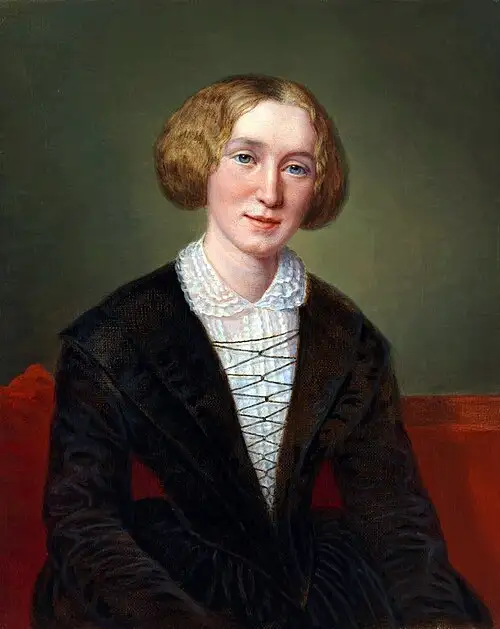
Life lesson of the day by the Victorian-era English novelist George Eliot: 'It is never too late to be what you might have been...'- 'Middlemarch' author's timeless life lesson on why it’s never too late to become who you were meant to be

Life lesson of the day: George Eliot’s powerful words remind us that life is not a race with a fixed deadline. Many people quietly carry dreams they once abandoned because of age, responsibilities, fear, or circumstances. But Eliot’s wisdom challenges that belief. Our past may shape us, but it does not have to decide who we become. There is always room for growth, reinvention, and discovering a version of ourselves that has been waiting to emerge.

Life lesson of the day by George Eliot

“It is never too late to be what you might have been.”

George Eliot's remarks debunk the redundant notion that our dreams have an expiration date. No matter our age or situation, there is always time to reach our goals and realize our fullest potential. This powerful life lesson of possibilities and hope is quite relevant and inspiring.

George Eliot’s Life Proved That Reinvention Has No Age Limit

George Eliot understood the complexity of human change better than most writers of her time. Born Mary Ann Evans on November 22, 1819, in Warwickshire, England, she became one of the greatest novelists of the Victorian era. Writing under the pen name George Eliot, she challenged social expectations and created some of the most psychologically rich characters in English literature. Her life itself became an example of transformation, courage, and the pursuit of purpose., as per Britannica.

George Eliot’s journey was not a simple path toward fame. Her early years were shaped by strict religious traditions, personal struggles, and questions about society, faith, and human nature. As a young woman, she was expected to follow the traditional role placed on women during the Victorian period. Instead, she developed a deep love for books, philosophy, and independent thought.

Her intellectual curiosity eventually led her away from the life others expected her to live. She studied widely, translated important works, worked as an editor, and became involved in London’s literary world. At a time when women writers were often dismissed or underestimated, she chose to publish under the name George Eliot because she wanted her work to be judged by its ideas rather than by assumptions about her gender.

Her story is a reminder that becoming your true self often requires the courage to step away from expectations. The person you are today does not have to be limited by the person others thought you should become.

READ ALSO: A new breakthrough in the Nancy Guthrie case: Is Nancy Guthrie dead? Did the investigators' mistake with the ransom money cost them a chance to find her? Here's what a new report reveals

Why Did George Eliot Believe Change Was Always Possible?

The meaning behind George Eliot’s famous life lesson goes deeper than simply chasing dreams. It speaks about personal evolution. Many people believe that missed opportunities are gone forever, but Eliot’s own journey shows that growth can happen at any stage of life.

She did not publish her first major novel, Adam Bede, until she was nearly 40 years old. Before becoming one of the most respected authors in history, she spent years studying, translating, writing essays, and developing her voice. Her greatest works, including The Mill on the Floss, Silas Marner, and Middlemarch, came after years of preparation and self-discovery, as per Britannica.

Her success was not the result of overnight luck. It came from patience, discipline, and the willingness to keep becoming better.

This is one of the greatest lessons from George Eliot’s life. Sometimes the delay is not a denial. Sometimes the years spent learning, struggling, and changing are preparing us for the moment when we are finally ready.

Your Past Does Not Have the Final Word

One of the reasons George Eliot’s novels remain powerful today is because she understood people. Her characters were not perfect heroes. They were ordinary individuals dealing with regret, ambition, mistakes, love, disappointment, and the search for meaning.

In Middlemarch, often considered her masterpiece, Eliot explored how small choices and personal decisions shape a person’s future. She showed that even quiet lives can contain enormous possibilities. A person does not need to be famous or extraordinary to create change. Sometimes the most meaningful transformation happens privately, through daily choices.

Her message applies to everyone. Whether someone wants to begin a new career, return to education, rebuild confidence, start a creative journey, or simply become a better version of themselves, the opportunity for change is still there.

READ ALSO: Quote of the Day by Carl Rogers: 'If I let myself really understand another person, I might be...'- Inspiring lessons on empathy, fear, and human connection by the famous American psychologist, esteemed as one of the founders of humanistic psychology

The Real Meaning Behind George Eliot’s Words

“It is never too late to be what you might have been” is not a promise that life will always be easy. It is a reminder that potential does not disappear just because time passes.

Dreams may change. Paths may take unexpected turns. But people continue to grow throughout their lives. The person you imagined becoming years ago may not be exactly who you become today, and that is perfectly natural. What matters is having the courage to listen to yourself and take the next step.

George Eliot’s legacy is not only her novels but the example she left behind. She questioned limits, ignored narrow expectations, and built a life around learning and creativity. Her journey proves that a late beginning can still become a remarkable story.

The best chapter of your life may not be behind you. It may simply be waiting to be written.

READ ALSO: Thought of the Day by the father of Political Philosophy Plato: 'Every heart sings a song, incomplete, until...'- Do we all become poets in love? Here's a timeless thought on love, connection, and the poet within us

What Can We Learn From George Eliot’s Greatest Works?

George Eliot’s novels became famous because they explored real human emotions. She wrote about ambition, regret, love, failure, responsibility, and the choices that shape our lives.

In The Mill on the Floss, she examined family, identity, and the struggle between personal dreams and social expectations. In Silas Marner, she showed how loss can eventually lead to unexpected renewal. Her masterpiece, Middlemarch, explored the lives of ordinary people and showed that even small decisions can have lasting consequences.

Her characters were not perfect. They made mistakes, carried regrets, and searched for meaning. That is why her writing still feels relevant today. Eliot understood that human beings are always changing. A person is never completely defined by one mistake, one failure, or one chapter of life. Her message was simple but profound: growth is always possible.

READ ALSO: Life lesson of the day by Muhammad Ali: 'You lose nothing when you fight for...'- A powerful life lesson about courage, purpose and fighting for your beliefs by one of the greatest boxers in history

The Courage to Start Again

Many people believe that success belongs only to those who start early. George Eliot’s life challenges that idea. She did not become famous because everything happened at the perfect time. She became successful because she continued moving forward despite uncertainty.

Starting again requires a special kind of courage. It means accepting that your past does not have to control your future. It means believing that experience, even painful experience, can become a source of wisdom.

Eliot’s own journey included moments of criticism, isolation, and judgment. Yet she continued writing and creating work that would influence generations of readers. She proved that personal growth is not limited by age or circumstances.

READ ALSO: Quote of the Day by William Shakespeare: 'It is a wise father that knows his own...'- Timeless lessons on parenting, family values, fatherhood, responsibility and the value of understanding your child’s heart by the greatest dramatist of all time

George Eliot’s Legacy and the Meaning of Her Life Lesson

George Eliot passed away on December 22, 1880, in London, but her influence has never disappeared. Her novels remain among the most respected works of English literature, and her ideas about human nature continue to inspire readers around the world, as per Britannica.

Her famous life lesson reminds us that there is no expiration date on becoming better, wiser, or more fulfilled. The person we want to become may not appear exactly when we expect, but that does not mean the journey is over.

Sometimes life takes us through unexpected roads before bringing us closer to ourselves. The important thing is not how late we begin. The important thing is whether we are willing to begin at all.

George Eliot’s story proves that a person’s greatest chapter can arrive after years of searching. The future is not reserved for those who started early. It belongs to those who keep growing.

Sign up to read this article
Read news from 100's of titles, curated specifically for you.
Already a member? Sign in here
Related Stories
Top stories on inkl right now
One subscription that gives you access to news from hundreds of sites
Already a member? Sign in here
Our Picks
Fourteen days free
Download the app
One app. One membership.
100+ trusted global sources.