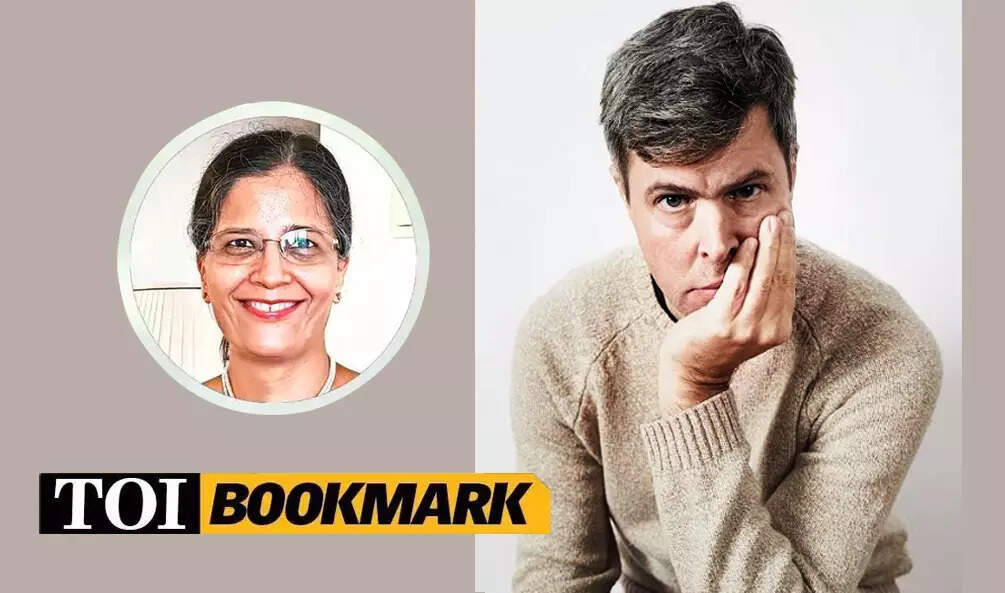
Excerpts from the interview:
Q: How did this book come about?
A: This book had a slightly unusual beginning. I started writing it having just abandoned another book. I'd written quite a lot of it, nearly 100,000 words. And after wrestling with it and in a state of increasing anxiety for some months, I finally decided to abandon this project. And it was after having done that that I started to write the book that became Flesh. And I think to help me cope with the pressure of that situation, I started with a few very simple sort of elements that I knew I wanted to work with and write about. And one of those was that I wanted the new book to have both an English and a Hungarian aspect to it somehow. And another aspect of the new book that I was sure of from the beginning was that it would, at least initially, be about life as a physical experience...
Q: I was taken in by the kind of monotonous beat of the conversation, the dialogues, the monosyllables.
A: Somebody referred to the dialogue in the book as being largely non-functional... The dialogue in the book doesn't always or, in fact, rarely does it move the narrative forward... The banality itself has a kind of delicious quality that I enjoy. It's an important part of the realism of the book.
Q: I kept feeling as if Istvan was inhabiting the role of an everyman.
A: There's always a danger of that figure being sort of dull and unconvincing because obviously the character in a novel has to have a high degree of specificity. And I think Istvan does and is a real specific individual. But his experience as an economic migrant, as someone simply trying to make their way in the world in some sense is universal.
Q: I liked the way in which you put the lens on masculinity.
A: I didn't really set out to write a novel about masculinity. Of course, if you write a novel set in the contemporary world with a male protagonist, then that novel almost inevitably will be, in some sense, about masculinity. But I wasn't writing a book very specifically about masculinity. So I always push back slightly against readings of the book that put too much emphasis on that aspect. I think that Istvan's experience is the experience of a man. He happens to be a male character. And I tried to portray his experience as truthfully as I could. But beyond that, he's also a human being in a wider sense.
Q: Why this title?
A: It was literally the name of the word file on my laptop from very early on in the process of writing this book. And so it was a word that I just alighted on instinctively. One of the most important aspects of the book from a very early stage for me was this emphasis on physicality. We are living bodies... fundamentally. So I think the word was about that... We had doubts about it because it does have a sort of slightly vulgar, tawdry feel to it. It doesn't feel very literary. It's clearly inelegant. It's sort of rough, almost brutal. But all of these aspects of the word we felt were probably good things, or at least relevant. They said something true about the book as well. I think it's quite an impactful, memorable title. It's probably an intriguing title.
The word flesh also is a very important word in the Bible and in Shakespeare. There are various famous phrases from the Bible. The way of all flesh, for instance. They tend to be about mortality and about the moral burden of physicality. On the American cover of the book is the image of an apple, which immediately brings to mind the Garden of Eden.
Q: You come across this amazing cast of characters in the different cities, different points of his life. There's nothing which is black or white.
A: I wanted this book as far as possible to reflect that. And I was very keen that it was always that all the moral situations that the book deals with — and it deals with many — really remain quite gray. It's quite difficult to resolve the situations morally in the reader's own mind, I think. But I hope that that's a sort of satisfying experience.
Q: You make the ambitions of an individual very real.
A: Much of the book is about his ambition in various ways. But finally, the book is also about the limits of ambition and the limits of what ambition can give you in terms of happiness, I suppose.