Get all your news in one place.
100’s of premium titles.
One app.
Start reading
Budget and the Bees
Budget and the Bees
Latrice Perez

License Plate Readers Are Everywhere: What They Capture, How Long It’s Kept, and Who Can Request It

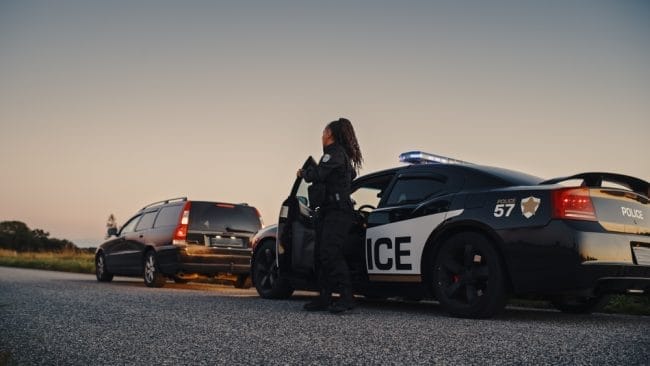
License Plate Reader
Image source: shutterstock.com

You drive past a police cruiser or a traffic camera, and you probably don’t give it a second thought. But behind the scenes, a high-speed camera called an Automated License Plate Reader (ALPR) just captured your location, time, and identity. These devices are not just for catching criminals; they are part of a massive, mostly unregulated surveillance web. Every time you drive to the grocery store, the doctor, or a friend’s house, a record of your journey is being created and stored. We are diving into the reality of how your movements are being tracked and who actually has access to that data.
1. Precise GPS Coordinates and Location Maps

The system records the exact GPS coordinates of your vehicle at a specific moment in time. Honestly, the scale of this data collection is staggering, yet most citizens have no idea it exists. These cameras are mounted on police cars, bridges, and even private tow trucks. This data can be used to build a virtual map of your daily life, showing where you work, shop, and socialize. Over months and years, this information paints a very intimate picture of your private habits. On the other hand, the law hasn’t caught up with the speed of this technology. There are very few federal limits on how this location history can be used.

2. Time-Stamped High-Resolution Visual Evidence

An ALPR doesn’t just record the plate number; it takes a photo of the vehicle and sometimes the occupants inside. This provides a timestamped image of your car, including its make, model, and color. On the other hand, law enforcement argues these tools are essential for finding stolen cars and missing persons. However, the line between public safety and mass surveillance is becoming increasingly blurred as more cameras are added to the grid. These photos are often high-resolution enough to see who is in the passenger seat. Surprisingly, these images are often stored even if the vehicle is not linked to any crime. You are being recorded just for existing in public space.

3. Historical Commute and Behavior Patterns

The cameras can capture data that reveals sensitive details about your private life. The system might record whether you were parked at a protest, a place of worship, or a medical clinic. This creates a historical pattern of your behavior that could be misinterpreted by authorities. Surprisingly, this data is often kept for years, depending on local state laws and department policies. If you visit a specific area frequently, the algorithm can flag you for further scrutiny. That said, you have no way of knowing what your digital profile looks like. It is a silent witness to every mile you drive on public roads.

4. Interstate Data Sharing and Fusion Centers

The biggest concern is not just that the data is collected, but who can see it. Law enforcement agencies often share these databases across state lines through regional fusion centers. This means a record of your travel in one state could be accessed by police in another state without a warrant. That said, private companies also maintain massive databases of plate scans that they sell to third parties. These centers act as central hubs for information, combining your driving records with other personal data. Honestly, the lack of oversight in these facilities should concern every driver.

5. Private Sector Access and Commercial Sales

Private companies like Vigilant Solutions maintain massive databases of plate scans that they sell to insurance companies and lenders. Even private investigators can sometimes gain access to this information for a fee if they know which database to query. This turns a public safety tool into a profitable commodity sold to the highest bidder. On the other hand, repo agents use these readers to find cars with outstanding loans in real-time. The system is designed to make it impossible to hide your vehicle. Surprisingly, some malls and grocery stores are now using their own readers to track customer habits.

The Future of Privacy on the Road

As technology advances, the net will only get tighter. Recognizing that your movements are being tracked is the first step toward advocating for better privacy protections. We must demand transparency from our local governments about how this data is used and stored. Your right to move freely without being monitored is a cornerstone of a free society. Stay aware, stay informed, and don’t let your digital shadow be used against you.

Does it bother you that your daily commute is being tracked? Share your thoughts in the comments below.

What to Read Next…

The post License Plate Readers Are Everywhere: What They Capture, How Long It’s Kept, and Who Can Request It appeared first on Budget and the Bees.

Sign up to read this article
Read news from 100’s of titles, curated specifically for you.
Already a member? Sign in here
Related Stories
Top stories on inkl right now
One subscription that gives you access to news from hundreds of sites
Already a member? Sign in here
Our Picks
Fourteen days free
Download the app
One app. One membership.
100+ trusted global sources.