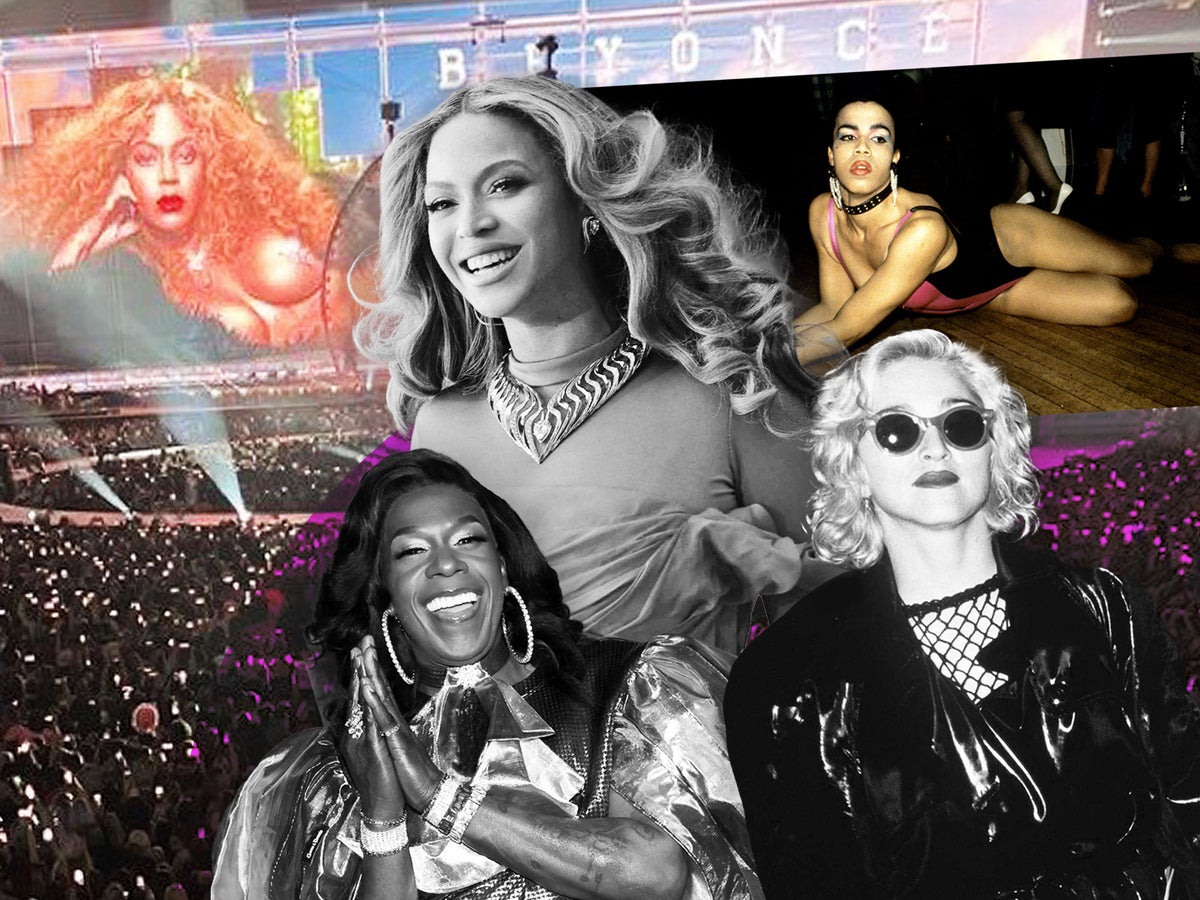
At the close of the Barcelona stop on Beyoncé’s much-hyped Renaissance world tour – a dazzling, Afrofuturist fantasia full of sexy androids, a rolling six-wheeled tank, and Queen Bey herself sitting astride a giant crystal horse – an image flickered on the jumbotron at the centre of the stage. It was Beyoncé’s late Uncle Jonny, a man she’s described as her “godmother” and the first person “to expose me to a lot of the music and culture” that’d go on to inspire her Renaissance album, which was released last summer. “Thank you to all of the pioneers who originate culture,” Beyoncé wrote in a dedication for the record. “To all of the fallen angels whose contributions have gone unrecognised for far too long.”
Ricky Tucker, a writer and the author of And the Category Is . . . : Inside New York’s Vogue, House, and Ballroom Community, was one of the 53,000 people watching Beyoncé perform at Barcelona’s Estadi Olimpic Lluis Companys in early June; he’d made the pilgrimage to the city from New York especially to see her. As Jonny flashed on the screen, Tucker’s thoughts turned to his aunt Veronica, his mother’s sister, who – like Jonny – also died of Aids-related complications, and also exposed him to the wider gay world when he was growing up in North Carolina. “My aunt Ronny was one of the first people that taught me about Paris Is Burning,” he tells me, of the groundbreaking 1990 documentary about drag and ball culture in New York. “She was a club kid, real hip, and gay. For Beyoncé to dedicate this album to her uncle… it meant a lot to me. I just burst into tears.”