Get all your news in one place.
100's of premium titles.
One app.
Start reading
The Economic Times
The Economic Times
Mudar Patherya

Let sleeping bourses lie: Why the new BJP West Bengal govt shouldn't help resurrect Calcutta Stock Exchange

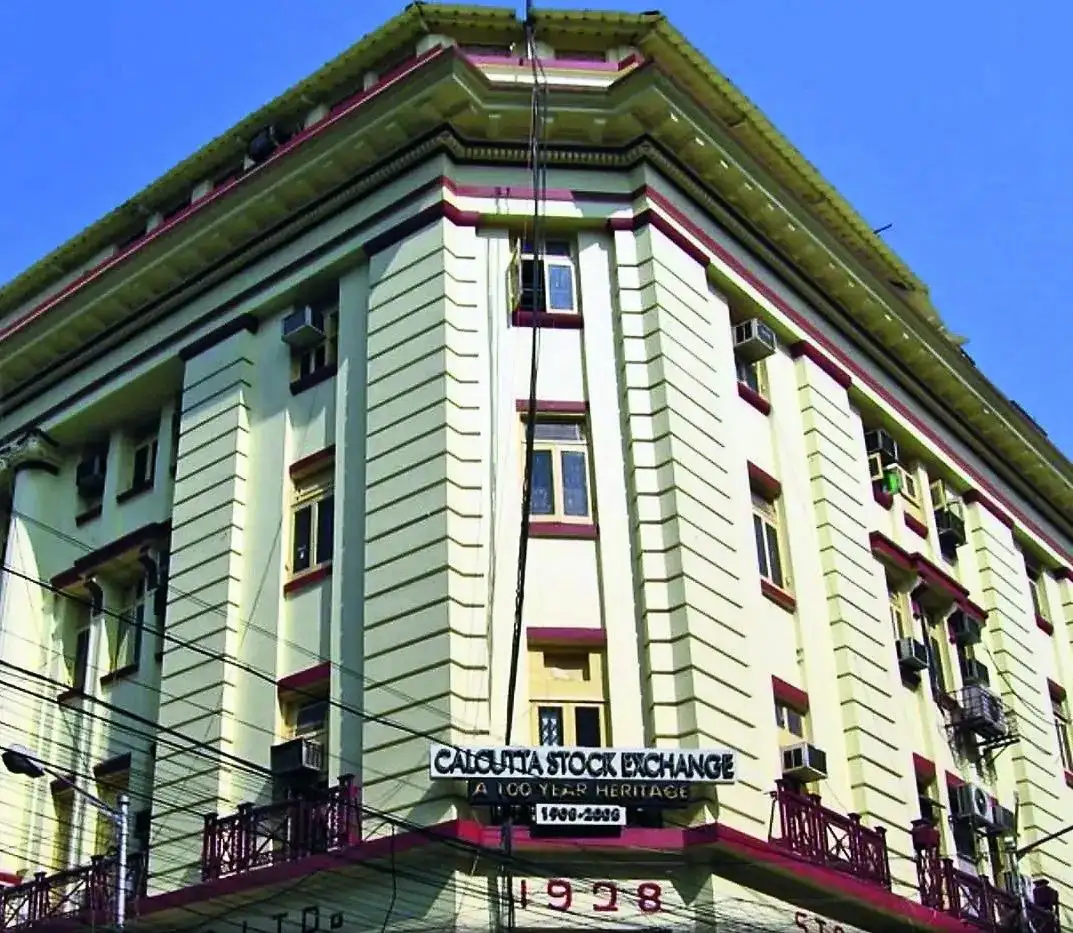
While presenting the 2026 state budget, West Bengal finance minister Swapan Dasgupta stated that the new BJP government wants to help bring Calcutta Stock Exchange (CSE), a 118-yr-old institution that has not seen a single trade in over a decade, back to life. This plan, according to Dasgupta, is part of the government's vision for a 'Viksit Bharat' and 'Viksit Bengal'.

Before a single rupee of capital is committed to any revival plan, here are 6 reasons why that's the last thing the government should try to do:
No one asked for another equity exchange

Sebi approved the voluntary exit of as many as 28 regional exchanges over the past decade, watching each one shut as liquidity migrated to where liquidity always migrates: towards the deepest pool. One is left to wonder whether the new Bengal government's support will be moral or financial. And whether either will be sufficient.

Talent crunch

Talent required to build and operate a modern exchange from scratch does not exist in Kolkata. Technology architecture, risk management, surveillance systems, clearing and settlement, market-making, compliance, cybersecurity, data centres, disaster recovery - these are not disciplines that can be willed into existence by government support.

To import expertise from Mumbai or Bengaluru means paying above market rates for relocating professionals, enduring Kolkata's quality-of-life constraints, and building something that has no survival assurance. To expect a stock exchange to counteract Kolkata's structural downsides is to expect the tail to wag the dog.

NSE challenge

CSE's revival will be competing against an exchange with a market valuation likely to exceed $60 bn, listing over 2,800 companies, and operating Nifty - the index that has become shorthand for India's economic ambition.

NSE did not merely win the market. It made the market - and, hence, made the concept of a physically-located regional exchange conceptually redundant. Geography, which once gave CSE its raison d'etre, has been made redundant by fibre-optic cable and cloud infrastructure. That architecture cannot be competed with, it can only be joined.

Building costs

Initial infrastructure costs - technology, network, regulatory compliance, clearing systems - could reach an estimated ₹1,000 cr before the first rupee of transaction revenue is earned. That is a substantial leap of faith, demanding patience, capital and an optimism that the market itself has consistently declined to supply.

The same ₹1,000 cr invested in financial literacy infrastructure, distributor networks or SME credit platforms across Bengal could generate superior returns - social and economic - within a measurable timeframe. A new exchange would face the permanent problem of persuading traders to leave the deepest pool of liquidity in the country for a shallower one closer to home.

Conventional or specialised

Dasgupta announced support for CSE's revival without specifying whether he envisioned a conventional equity exchange or a specialised one. The distinction matters. As a general-purpose competitor to NSE, it fails on Day 1 with a higher operational cost, and inability to provide any incremental digital value beyond the industry average.

As a niche regional platform, perhaps focused on SME listings, it may just survive long enough to prove a concept. But niches are not safe harbours in financial markets. NSE moves fast, adapts continuously, and could render any specialised positioning irrelevant.

Net worth?

Sebi's minimum requirements for a recognised stock exchange include a net worth of ₹100 cr and annual trading volume of ₹1,000 cr. CSE, dormant since 2013, possesses neither. It filed a voluntary exit application in Feb 2025. The fact that the exit order has not yet been issued creates a narrow technical window. But it is not an invitation. It's merely an unopened door in a corridor marked for closure.

What, then, should CSE become? The answer is not nothing. It could be useful as an institution reimagined, rather than resurrected: startup funding platforms, trading infrastructure for municipal and infrastructure bonds, carbon-credit markets, cash market for equities, Bengal-focused investment products, fintech incubation, as well as a training and consulting institute.

In that last role above all, CSE could become not a competitor to NSE but its most valuable eastern outpost - collaborating rather than contesting, evangelising the equity cult across a region still waiting to discover it. Bengal's mutual fund AUM per capita stands at ₹37,200, a mere 0.7x the national average and a fraction of Maharashtra's ₹2,37,000.

The transition of Bengal's savers - from FDs and gold and life insurance policies into equities - represents a larger economic opportunity than any trading floor could generate. Without that transition, a revived CSE would merely be a transaction interface for a moderately ageing investor population: a classist ambition dressed as a developmental one.

Reviving CSE, as presently conceived, is the financial equivalent of instructing a man whose death certificate is being drafted to run 100 m in 10 secs. If the Suvendu Adhikari government's political support can attract an investor brave enough, resourceful enough, and visionary enough to pull this off, CSE could well become a global case study in institutional resurrection.

Bengal has produced stranger miracles. It is that markets, unlike poets, are not moved by the possibility of miracles.

The writer is CEO, Trisys

Sign up to read this article
Read news from 100's of titles, curated specifically for you.
Already a member? Sign in here
Related Stories
Top stories on inkl right now
One subscription that gives you access to news from hundreds of sites
Already a member? Sign in here
Our Picks
Fourteen days free
Download the app
One app. One membership.
100+ trusted global sources.