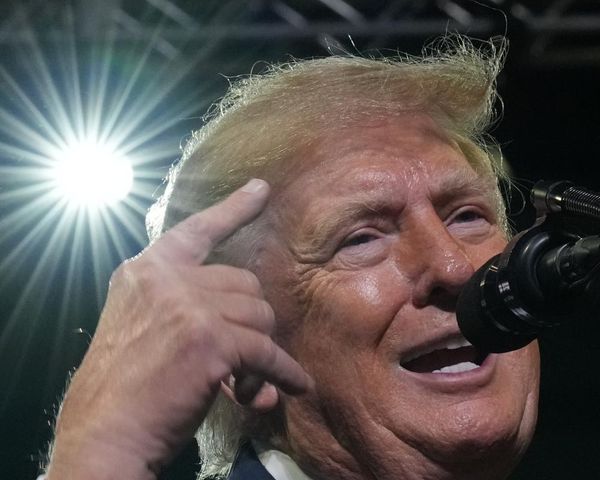
Elon Musk is on the brink of becoming the world's first trillionaire next week, as the planned initial public offering of SpaceX in the United States is set to push the Tesla chief executive's total net worth to an estimated $1.11 trillion, according to figures cited by CNN.
Musk's companies, led by electric car maker Tesla and rocket and artificial intelligence firm SpaceX, underpin his fortune. He already controls about $273 billion in Tesla stock and options. If the SpaceX IPO goes ahead at the valuations bankers are now touting, he would own nearly half of a company that public markets are expected to price at roughly $1.77 trillion, handing him a further $841 billion on paper. It would mark a level of individual wealth without precedent in modern capitalism.
This is not a pile of notes in a vault. Musk's apparent fortune is almost entirely 'paper wealth' tied to market prices. If investors sour on Tesla or SpaceX, those headline numbers can shrink just as quickly as they ballooned. But on current expectations, he is about to stride into a financial category all his own, overtaking not just his long-time rival Jeff Bezos but an entire tier of tech founders in one leap.
The Trillion-Dollar Scale
Musk's possible shift into trillionaire status is being framed by some analysts as a useful, if uncomfortable, moment to ask what a trillion dollars really is. Put bluntly, it is a million million dollars. That kind of money is so abstract that economists resort to thought experiments. Spend $1 million every single hour, without pausing for sleep, and it would still take more than a century to run through $1 trillion.
Set against that scale, the idea that one man's holdings could outweigh entire countries is not just a metaphor. According to data from the International Monetary Fund cited in the report, only 20 national economies on Earth produce more in a year than the $1.1 trillion that Musk may soon be worth on paper.
That leaves the vast majority of nations theoretically 'smaller' than Musk in pure dollar terms. Taiwan's economy is put at around $977 billion, Ireland's at $779 billion, Sweden's at $760 billion and Singapore's at $660 billion. Even South Africa, Musk's birthplace, trails far behind, with an output of about $480 billion.
It is a provocative comparison, and also an incomplete one. A country's gross domestic product measures annual production, while a personal net worth is a stockpile of assets valued at a particular moment. Yet the juxtaposition underlines why his trajectory is sparking fresh debate over how concentrated financial power has become at the very top of the tech pyramid.
It's a staggering amount of wealth never seen before in the history of human commerce.
— CNN (@CNN) June 6, 2026
To help put it in context, here are six things that are (soon) to be worth less than Elon Musk. https://t.co/LE9Lq2kimc pic.twitter.com/vnI39X9ZUm
When One Man Outweighs Manhattan, Houston and Every New Car
Those country-level figures are not the only yardsticks that suddenly look small next to Musk's expected fortune. The GDP of Manhattan, perhaps the emblem of American corporate power, was just over $1 trillion in 2024, based on Federal Reserve data. One densely packed island hosting Wall Street and a thicket of global headquarters is, on paper, now heading for a smaller economic footprint than a single executive's holdings.
Move south-west, and the scale plays out in property rather than productivity. All the residential and commercial real estate in Houston, a core hub of the US oil and gas industry, is estimated to be worth about $879 billion. If the SpaceX IPO lands where bankers hope, Musk alone would be able to match, and comfortably surpass, the total value of every home, office and warehouse in one of America's largest cities.
Even the combined cost of Americans' most expensive everyday assets falls short. New vehicles are, after housing, the biggest purchase most households make. In 2025, the average price of a new car in the US climbed to $48,402, yet buyers still drove 16.3 million of them off the lot at a total cost of $789 billion. In theory, Musk's future balance sheet could swallow the entire value of that year's new car market with room to spare.
Then there is the billionaire league table itself. On current estimates, Musk is already the richest person alive. But if SpaceX lists at the suggested price, he will not just edge ahead of his peers; he will eclipse them. The combined estimated wealth of the next four richest tech founders Google's Larry Page and Sergey Brin, Oracle's Larry Ellison and Amazon's Jeff Bezos sits at around $1.09 trillion. Together, they would still fall just short of Musk's projected $1.11 trillion.
The comparison is almost theatrical, but the numbers come from stock markets rather than fiction. Like Musk, those four men owe their fortunes primarily to the shares of the companies they created. Their wealth rises and falls with investor faith in technology's future. If anything, that makes the looming trillion even more fragile, and more striking.
The final marker is perhaps the most revealing of billionaire tastes. Forbes estimates that the 50 most valuable sports teams worldwide are worth a combined $353 billion, from the Dallas Cowboys at about $13 billion down to the Toronto Raptors at roughly $5 billion. If the figures hold, Musk could, at least in theory, buy the entire upper tier of global sport almost three times over.
None of this is guaranteed. The SpaceX IPO has not yet taken place, valuations can change, and nothing is confirmed until shares actually start trading, so every projection should be taken with a grain of salt. But even as a thought experiment based on the latest filings and estimates, the idea that one man might soon be 'worth' more than Manhattan, Houston, a year's worth of American cars and the combined hauls of Bezos, Ellison, Page and Brin captures how far the age of the tech founder has bent the economic map out of its old shape.