Get all your news in one place.
100's of premium titles.
One app.
Start reading
The Conversation
The Conversation
Mireille Rebeiz, Chair of Middle East Studies, Dickinson College

Lebanon’s orchards have been burnt, wildlife habitat destroyed by Israeli strikes – raising troubling international law questions

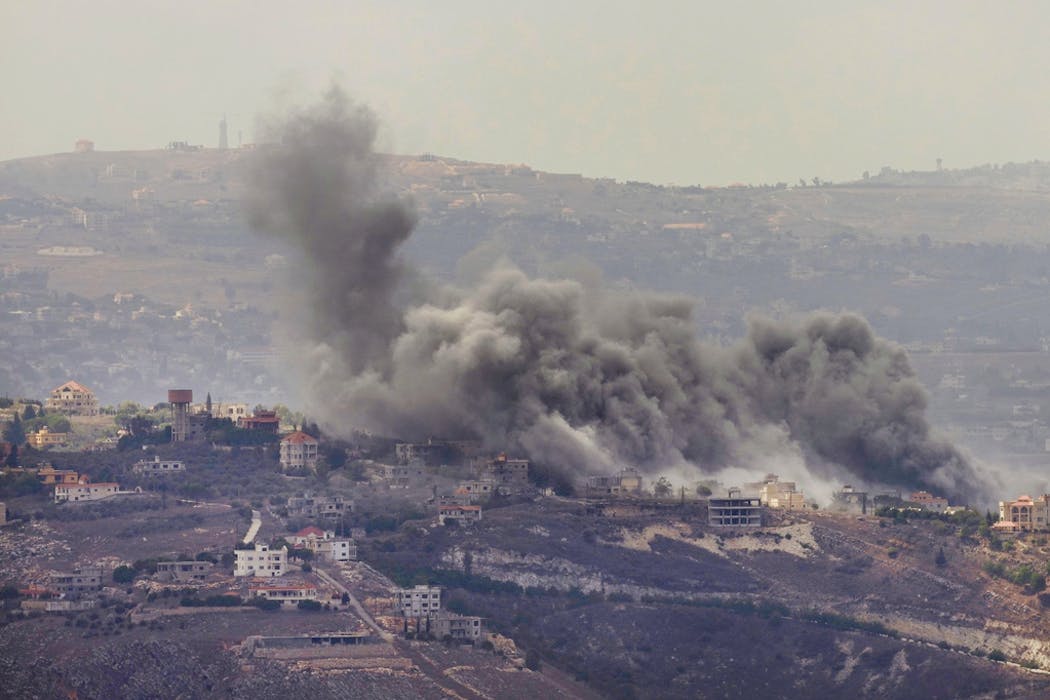
Smoke rises from Israeli airstrikes on southern Lebanese villages on Sept. 23, 2024. AP Photo / Hussein Malla

More than a year after a ceasefire nominally ended active fighting, much of southern Lebanon bears the ecological scars of war. Avocado orchards are gone and beehives destroyed. So, too, are the livelihoods they supported. Meanwhile, fields and forests have disappeared under the intense fire caused by white phosphorus shelling. Shrapnel and unexploded bombs, however, remain.

Such grim realities are a window into the massive ecological destruction brought to Lebanon as a result of the 2024 war between Hezbollah and Israel. The number of Israeli airstrikes from October to November of that year ranked among the highest globally in the 21st century.

Sign up to read this article
Read news from 100's of titles, curated specifically for you.
Already a member? Sign in here
Related Stories
Top stories on inkl right now
One subscription that gives you access to news from hundreds of sites
Already a member? Sign in here
Our Picks
Fourteen days free
Download the app
One app. One membership.
100+ trusted global sources.