Get all your news in one place.
100's of premium titles.
One app.
Start reading
The Independent UK
The Independent UK
Steve Fowler

Leapmotor B10 review – is this the UK’s best-value family car?

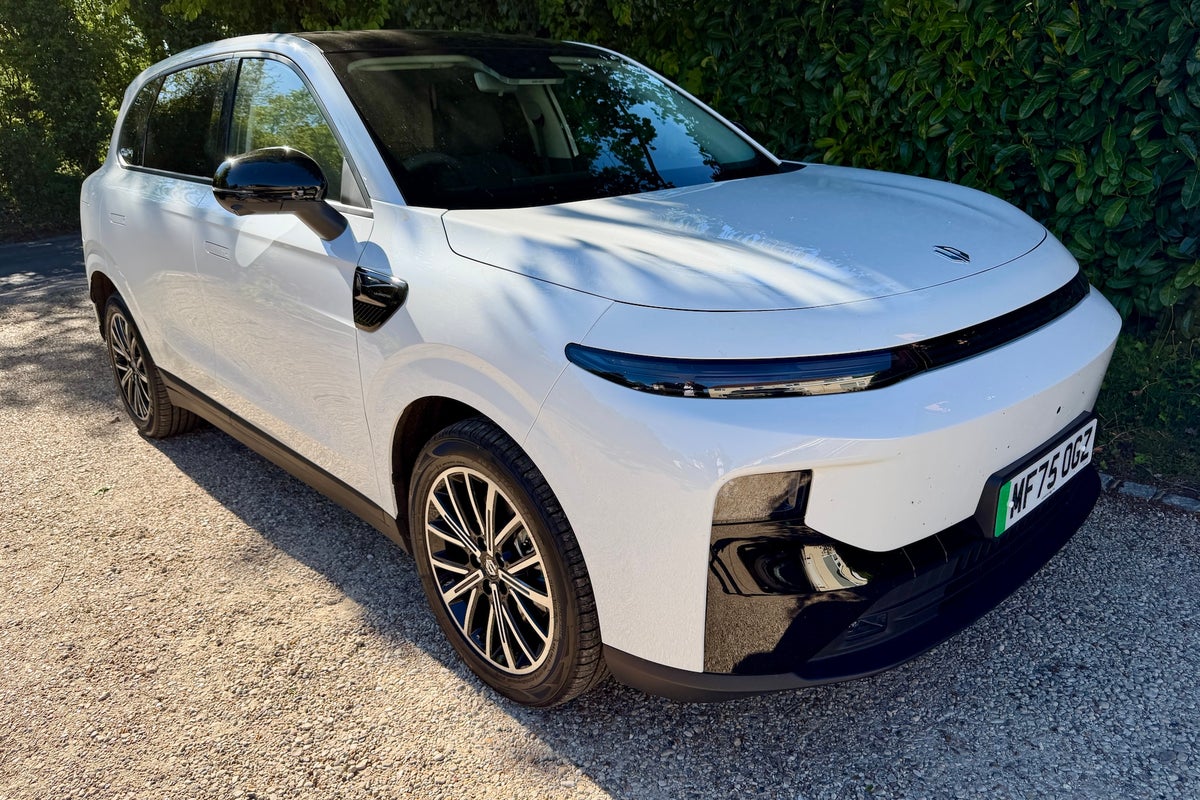
The Leapmotor B10 electric family SUV costs just £29,995 including the £1,500 Leap-grant - (Steve Fowler)

The Leapmotor B10 is one of those cars that makes you do a bit of mental arithmetic before you’ve even driven it. Not because the range, charging speed or boot space are especially hard to understand, but because the price and kit list don’t quite seem to add up in the usual way.

Here is a family-sized electric SUV, with a 67.1kWh battery, rear-wheel drive, up to 270 miles of range, heated and ventilated electric front seats, a heated steering wheel, panoramic glass roof, electric tailgate, 360-degree camera, 12-speaker stereo, 14.6-inch touchscreen, vehicle-to-load capability, 18-inch alloy wheels and a long list of driver assistance systems. And yet, after Leapmotor’s own £1,500 grant, it costs just £29,995.

That is the whole point of the B10. Leapmotor is a Chinese brand, but in the UK it arrives with a bit more reassurance behind it than some new names, because Leapmotor International is a Stellantis-led joint venture – and, of course, Stellantis owns Vauxhall, Peugeot, Citroen, Fiat, Jeep and Alfa Romeo (among other brands).

That means Leapmotors are sold through existing and familiar Stellantis retail sites, with 60 UK retailers at launch, rather than a handful of pop-up showrooms and a familiar promise that more support is coming later.

The B10 follows a very simple approach, too. There is one trim level, one battery size and a long list of equipment fitted as standard. That means buyers won’t be confronted by a complicated range ladder to get the kit they really want. The only real decisions are the colour and interior finish.

There are six exterior colours, called Starry Night Blue, Dawn Purple, Galaxy Silver, Gloss White, Tundra Grey and Metallic Black, with interior options of Light Grey or Shadow Grey. My test car had the light grey interior, and we’ll come back to that shortly.

At 4,515mm long, 1,885mm wide and 1,655mm tall, the B10 sits in the family SUV zone. It is bigger than a small electric hatchback and smaller than the larger Leapmotor C10. Think of it as a rival to cars like the Skoda Elroq, Kia EV3, Hyundai Kona Electric and Volvo EX30 – although the Leapmotor’s value argument against its similarly-sized rivals is especially strong.

Visually, it is neat rather than dramatic. The slim front and rear LED lights make it more interesting in the dark, and the full-width rear light bar gives it a bit more presence from behind, but in daylight it is inoffensive rather than exciting. That may suit plenty of buyers perfectly well; not everyone wants their electric family SUV to look like it has just escaped from a concept-car stand.

The more interesting story is inside and underneath. The B10 uses a 67.1kWh lithium-iron phosphate battery, a rear-mounted electric motor providing rear-wheel-drive and multi-link rear suspension, with plenty of technology bundled in as standard. There is also a plug-in range extender hybrid model, where a petrol engine acts as a generator to charge a smaller battery, but doesn’t drive the wheels directly.

So the question is not whether the B10 looks good value on paper. It clearly does. The real question is whether it still feels like a bargain once you’ve lived with it, driven it and tried to make the technology behave.

How we tested

I lived with the Leapmotor B10 for a week and tested it on the streets and motorways near my home in South Buckinghamshire. I used it for shopping trips, commutes and longer journeys up the M40. I tried the back seats for size, plus I filled the boot and assessed all the tech, too.

Leapmotor B10: From £29,995 (with Leap-grant), Leapmotor.net

The Leapmotor B10 is a good size for a family SUV, but it's the value that stands out (Steve Fowler)

Independent rating: 7/10

  • Pros: Impressive value with huge standard equipment list, roomy cabin, useful boot
  • Cons: Glitchy infotainment, overactive driver assistance systems, no rear wiper
  • Price range: £29,995 (including Leapmotor’s £1,500 grant)
  • Battery size: 67.1kWh
  • Maximum claimed range: 270 miles
  • Maximum charging rate: up to 168kW DC, 30–80 per cent in around 20 minutes

Battery, range, charging, performance and drive

The B10 keeps things refreshingly simple. In the UK, the full electric model comes with a 67.1kWh battery and a rear-mounted electric motor producing 215bhp and 240Nm of torque. It is rear-wheel drive, has a claimed 0–62mph time of 8.0 seconds and a top speed of 106mph. That’s all pretty familiar for EV buyers.

The official range is up to 270 miles, which puts the B10 in useful family EV territory. It is not a long-distance hero in the way some larger, pricier electric SUVs can be, but 270 miles is enough for most weekly routines and plenty of longer journeys if you plan charge stops accordingly. The official energy consumption figure is 16.4kWh/100km, which works out at around 3.8 miles/kWh.

The Leapmotor B10 gets smart, but inoffensive styling with some interesting lighting treatments (Steve Fowler)

Charging is one of the stronger numbers. The B10 can rapid charge at up to 168kW DC, with a claimed 30–80 per cent top-up in 20 minutes. That is a useful figure because it reflects the sort of charging stop most owners will actually make on a long journey. There is also 11kW AC charging for home, workplace or slow public charging, while a heat pump is standard to help preserve range in colder weather.

The B10 also has vehicle-to-load capability, so you can use the main battery to power larger devices such as laptops and electric bikes, or even camping gear like a portable fridge. That might sound like one of those features people talk about more than they use, but for camping, work kit or family days out, it could be genuinely handy.

On the road, the B10 is at its best after you’ve spent time getting the settings right. It is unusually sensitive to its drive modes and regenerative braking settings. I usually like one-pedal driving in an EV, but in the B10 I found the throttle response became a little too jumpy, and with the car noticeably slowing the moment you start to lift off the accelerator, it makes the B10 hard to drive smoothly.

The better set-up, for me, was to switch one-pedal driving off and instead select the highest level of regenerative braking. That combination feels more natural, more predictable and easier to live with. The steering also benefits from being put into Sport mode – in its normal or comfort setting it feels too light and lifeless, but Sport adds a bit more weight and a greater sense of control without turning the B10 into something it’s not.

Once those settings are sorted, the B10 is quite pleasant to drive. It is not sporty, despite the rear-wheel-drive layout, but it feels composed enough and easy to place. The instant electric response makes it feel brisk around town, while the 8.0-second 0–62mph time is more than adequate for a family SUV.

The ride quality is mostly okay. It is not exactly silky smooth, and there is a bit of looseness to the body control over undulating roads, where the car can feel slightly bouncy. It also leans a little through corners if you press on, but driven in the way most B10s will be driven – school runs, commuting, shopping trips, weekend family use – it is comfortable enough most of the time.

There is a fair bit of road noise, though, and the low-speed EV warning sound the car emits for pedestrians is surprisingly loud inside the cabin. It’s a small thing, but the kind of small thing you notice when the car drives quietly the rest of the time.

The bigger frustration is the driver assistance technology. The B10 has 17 advanced driver assistance systems and a five-star Euro NCAP rating, which sounds good – and the equipment list includes adaptive cruise control, lane centring, lane keeping assistance, blind-spot detection, rear cross-traffic braking, intelligent speed assistance and driver attention monitoring. But, as with quite a few Chinese cars, the systems can be overzealous.

There are too many beeps and tugs at the steering wheel if you stray too close to the white lines in the middle of the road, for example. I know it defeats the object of having the systems in the first place, but unusually for me, I turned all the ADAS settings off. For buyers, that may be one of the first things to check on a test drive: not just whether the tech is there, but how calmly it behaves on British roads.

It is worth mentioning that if you don’t want the full EV, there is also a plug-in, range-extender model. That uses a petrol engine as a generator to charge an 18.8kWh battery, with the electric motor still driving the wheels. Its claimed electric-only range is 53 miles, with a total claimed range of 559 miles.

Interior, practicality and boot space

The B10’s interior is where its value argument becomes most obvious. You get lots of space, lots of equipment and plenty of thoughtful touches, even if the overall finish doesn’t make the strongest first impression.

My test car had a light grey interior, and the problem with that is simple: there was an awful lot of grey. It made the cabin look more plasticky and cheaper than the quality actually is, which is a shame because there are some nice design touches hiding in there. The chrome-style air vent surrounds, the soft padding on the doors and the general layout all help, but they can get a bit lost in the greyness of it all.

A flat floor and excellent leg and headroom make the Leapmotor B10 a family-friendly choice (Steve Fowler)

The materials are a mix of decent soft-touch finishes and harder plastics, which is expected at this price. It doesn’t feel luxurious in the traditional sense, but the specification certainly does. Heated and ventilated front seats, electric adjustment for both front seats, a heated steering wheel, ambient lighting, an electric tailgate, lovely panoramic roof and automatic climate control are all standard.

The front seats are comfortable enough and have the kind of features you usually associate with cars costing far more. They can also recline fully to create a rest area when the car is parked, which is a very Chinese-market idea, but not an entirely silly one if you spend time charging, waiting for children or hiding from emails.

The panoramic roof is huge and makes the cabin feel much brighter than it otherwise might. It has an electric sunshade, too, which can be controlled through the car or the phone app.

Space is one of the B10’s best qualities. The flat floor in the back makes it feel especially roomy, and rear legroom is excellent. Adults should be comfortable in the back, and family buyers will appreciate the easy access and the amount of room around child seats. Visibility is good all round, with one annoying exception (I’ll come on to that) which makes the B10 easy to place in traffic and less intimidating than some bulkier SUVs.

The boot is a useful 430 litres with the rear seats up, expanding to 1,700 litres with them folded. It is a good size and a usable shape, although there is some wheelarch intrusion. The floor is nice and flat, and there is storage underneath for cables, which is always welcome in an EV. There is also a 25-litre front boot, or frunk, which is another good place to keep charging cables away from the main luggage area.

There are 22 storage spaces around the cabin, including a large centre console, door bins, cupholders and phone trays. The glovebox is big enough for a laptop, while the centre armrest has space for two phones. Only the driver’s side phone pad charges wirelessly, though, which is worth knowing if you assume both trays do the same job.

The NFC card access system is less convincing. You must hold the card against the driver’s door mirror to unlock the car, which is awkward if you are trying to open the passenger side first. Then you place the card on one of the phone pads for the car to start. It works, but it feels like a faff. There are easier options out there – they are called keys.

My iPhone also kept bringing up Apple Wallet when I put it on the wireless charging pad – that’s not exactly a disaster, but suggests a glitch where the car is telling the phone it’s a contactless payment terminal. I also found the Bluetooth and wifi connection between car and phone would drop when the phone was not on the charging mat.

There's decent boot space in the Leapmotor B10 with under floor and under bonnet storage, too (Steve Fowler)

Ah yes, visibility again. One of the most frustrating practical omissions is a rear wiper. This is not a low, sloping sports car rear screen where designers can just about argue airflow will keep the glass clear. The B10 has an upright rear screen, and in a heavy downpour it was impossible to see out of the back. That’s really frustrating, especially in a family SUV that otherwise has good visibility.

Still, the overall practicality is strong. The B10 is roomy, easy to get in and out of, has a good boot, useful storage and lots of kit fitted as standard. The cabin may not feel quite as plush as the equipment list suggests, but it gives you an awful lot for the money.

Technology, stereo and infotainment

The B10’s technology is both one of its biggest selling points and one of its biggest frustrations. On paper, it looks excellent. In practice, some of it works well, some of it feels promising, and some of it needs polish.

The centrepiece is a 14.6-inch touchscreen, backed up by an 8.8-inch digital driver display. The main screen is big, bright and has a useful row of shortcuts along the bottom, which should make commonly used functions easier to reach with a tap. The graphics are modern, and the system is designed to feel more like a smartphone than a traditional car infotainment set-up.

The Leapmotor tech frustrated with over-zealous driver aids and a frequently dropping connection with my smartphone (Steve Fowler)

There is plenty built in, too. The system supports Apple CarPlay and Android Auto, has its own navigation with real-time traffic and charge station data, over-the-air updates and pre-installed apps. The hardware is clearly intended to make the B10 feel more like a modern tech product than a traditional car.

The problem is that I soon fell out of love with the screen. It was glitchy, often dropping my Apple CarPlay connection or not connecting in the first place. That is not just mildly annoying. If you are using your phone for navigation, music, messages or calls, it can be genuinely inconvenient. And because so much of the car is controlled through the screen, you want the system to feel rock solid.

The voice control is much better. Saying “Hey Leapmotor” worked surprisingly well, allowing me to turn on the seat heating or ventilation, open and close windows, or operate the sunblind on the huge panoramic roof. Voice control can be a gimmick in some cars, but in the B10 it is one of the better ways to control several features without diving into menus.

The 12-speaker audio system is surprisingly respectable given the budget nature of the car. It is not a high-end branded hi-fi, but it has decent clarity and enough punch to feel more special than you might expect in a sub-£30,000 SUV. You can also tailor the sound stage for the whole car, front row or back row, while the 64-colour ambient lighting can synchronise with the music.

There is a long list of connected services through the Leapmotor app. You can pre-heat the battery, control the climate remotely, check the car’s status, lock or unlock it, schedule charging, open and close the windows, operate the tailgate, heat the steering wheel, move the sunshade, send navigation destinations to the car, locate the vehicle and warm or ventilate the seats. That is a very strong list, particularly for the price.

The B10 also has several modes designed for different situations. Pet Mode keeps the climate control running when you leave the car locked, Camping Mode can keep the air conditioning active, Cleaning Mode turns off automatic locking and closes windows and the tailgate, while Vehicle-off Power Supply Mode keeps the car powered when the driver steps out briefly.

Prices and running costs

This is the section where the B10 gets its revenge. While you can pick holes in the infotainment, the ADAS tuning and the missing rear wiper, it is much harder to argue with the value.

The official on-the-road price is £31,495, but Leapmotor applies its own £1,500 Leap-grant to retail customers, bringing the price down to £29,995.

Optional paint costs £575, while the interior choice is a no-cost option. Insurance group is listed as 32, while company car drivers get the benefit of a low benefit-in-kind rate.

Running costs should be competitive if the B10 gets close to its official efficiency. The 67.1kWh battery is rated at around 3.8 miles/kWh, which is a respectable figure for a family-sized electric SUV. Charging at home on a suitable EV tariff should make it much cheaper to run than a petrol SUV, and the heat pump should help cold-weather efficiency during winter months.

The warranty is four years or 60,000 miles for the car and eight years or 100,000 miles for the battery. That is decent, although some rivals offer longer vehicle warranties. The bigger reassurance may be the Stellantis retail network behind the brand, because one of the main questions with any new car maker is not just how good the car is when new, but how easy it will be to service, repair and support later.

The Leapmotor B10 is great value at £29,995 including a £1,500 Leap-grant (Steve Fowler)

The verdict: Leapmotor B10

The Leapmotor B10’s biggest strength is obvious: value. You really are getting a lot of equipment for the money.

It is also roomy and practical – the rear seat space is excellent, the flat floor helps, the boot is a useful size and the extra front storage is welcome. As a family EV, the fundamentals are strong.

But there are frustrations. The infotainment system looks promising but proved too glitchy, especially with Apple CarPlay. The driver assistance systems are too overactive. The ride is okay rather than plush, road noise is noticeable, and the cabin can look cheaper than it feels if you choose the wrong shade of grey. The lack of a rear wiper is baffling on a car with such a conventional rear screen.

The driving experience improves significantly once you find the right settings and the simple one-version approach helps the B10’s case, too. You are not having to pay extra for the features that make the car feel appealing in the first place, and the 67.1kWh battery gives it a useful 270 miles of official range. That makes the value story much cleaner.

So this is a car with some rough edges, but also a very strong sense of purpose. It does not feel as polished as the best European or Korean rivals, but it undercuts many of them while offering more standard kit than most buyers will expect.

It’s a bargain – and a serious one. With a bit more software polish and calmer driver assistance tuning, Leapmotor could be onto something very strong indeed.

Leapmotor B10 rivals:

FAQs

How long does it take to charge?

The Leapmotor B10 has a 67.1kWh battery and an official range of up to 270 miles. It can rapid charge at up to 168kW DC, with a 30–80 per cent top-up taking around 20 minutes.

How much does it cost – is it worth it?

Value is the B10’s strongest selling point. It costs £29,995 after Leapmotor’s £1,500 grant and comes with a huge amount of standard equipment, including heated and ventilated electric front seats, a panoramic roof, electric tailgate, 360-degree camera, 12-speaker audio, heat pump, V2L and a long list of driver assistance systems.

Does Leapmotor replace batteries for free?

Leapmotor offers a four-year or 60,000-mile warranty on the car and an eight-year or 100,000-mile warranty on the battery.

Why trust us

Our team of motoring experts have decades of experience driving, reviewing and reporting on the latest EV cars, and our verdicts are reached with every kind of driver in mind. We thoroughly test drive every car we recommend, so you can be sure our verdicts are honest, unbiased and authentic.

With more than 30 years of experience, Steve Fowler is one of the UK’s best-known automative journalists. Steve has interviewed key industry figures, from Tesla’s Elon Musk to Ford’s Jim Farley, and is a judge for both Germany’s and India’s Car of the Year Awards, as well as being a director of World Car of the Year. When it comes to electric vehicles, Steve reviews all the latest models for The Independent as they launch, from Abarth to Zeekr, and he uses his expert knowledge of car buyers' needs to provide a comprehensive verdict.

Sign up to read this article
Read news from 100's of titles, curated specifically for you.
Already a member? Sign in here
Related Stories
Top stories on inkl right now
One subscription that gives you access to news from hundreds of sites
Already a member? Sign in here
Our Picks
Fourteen days free
Download the app
One app. One membership.
100+ trusted global sources.