Get all your news in one place.
100’s of premium titles.
One app.
Start reading
Tom’s Guide
Tom’s Guide
Technology
Amanda Caswell

Leaked transcript: Sam Altman warns Elon Musk’s xAI could tell the Pentagon 'we’ll do whatever you want'

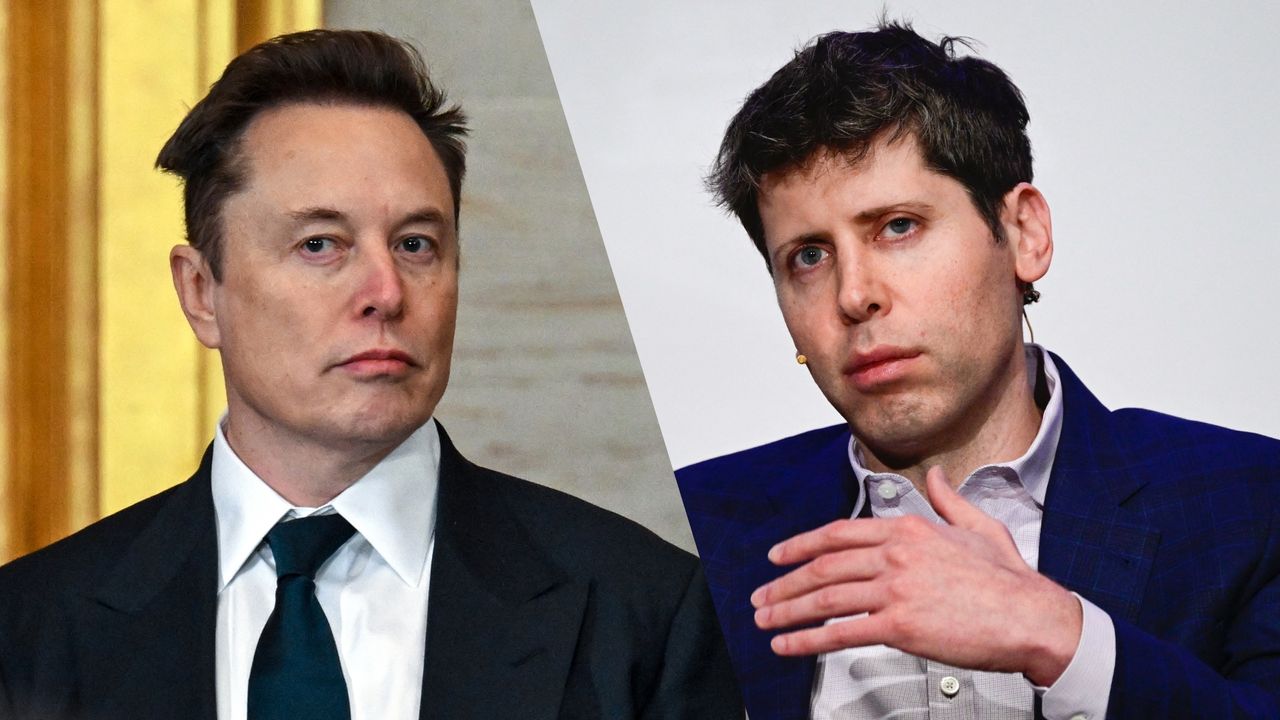
Elon Musk (left) and Sam Altman (right).

A leaked transcript from an internal meeting at OpenAI shows CEO Sam Altman facing intense questions from employees about the company’s controversial deal with the U.S. military.

During the all-hands meeting, Altman reportedly acknowledged that the announcement of OpenAI’s partnership with the U.S. Department of Defense “looked opportunistic and sloppy,” while also warning staff that they have little influence over how the technology will ultimately be used.

The meeting came just four days after OpenAI confirmed the Pentagon would gain access to its AI models on classified networks — a move that quickly sparked criticism from AI safety advocates and some employees.

'You don’t get to weigh in on that'

(Image credit: ANDREW CABALLERO-REYNOLDS/AFP via Getty Images)

According to reports from CNBC and other outlets, Altman was blunt about the limits of OpenAI’s control once its technology enters government systems.

“So maybe you think the Iran strike was good and the Venezuela invasion was bad,” Altman told employees, according to the transcript and reported by Bloomberg. “You don’t get to weigh in on that.”

Altman said operational military decisions ultimately belong to the U.S. government, not OpenAI. Those decisions would fall to officials such as U.S. Defense Secretary Pete Hegseth.

OpenAI’s role, Altman said, according to the transcript, is limited to maintaining the company’s “safety stack” — the technical guardrails built into its models.

He added that government agencies would not be able to force a model to perform a task it refuses. But beyond those safeguards, OpenAI would largely act as an adviser rather than a decision-maker.

The Anthropic standoff

(Image credit: Getty Images)

The Pentagon deal also comes amid a growing divide between AI companies over military use of their technology. Rival AI lab Anthropic previously deployed its Claude models on Department of Defense networks but reportedly refused to remove safeguards that prevented the technology from being used for fully autonomous weapons or mass domestic surveillance.

According to reports, the Pentagon insisted that AI systems must be available for “all lawful purposes.” Anthropic's full stop broke down negotiations and within days, OpenAI stepped in with its own deal.

Altman has publicly stated that OpenAI’s agreement still includes restrictions against autonomous weapons and domestic surveillance.

Critics, however, argue that once the technology is deployed on government systems, the Pentagon ultimately holds the power to interpret those limits.

The xAI warning

(Image credit: Future)

One of the most widely quoted moments in the transcript involves OpenAI’s competitive concerns. Altman told employees that another AI company — which he suggested could be Elon Musks' xAI — might be willing to tell the Pentagon: “We’ll do whatever you want.”

That possibility, Altman argued, is precisely why OpenAI believes it must remain involved. The logic: if more cautious companies step back, the field could be dominated by competitors willing to offer fewer safeguards.

But critics say that reasoning highlights a deeper concern — that competition among AI labs could create a race to loosen ethical limits.

Internal pressure at OpenAI

(Image credit: Getty Images)

The transcript also suggests the Pentagon deal has sparked internal debate.

OpenAI employees had previously signed an open letter titled “We Will Not Be Divided,” expressing support for Anthropic’s stance before OpenAI finalized its agreement with the Department of Defense. The leaked meeting indicates those concerns have not fully subsided.

According to reporting from The Wall Street Journal, Altman also told employees that OpenAI is exploring a future deal to deploy its technology across NATO networks. The comment highlights how quickly AI companies are expanding their relationships with governments and defense organizations.

Final thoughts

The leaked transcript reveals how rapidly generative AI has moved from consumer technology to geopolitical infrastructure.

For OpenAI, the Pentagon deal represents a major step into national security — and a moment that is already sparking intense debate inside the company and causing some users to boycott ChatGPT.

It’s evident that the pace of AI development is outstripping public understanding, and decisions may already be happening faster than either the public or even AI developers can keep up with.


Follow Tom's Guide on Google News and add us as a preferred source to get our up-to-date news, analysis, and reviews in your feeds.


More from Tom's Guide

Sign up to read this article
Read news from 100’s of titles, curated specifically for you.
Already a member? Sign in here
Related Stories
Top stories on inkl right now
One subscription that gives you access to news from hundreds of sites
Already a member? Sign in here
Our Picks
Fourteen days free
Download the app
One app. One membership.
100+ trusted global sources.